
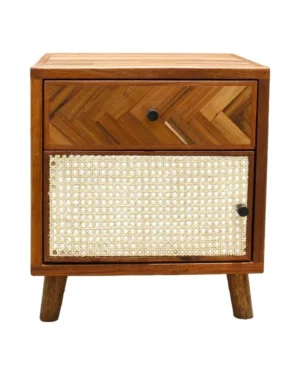
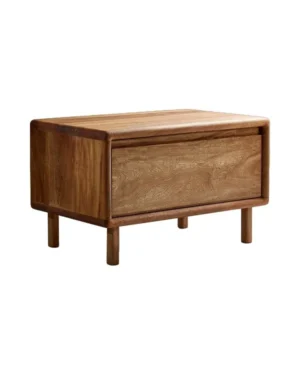
-

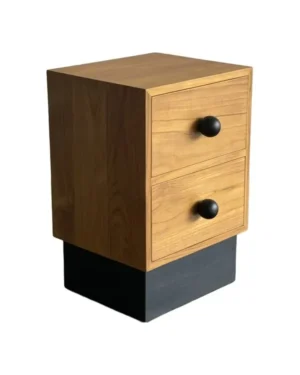
Mamun Nightstand in Solid Teak
By STUDIO KALLANG
€1.450 -
 In stock
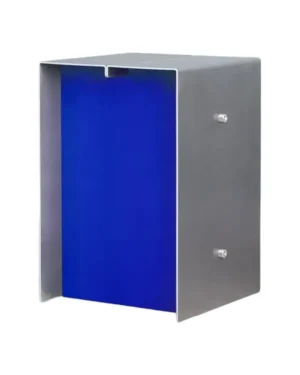
Matted Aluminium Nightstand In Aluminum And Oak
By case studios
€690 -
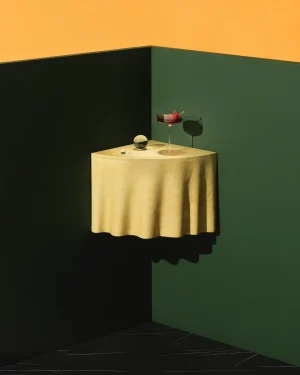 In stock
DUK x Reishi Edition Wall-Mounted Corner Table
By Studio TOOJ
€2.900 -
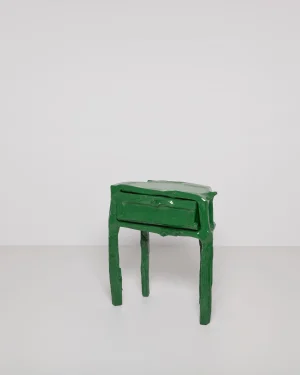 In stock
Splitted Round Cabinet Green
By Teun Zwets
€3.915 -

A_Forma Nightstand in MDF
By AROUND
€400 -
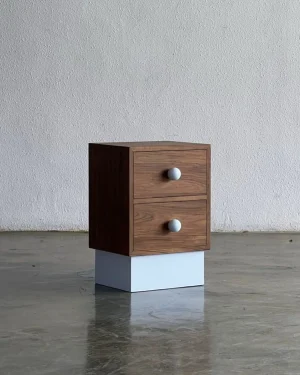
Mamun Dusty Blue Nightstand in Solid Teak
By STUDIO KALLANG
€1.450 -
 In stock
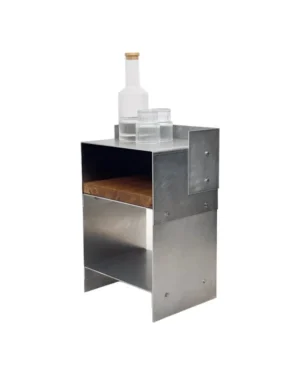
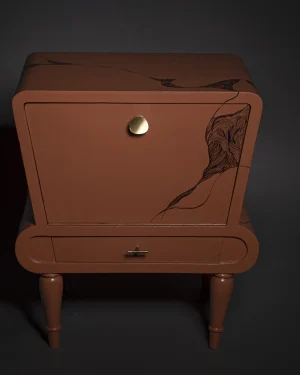
Undress House Nightstand in Stainless Steel
By Undress House
€1.600 -
 In stock
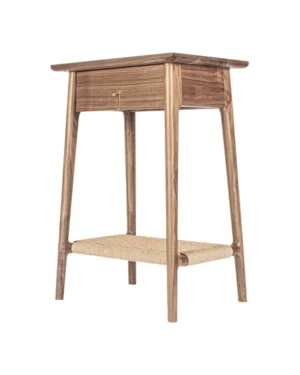
Harmony Nightstand in Oak Wood
By WOODTALES by Foteini Noti
€540 -

Furniture Friends Pino Nightstand in Pine Wood
By STUDIO FP
€2.420 -
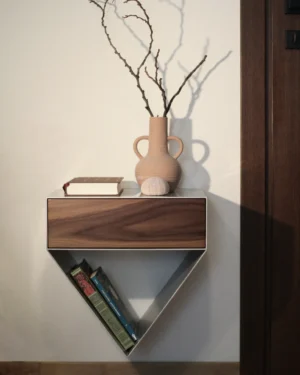
Agave Nightstand in Aluminum and Walnut
By Atelier Nienē
€1.300 -
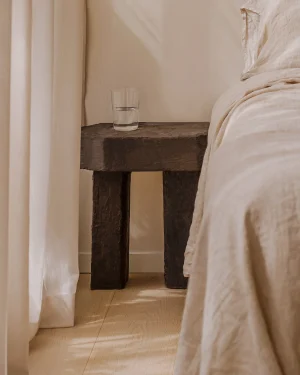
Ruins Nightstand in Resin
By Szymon Keller
€3.546
Contemporary nightstands bring together plain geometry, mixed materials and small studio production, each piece built to sit close to the bed without pulling focus from it. Oak, walnut, teak and aluminum appear often, worked into flat planes, exposed joints and quiet hardware rather than carved detail. Studios working this way favor proportion and surface over ornament, so the material itself, grain, grain direction, a brushed or lacquered finish, does most of the talking.
What defines the contemporary style in a nightstand
Contemporary design, as distinct from mid-century or Bauhaus reference points, tends toward asymmetry, open shelving instead of closed drawers, and a mix of materials within a single piece: a steel frame under a wood top, or a cast resin pull set into an oak drawer front. Lines stay straight, edges stay sharp, and color is usually restrained to black, beige, brown or bare metal rather than pattern. The result reads calm next to a bed, not competing with bedding or wall color.
The materials, finishes and ways of making
Wood leads, mostly oak and teak, with aluminum and stainless steel close behind, worked through standard cabinetmaking: dovetailed or doweled joints, solid tops over veneered or MDF carcasses, finishes left matte or oiled to show grain. Metal pieces lean on aluminum and stainless steel, welded or bent into frames and legs, sometimes paired with lacquered wood panels for contrast. Resin casting and laser cutting show up in drawer fronts and hardware, where a studio wants a repeated geometric detail without hand-carving it, and a smaller number of pieces come from biofabrication, using grown or bio-based materials in place of standard board stock.
- Open editions, produced in ongoing runs by a single studio
- Unique pieces, made once and not repeated
- Finishes ranging from matte lacquer to brushed metal to oiled wood
Anyone drawn specifically to timber grain and joinery can look through the wooden nightstands grouped separately, where oak, walnut and teak pieces sit together regardless of style label.
How to choose a contemporary nightstand
Start with height: a nightstand should sit level with or slightly below the mattress top, so a hand can reach a lamp switch or a glass without looking. Scale matters more than it first appears, a stand that's too deep crowds a narrow room, while one that's too low disappears next to a tall bed frame. Match the finish to what's already in the room rather than to the bed alone; a matte black steel frame reads differently against pale oak flooring than against dark walnut.
Drawer or open shelf is mostly a question of what gets kept bedside. Open shelving suits books and a stack of folded cloth, while a single drawer keeps smaller items out of sight. Either way, leave enough clearance for the drawer or door to swing without hitting the bed frame.
Where these pieces work
The obvious place is the bedroom, flanking a bed singly or in a pair, but the same proportions suit a reading chair in a study or a narrow hallway. A small contemporary stand also works as an entryway table, holding keys and mail at a height that doesn't block a doorway. Pieces in aluminum or stainless steel tolerate damp air better than wood, making them a reasonable choice near a bathroom or a covered porch.
Caring for wood and metal surfaces
Oiled or waxed wood needs an occasional reapplication to stop the surface from drying out and graying, especially in centrally heated rooms where humidity drops in winter. Lacquered finishes just need a dry or barely damp cloth, since standing water can cloud the coating over time. Aluminum and stainless steel resist rust but show fingerprints and light scratches, so a soft cloth and mild soap keep them even rather than streaked. For a broader view of the style across furniture, the full range of contemporary design on ADORNO and the wider set of nightstands both sit alongside this one, for comparing proportions and finishes before settling on a piece.
How do I choose a contemporary nightstand?
Look at proportion and material before finish. A contemporary nightstand should sit close to mattress height, hold a lamp and a few objects, and read quietly against the bed frame rather than compete with it.
What materials are contemporary nightstands usually made from?
Oak, walnut and teak appear often, alongside aluminum and stainless steel for a harder edge. Wood warms a room over time, while metal stays cool and holds sharp lines without shifting.
How do I care for a wood or metal nightstand?
Wipe wood with a dry or slightly damp cloth and keep it from direct heat to avoid drying or warping. Metal surfaces need only a soft cloth, since moisture and abrasive cleaners dull their finish.
What size and height should a nightstand be?
Most nightstands sit level with or just below the top of the mattress, so a lamp or alarm clock stays within easy reach from bed. Depth usually matters more than width in smaller rooms.
Can a contemporary nightstand work outside the bedroom?
Yes. Its small footprint and straight lines suit an entryway table, a sofa-side perch, or a reading corner, anywhere a compact surface for light and small objects is useful.
How does shipping, returns and authenticity work when I buy from ADORNO?
Shipping is insured and worldwide, with a 14-day return policy on all but made-to-order pieces. Every nightstand arrives with a certificate of authenticity and ADORNO's lowest-price guarantee.