




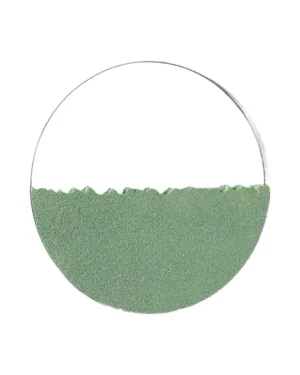
-

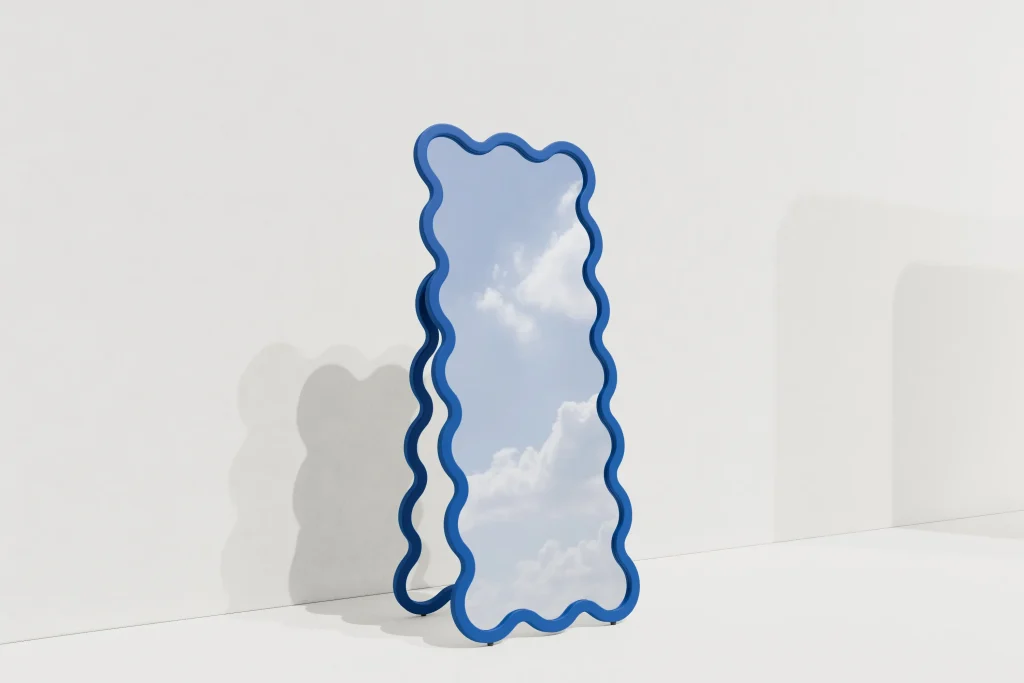
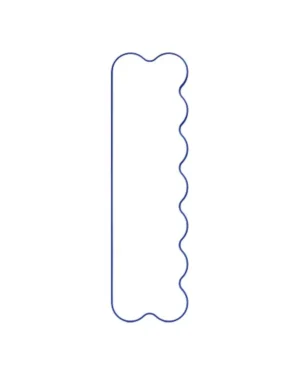
Hvyli 14 – Wavy Full Length Mirror
By oitoproducts
€1.300 -
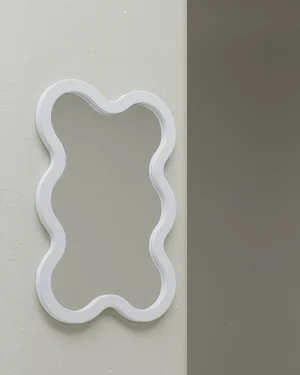
Hvyli 6 – Wavy Wall Mirror
By oitoproducts
€428 -
 In stock
Hvyli 8 – Wavy Wall Mirror
By oitoproducts
€640 -
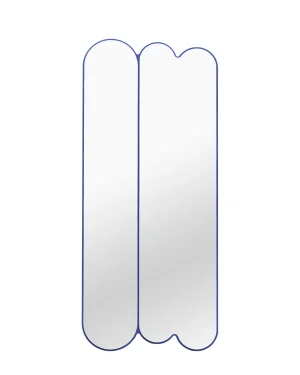
Pancakes V2+1 – Full Length Mirror
By oitoproducts
€1.710 -

Hvyli 16 – Wavy Full Length Mirror
By oitoproducts
€1.590 -
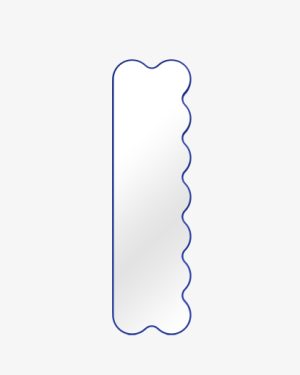
Hvyli Q9 – Wavy Full-length Mirror
By oitoproducts
€1.492 -
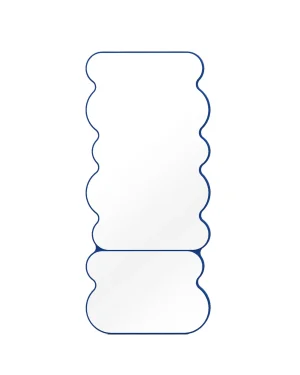
Pancakes H5+2 – Full Length Mirror
By oitoproducts
€1.820 -
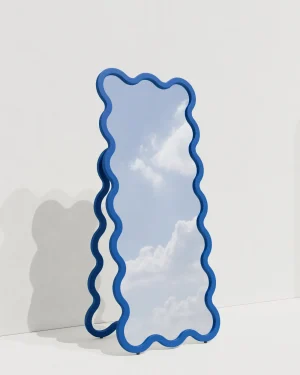
Hvyli 16+leg – Free Standing Mirror
By oitoproducts
€1.800 -
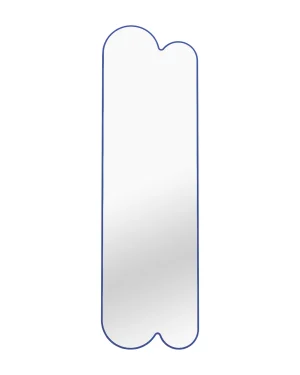
Pancakes V2 – Full Length Mirror
By oitoproducts
€1.280 -
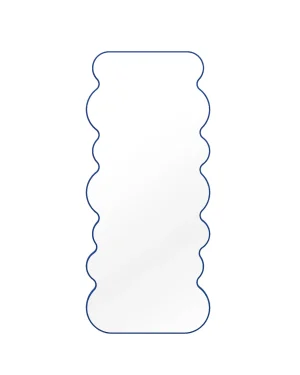
Pancakes H7 – Full Length Mirror
By oitoproducts
€1.725
Curved mirrors trade the straight rule of a rectangular frame for an edge that bends, swells or loops back on itself, so the glass reads as a line drawing rather than a hard-cornered object. Studios working in this shape most often start from MDF, routing or CNC milling the curve before painting or sealing the surface, a process that keeps the line crisp even where it tightens or doubles back. The result sits closer to a wall sculpture than a conventional looking glass, useful for seeing yourself but equally for shaping the wall around it.
What defines the shape
A curved mirror is built, not bent in one motion. Cabinetmakers cut the frame from sheet MDF, layer by layer or in a single milled profile, so the curve holds its form without the ripples or stress marks that would show in bent glass or metal. Because MDF takes paint evenly across a continuous surface, the frame can carry color right into the curve without a seam breaking the line.
This way of making also explains why the shape leans toward graphic, almost drawn outlines: a kidney bean, a wave, an asymmetric loop. The material follows the designer's hand closely, which is why curved mirrors often read as Surrealism or Maximalism translated into an everyday object, alongside quieter Mid-Century Modern and Contemporary takes on the same bending line.
Finishes and colors to expect
Color does most of the work on a curved frame, since the shape itself already draws the eye. Matte finishes in black, off-white or light gray keep the curve quiet against a wall, while cobalt blue, mustard, red or light green push it toward a standalone object. Painting and drawing techniques applied after milling let a studio treat the frame almost like a canvas, adding a second tone or a hand-drawn edge within the same curve.
Most of what is made this way sits in open editions, so a shape or color that reads well in a room can usually be found again rather than chased as a one-off. That makes curved mirrors a reasonably low-risk way to test a stronger color or a more unusual outline before committing a whole wall to it.
Choosing scale, height and placement
A curved frame changes how a mirror reads at different sizes more than a rectangular one does. Small, a curve looks like a piece of wall art with a reflective center; scaled up, the same outline starts to behave like architecture, pulling the eye around the room along its edge.
- Hang it so the widest or most unusual part of the curve sits near eye level, where it will be read first.
- Match the finish to the wall behind it: a matte, pale frame recedes, while a saturated color asks to be seen from across the room.
- Leave enough bare wall around an irregular outline so the shape stays legible rather than crowded.
If the frame's geometry matters more to you than the glass size, it is worth comparing a curved piece against the straighter lines kept among wooden mirrors or the harder edges typical of metal mirrors, since the base material changes how forgiving the curve can be.
Where curved mirrors work
Entryways and narrow hallways benefit from a curved mirror's lack of sharp corners, useful where people pass close by. In a living room, a larger curved frame can stand in for a piece of wall art, anchoring a sofa or console without needing a second decorative object nearby. Bedrooms take the shape well too, particularly where the mirror sits low enough to double as a dressing mirror.
Living with an MDF frame
Painted MDF asks for the same care as any painted wood furniture: keep it away from direct, sustained moisture, dust it with a dry or barely damp cloth, and avoid abrasive cleaners that will dull or scratch the finish. Hang it on a wall away from direct heat sources, which can warp the board over time.
For a broader sense of how this shape sits against other mirror types, the full range of mirrors on ADORNO includes straighter and more geometric framing, while every curved piece across the site shows how the same bending logic carries into lighting, seating and objects beyond the mirror wall. Those drawn to a quieter version of the same idea may also want to see the contemporary mirrors kept alongside them.
How do I choose a curved mirror for my space?
Look at the curve itself: soft, organic lines sit quietly among straight furniture, while bolder, asymmetric shapes work as a focal point on their own. Match the frame material and color to the rest of the room.
What are curved mirrors made from?
Many are built from MDF, shaped through CNC milling or cabinetmaking, then painted in solid colors such as black, cobalt blue, or mustard. MDF holds a clean edge, so curved profiles stay crisp over time.
How do I clean and care for a curved mirror?
Dust the frame with a dry cloth and clean the glass with a standard glass cleaner, keeping moisture away from the frame joints. Store or hang painted MDF frames away from direct heat and damp, which can dull or warp the finish.
What size curved mirror should I hang, and how high?
Center the mirror so its midpoint sits around eye level, roughly 57 to 60 inches from the floor. Pick a size that leaves breathing room on the wall rather than crowding it.
Which rooms suit a curved mirror best?
Entryways, living rooms, and bedrooms all take well to curved mirrors, where the rounded shape softens straight walls and furniture lines. Bathrooms work too, as long as the frame material tolerates humidity.
Does ADORNO ship curved mirrors worldwide, and can I return one?
Shipping is insured and worldwide. Pieces can be returned within 14 days, though made-to-order mirrors are excluded from returns.