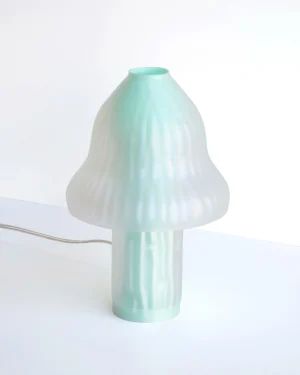
 Lampamodelé Blue Table Lamp in 3D Printed PLA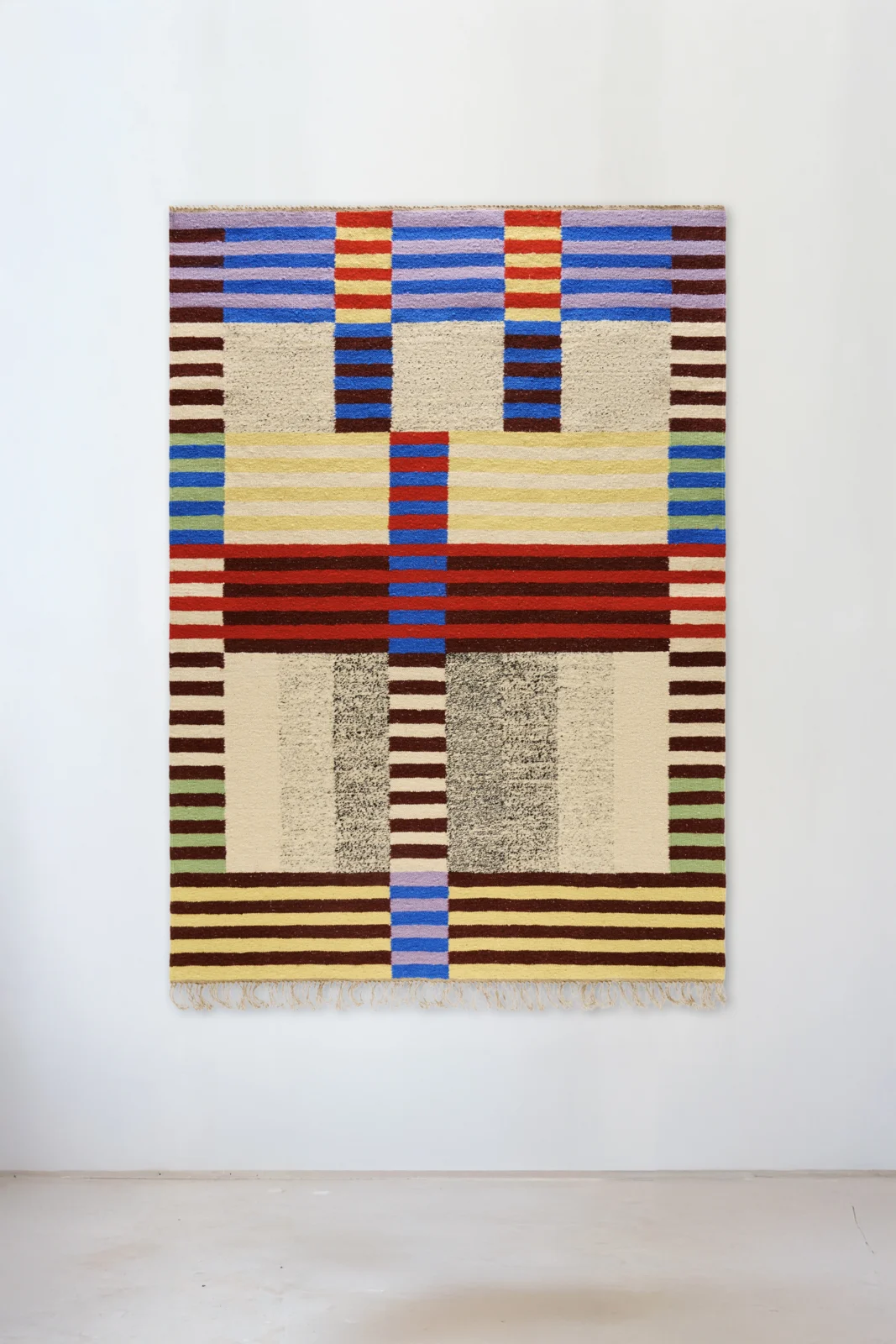
Some materials you look at. Textiles you feel before you even touch them.
Textile design brings warmth, color and softness into a home in a way few other materials can. A handmade rug defines a room, a woven panel quiets a wall, and an upholstered chair invites you to stay. Behind each piece is a long chain of craft: spinning, dyeing, knotting, weaving and tufting, often by hand.
This selection gathers nine textile pieces by independent designers: rugs, seating, wall art and a few sculptural surprises, in wool, linen and reclaimed fibers.
What is textile design?
Textile design is the craft of creating patterns, structures and objects from fibers. In interiors, it spans rugs, upholstery, wall hangings and throws, but contemporary designers also push textile into furniture, lighting and sculpture. Techniques range from traditional weaving and hand-knotting to tufting and upcycling old knitwear.
How to use textiles at home
Start with the rug
A rug anchors a seating area and sets the palette for the room. Choose the size so that at least the front legs of your sofa and chairs sit on it.
Add texture at eye level
Woven wall art and textile wall hangings soften hard surfaces and absorb sound, making a room feel calmer and warmer.
Mix fibers
Combine wool, linen and bouclé with wood, stone and metal. The contrast between soft and hard surfaces is what makes textiles feel rich.
Handmade rugs
A handmade rug is the easiest way to bring textile art into a home. These four range from upcycled knitwear to a graphic tufted wool rug.
Op Kilim No. 1 – Rug by Pani Jurek STUDIO
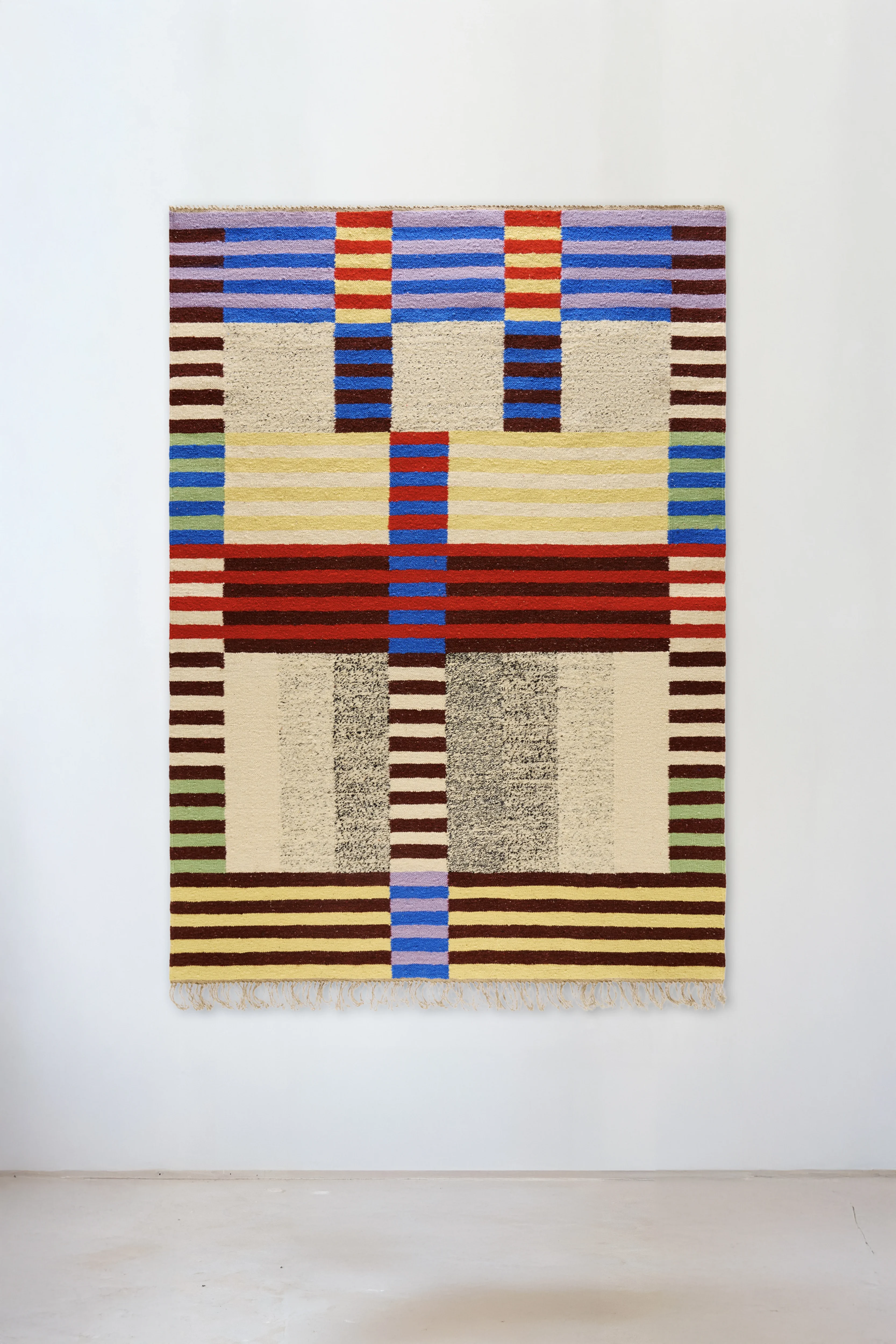
Designed by Magda Jurek, the OP Kilims translate the studio’s OP ceramic tile system into woven geometric compositions. Each wool and linen kilim rug is a one-of-one piece, measuring 150 x 210 cm. In other words, it works as a rug or as textile wall art, and it is in stock.
€4.879 incl. tax
Eclipse Oval Rug With Geometric Pattern by Toro Manifesto
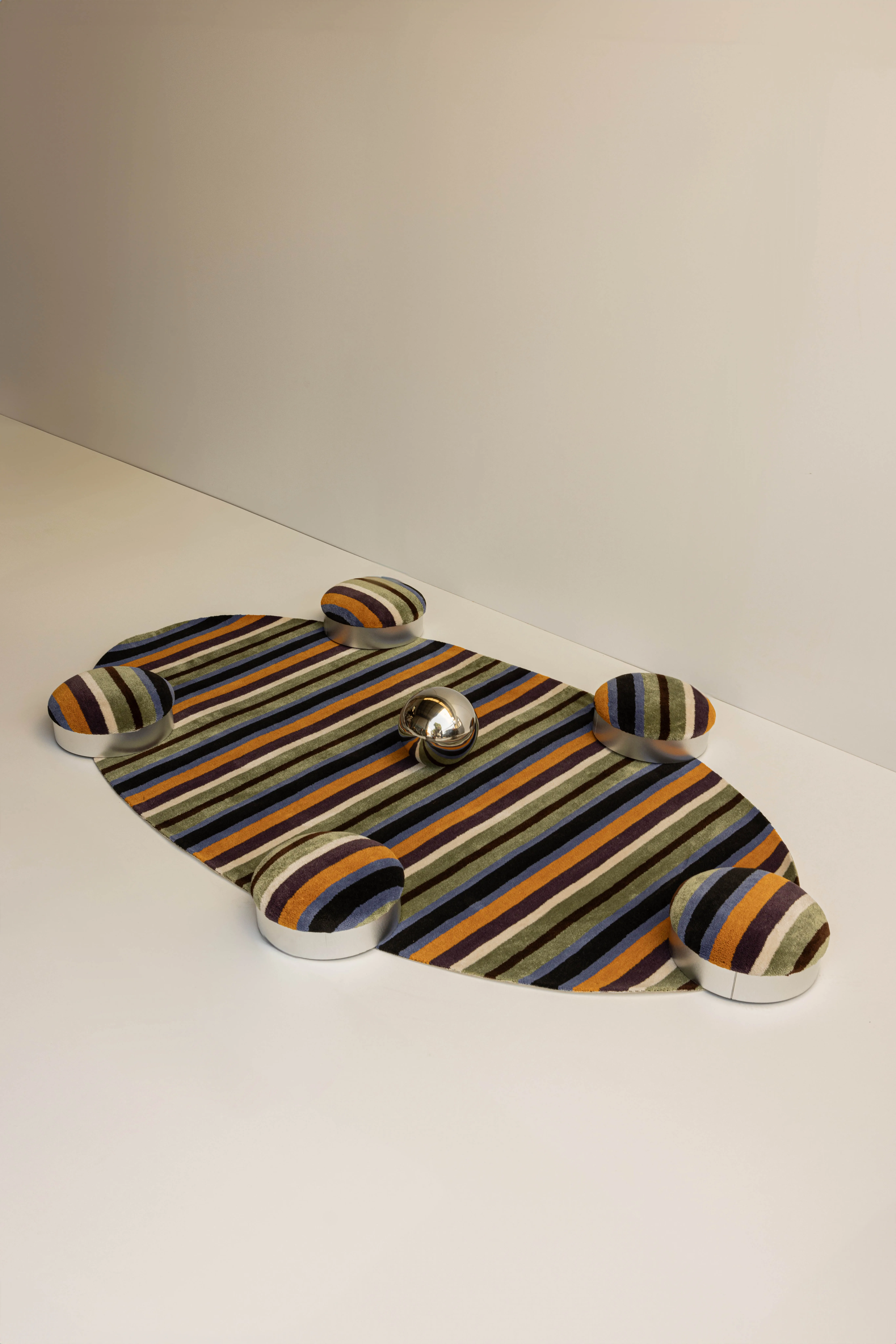
This oval rug with a geometric pattern draws on the retro-futurism of the 1960s and 1970s, with horizontal line motifs in warm, vibrant tones. It is made from Mexican dyed wool and can be customized in size and color. As a result, it anchors a room with a strong visual identity, and it is in stock.
€4.320 incl. tax
Circuit Black X Rug by Draken Studio
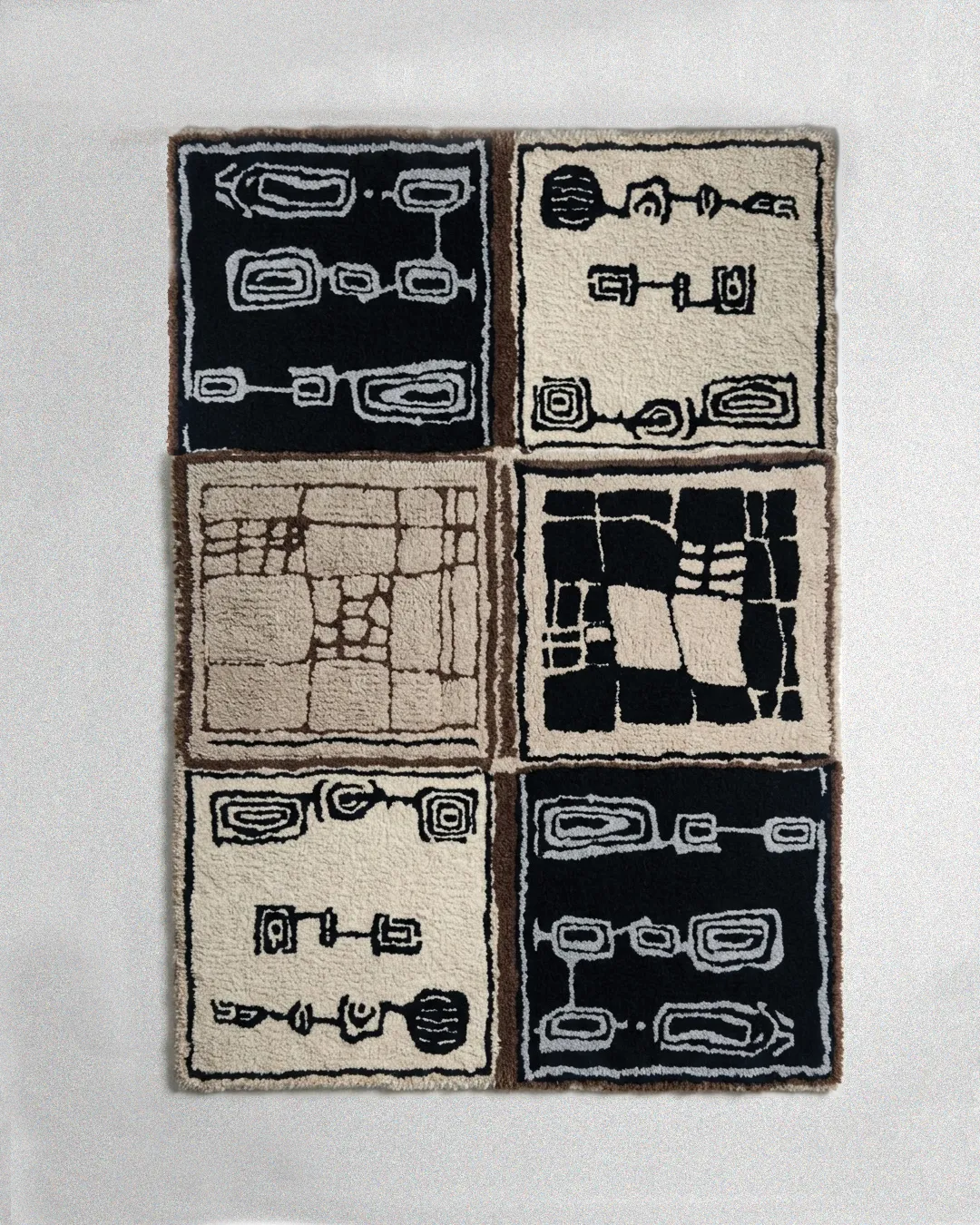
This tufted rug sets circuit-like motifs inside a geometric grid of black, cream and brown. Handmade in Buenos Aires from mostly Argentinian Merino wool, each piece carries a serial number and production date on the back. Moreover, it is the most accessible rug in this selection, and it is in stock.
€900 incl. tax
Repeated II Rug by Severija Inčirauskaitė-Kriaunevičienė
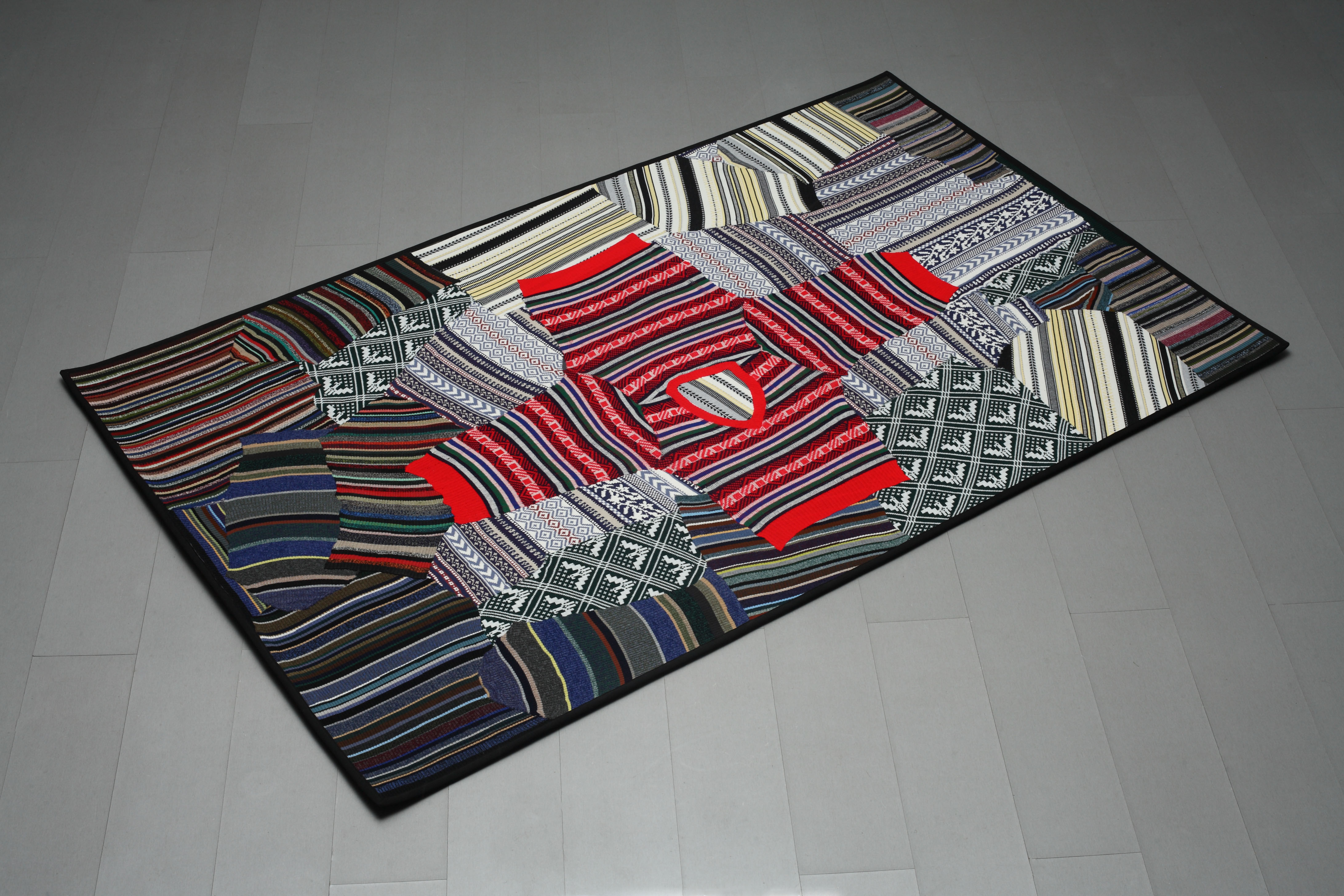
This collection of carpets was created from used knitwear: sweaters, caps, scarves and gloves. Lithuanian artist Severija Inčirauskaitė-Kriaunevičienė turns discarded garments into a rug that carries traces of the people who wore them. Consequently, it is textile art with a second life.
By Severija Inčirauskaitė-Kriaunevičienė
€3.500 incl. tax
Textile furniture and seating
Upholstery and knotted wool turn furniture into something tactile, warm and inviting.
Atlantis Armchair Blue Wool Tufting by Vintola Studio
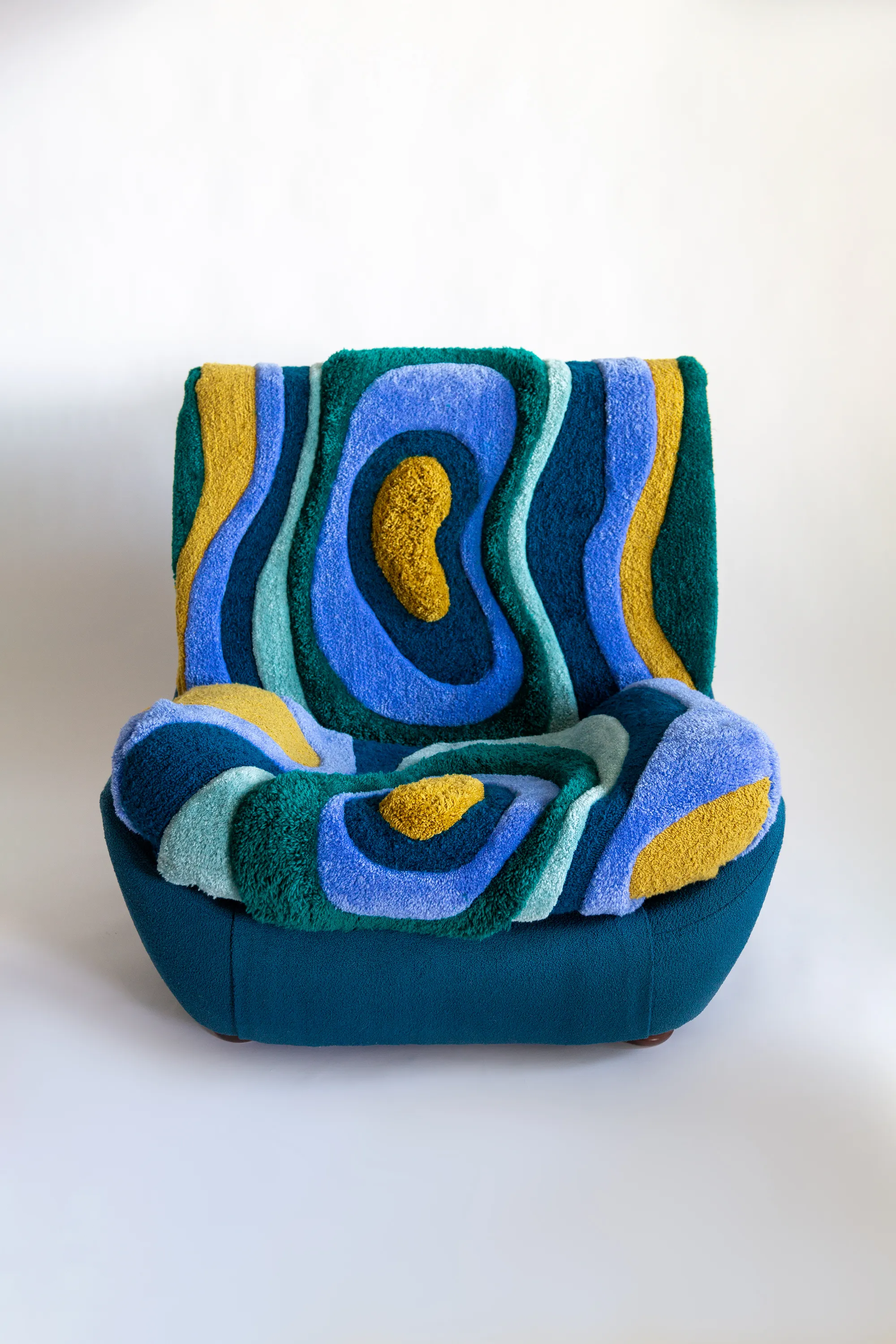
Made at the Silesian Furniture Factory in Świebodzin, Poland, the Atlantis has a hand-tufted, multicolored wool seat and back, so each chair is slightly different. Its compact size suits even small rooms. Moreover, it is in stock and available for immediate delivery.
€6.500 incl. tax
Fred Pouf – Tibetan Wool by Lyk Carpet
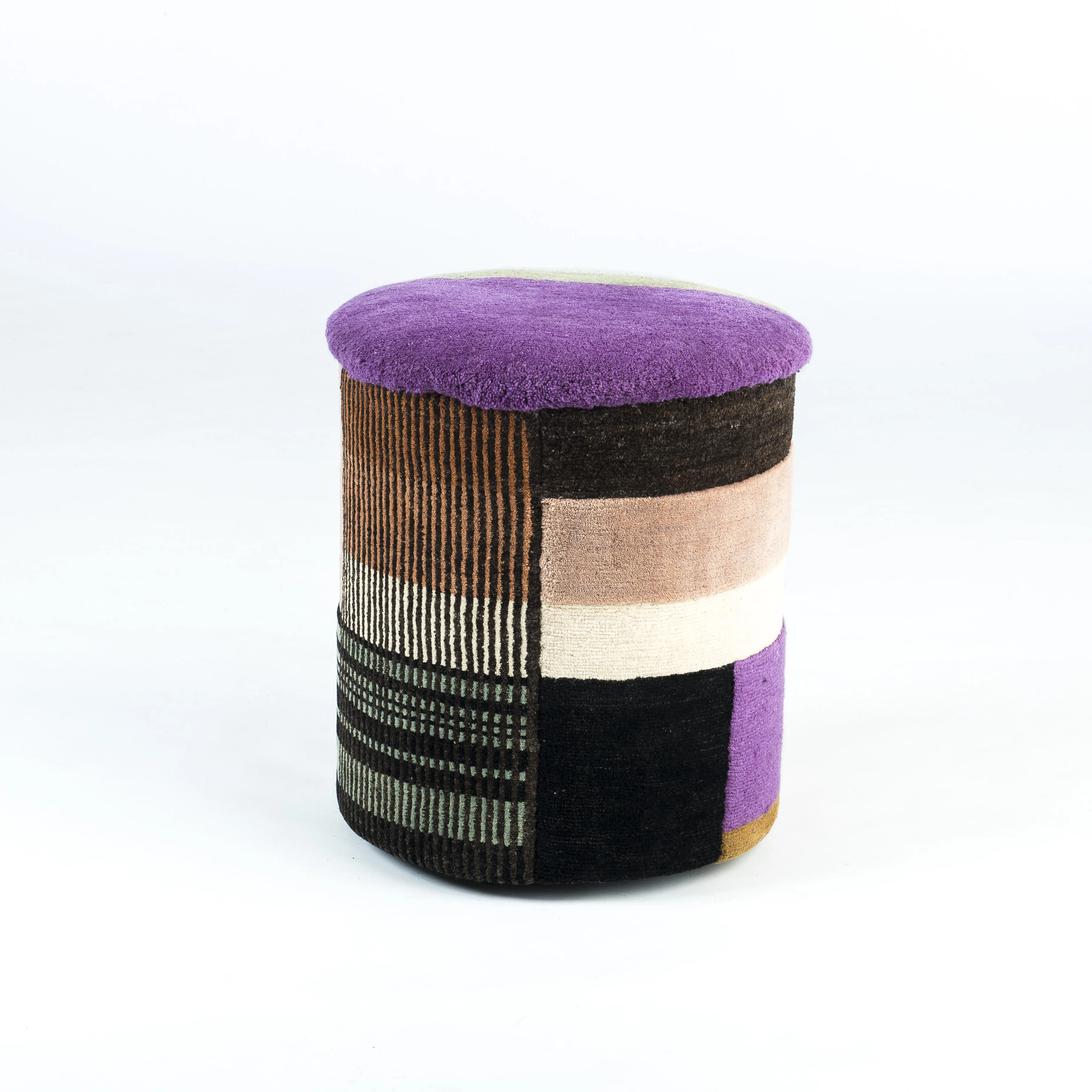
The Fred Pouf turns Mareike Lienau’s knotting techniques into a sculptural seat. It is hand-knotted from 100% hand-spun, plant-dyed Tibetan highland wool around a wooden core, and produced in Berlin. In other words, it is a rug-maker’s craft in three dimensions, and it is in stock.
By Lyk Carpet
€2.605 incl. tax
Textile wall art
Woven panels and wall hangings add texture and quiet to a room, and soften acoustics as well.
Spigolatura N°97 – Wall Decoration by Susanna Costantini
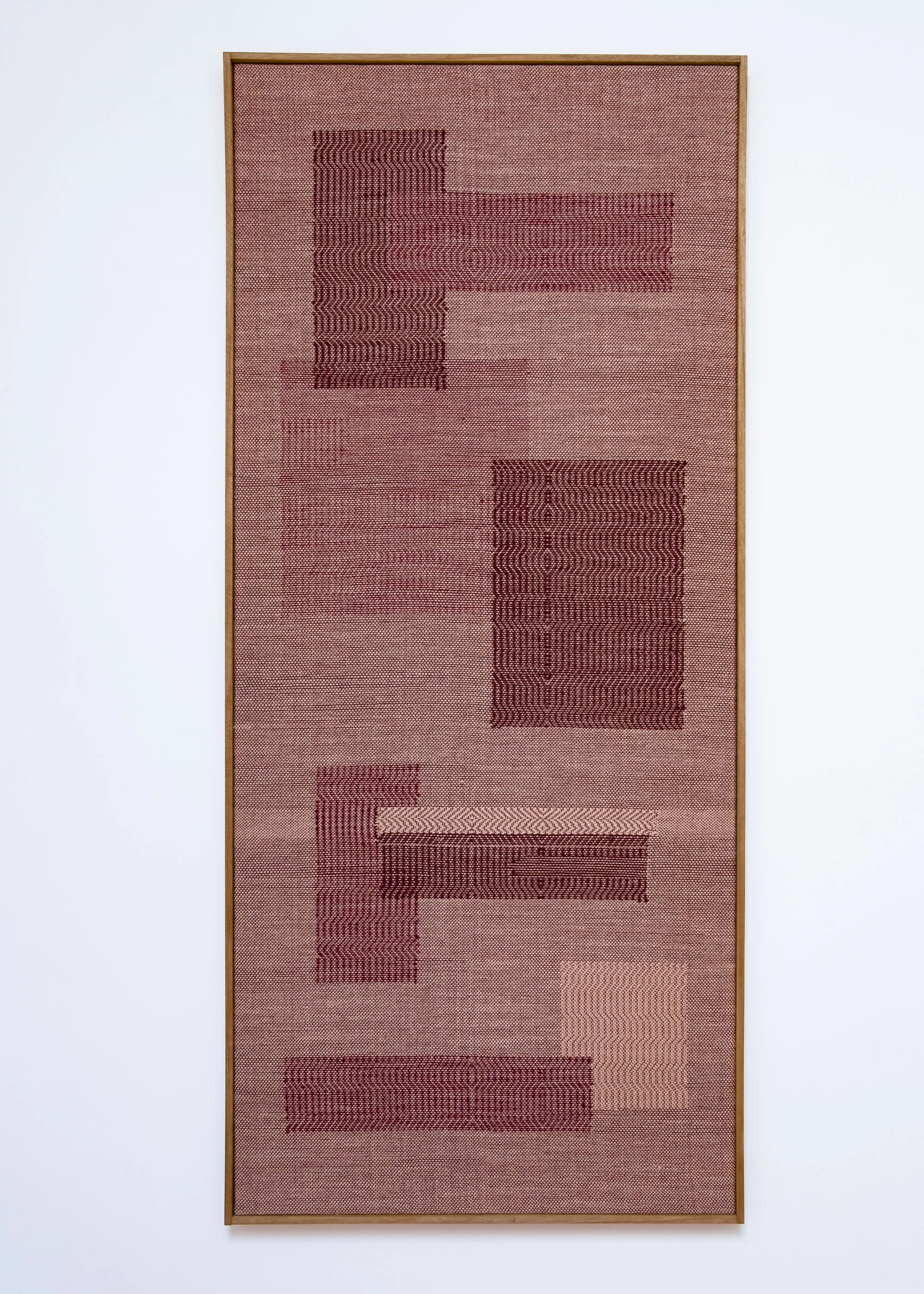
Part of Susanna Costantini’s Gleaning series, inspired by Agnès Varda’s documentary, this minimalist panel is woven from the remnants of warps and past weavings. Its textured geometry reads like an abstract landscape. As a result, it is a woven wall hanging that is also a meditation on reuse, and it is in stock.
€2.550 incl. tax
Textile objects and lighting
Textiles can also become sculpture and light, as these two pieces show.
Ic-15 Floor Lamp in Green Wool and Gold-leaf by Studio Josha
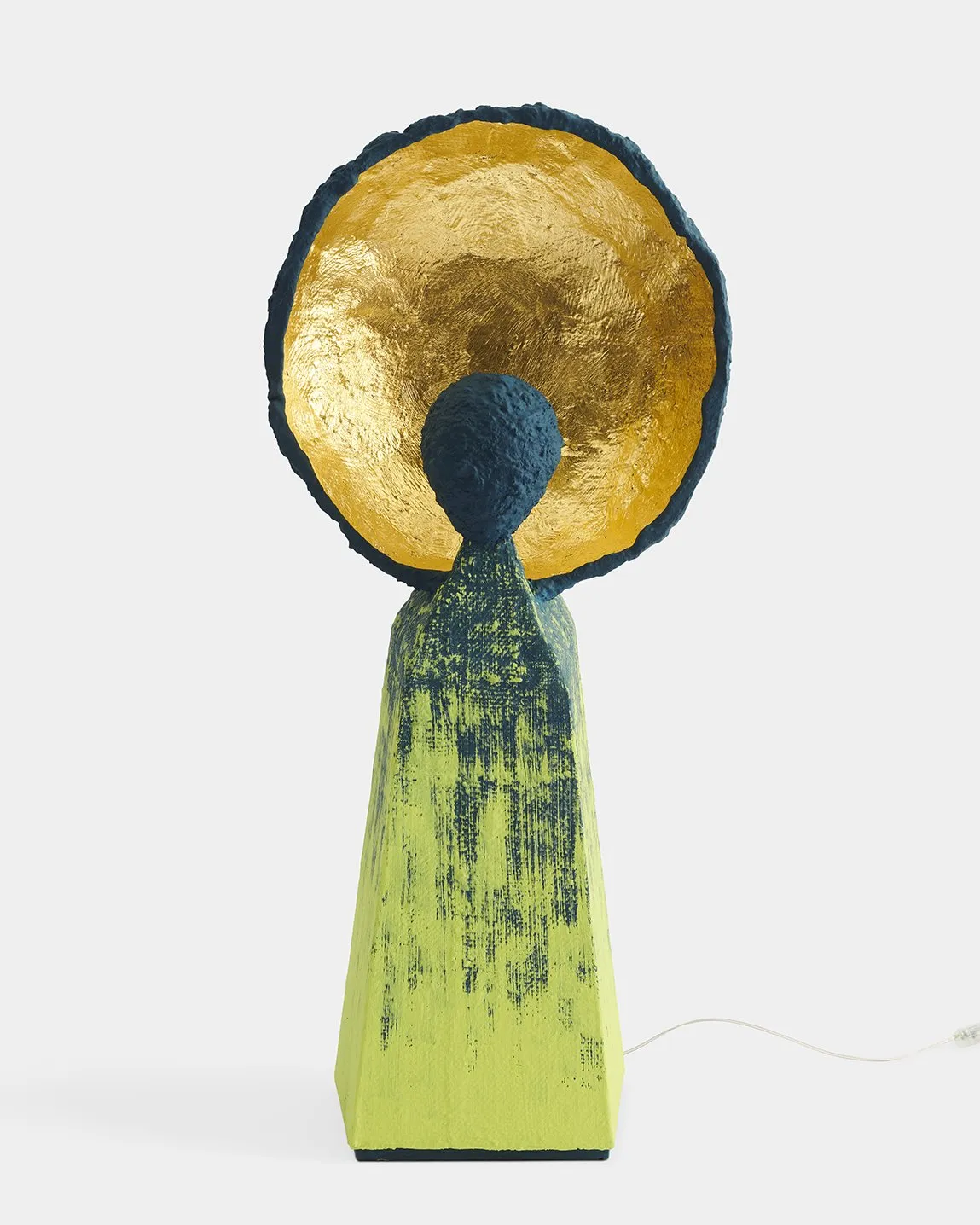
Dutch designer Josha Roymans builds the Ic-15 from raw, unprocessed sheep wool from a local shepherd, finished inside with hand-gilded 24k gold leaf that glows warm when lit. It stands 137 cm tall and is one of one. Therefore, it shows wool working as both texture and light.
By Studio Josha
€6.250 incl. tax
Super Lekker Donut by Joel Blanco

By presenting itself as something primary and humane, a world-record-size donut challenges ideas that are often taken too seriously, according to designer Joel Blanco. It is part sculpture, part joke and entirely soft. Indeed, it shows how playful textile design can be.
By Joel Blanco
€6.120 incl. tax
Frequently asked questions
What is the difference between textile design and textile art?
Textile design usually refers to functional pieces such as rugs and upholstery, while textile art emphasizes expression. Many contemporary pieces sit between the two.
Are wool rugs worth it?
Yes. Wool is durable, naturally stain-resistant and warm underfoot, and a well-made wool rug can last for decades.
What is a kilim rug?
A flat-woven rug with no pile, traditionally made with geometric patterns. Kilims are lighter than knotted rugs and can also be hung on a wall.
How do I care for a handmade rug?
Vacuum regularly without a beater bar, rotate it every few months, blot spills immediately and have it professionally cleaned when needed.
How do I hang a textile wall piece?
Use a wooden batten or rod with hidden fixings so the weight is spread evenly, and keep it out of direct sunlight to prevent fading.
Soft by nature
From upcycled knitwear and Tibetan wool to retro-futurist rugs and woven panels, textile design brings warmth, texture and story into a home. Choose one piece you want to touch every day, and build the room around it.