Biomimicry in Design: 4 Studios Growing Furniture From Nature
Updated on: September 24, 2026
Nature has had 3.8 billion years to solve design problems. Some designers are finally taking notes.
Biomimicry draws on the patterns, structures and processes of the natural world to solve human design challenges. It is more than aesthetic imitation; it is a way of learning from ecosystems that have already found efficient, resilient solutions. By studying how organisms adapt and thrive, designers can create objects and buildings that work with nature rather than against it.
In furniture and lighting, that approach is producing some of the most original work in contemporary design. Here, we explain what biomimicry is, look at landmark examples, and spotlight four studios using mycelium and bioplastic to grow, rather than simply make, their pieces.
What is biomimicry?
Biomimicry is the practice of emulating nature’s strategies and forms to create innovative and sustainable design. By studying how organisms solve problems, from regulating temperature to building strong, lightweight structures, designers develop solutions that are efficient and well suited to their purpose. In other words, biomimicry in design uses evolution as a research library, aiming for products, buildings and systems that are in harmony with nature.
It is closely related to nature-inspired design and biophilic design, but it goes further. Biophilic design brings nature into a space; biomimetic design borrows nature’s logic to decide how a thing is made and how it works.
Biomimicry examples in architecture and technology
One of the best-known examples of biomimicry architecture is the Eastgate Centre in Harare, Zimbabwe. Inspired by the self-cooling structure of termite mounds, it regulates temperature without conventional air conditioning, using significantly less energy than comparable buildings in the city.
Additionally, biomimetic wind turbines developed by Caltech researcher John Dabiri take their cue from the way schools of fish swim closely together without interfering with one another. The turbines mimic the vortices created by individual fish so they can operate efficiently in close proximity. As a result, these examples show how biomimicry can tackle complex environmental challenges.

Biomaterials: mycelium and bioplastic
Many biomimicry designers work directly with living systems. Mycelium, the root network of fungi, can be grown into molds or around frames, producing a material that is light, strong and compostable. Bioplastics made from collagen, starch or algae offer an alternative to petroleum plastics and can be designed to biodegrade at the end of their life.
These biomaterials change the relationship between designer and material. Rather than cutting or molding, the designer guides growth, and each piece carries the marks of its own development. Consequently, no two objects are ever quite the same.
Olle Sahlqvist: mycelium furniture shaped by nature
Swedish designer Olle Sahlqvist uses mycelium and other organic materials to create furniture that mimics natural phenomena, from the protective qualities of bark to the structure of bracket fungi. First shown at the Ex-Works 2022 exhibition, his work is a reminder of the urgent need to reconnect with nature. Moreover, it asks us to reflect on our relationship with the natural world and our responsibility to it.

Zwampen – Mycelium Lounge Chair by Olle Sahlqvist
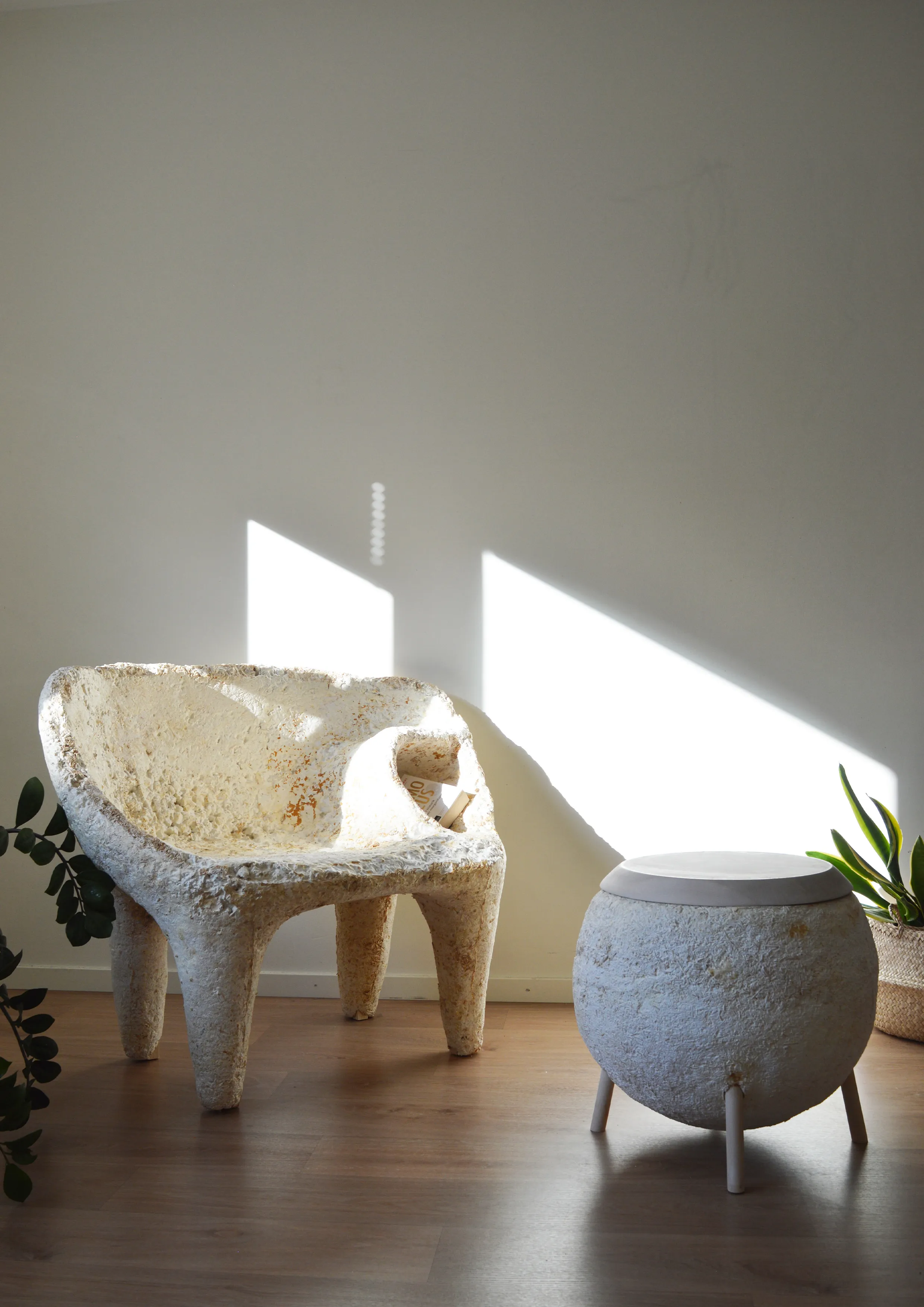
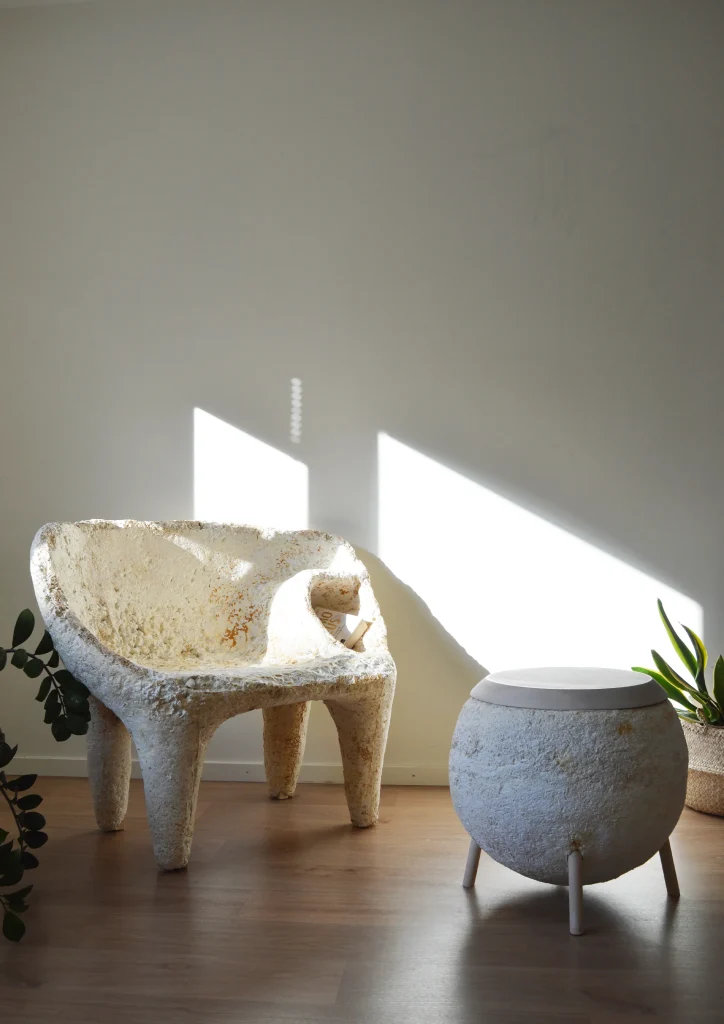
Zwampen, from the Swedish slang for mushroom, is a lounge chair grown from mycelium. Its soft, organic form looks as if it has emerged from the forest floor. Therefore, it is both a working lounge chair and a statement about what furniture can be made from.
€10.000 incl. tax
Mystool – Mycelium Stool by Olle Sahlqvist
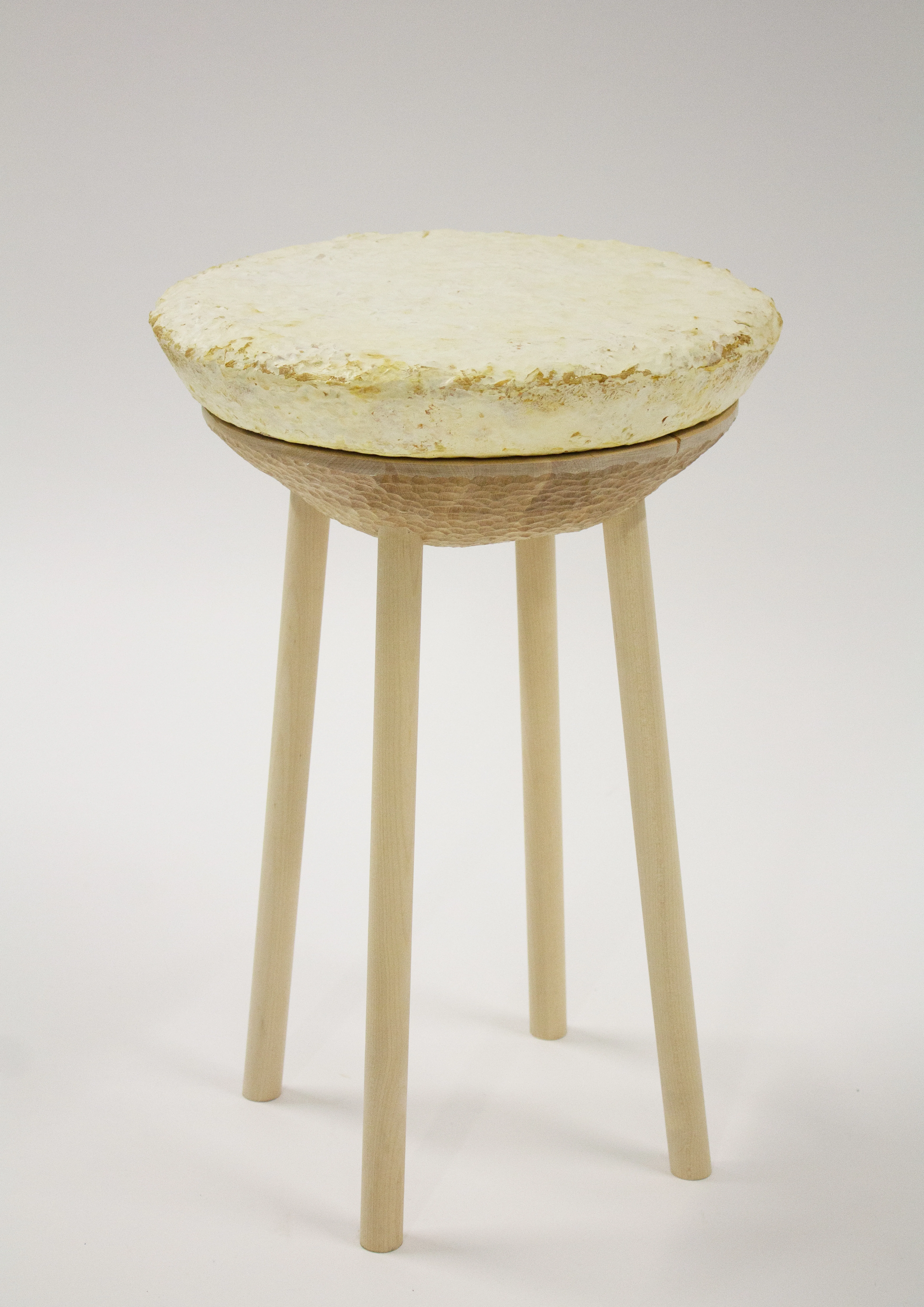
MyStool is grown from mycelium into a sturdy, textured stool. The material’s natural surface is left visible, so the growth process becomes part of the design. Notably, it is in stock and currently on sale.
€1.900 incl. tax
Ticka – Fungi Wall Shelf by Olle Sahlqvist
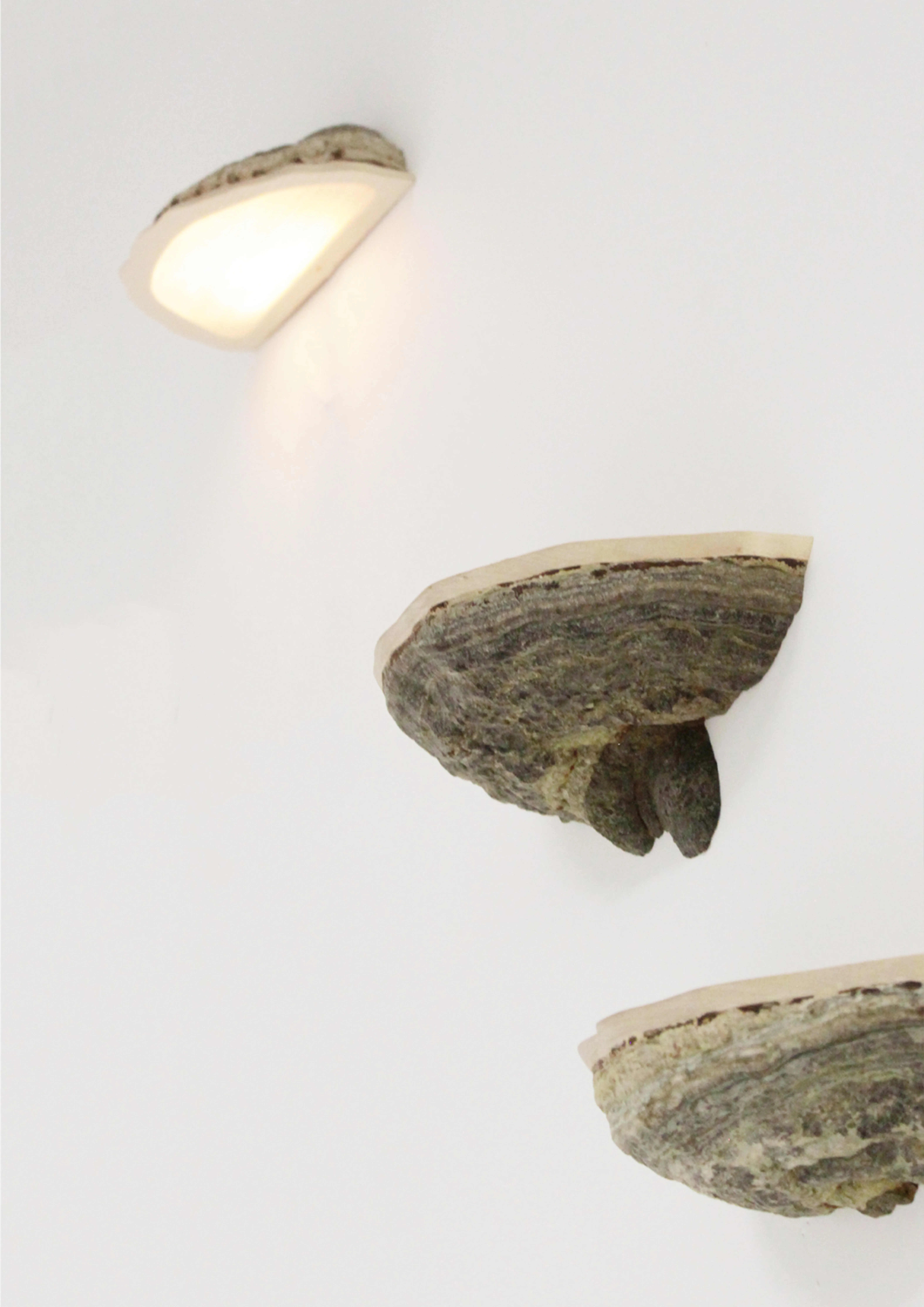
Ticka, the Swedish word for bracket fungus, mimics the shelf-like fungi that grow on tree trunks. Mounted on a wall, it becomes a small shelf for plants or objects. It comes in small, medium and large sizes.
€250 – €450 incl. tax
Sabrina Merayo Nuñez: bioplastic light sculptures
Sabrina Merayo Nuñez explores biomaterials and interactive sculpture, working at the meeting point of art, design and science. She has developed her own 100% biodegradable, collagen-based bioplastic, drawing on historical paint and adhesive techniques. Her interactive light sculptures respond to the presence of viewers and are designed to return to the earth at the end of their life. Read more in our studio visit.

Weaver Nest Pendant Lamp in Bio Plastic by Sabrina Merayo Nuñez
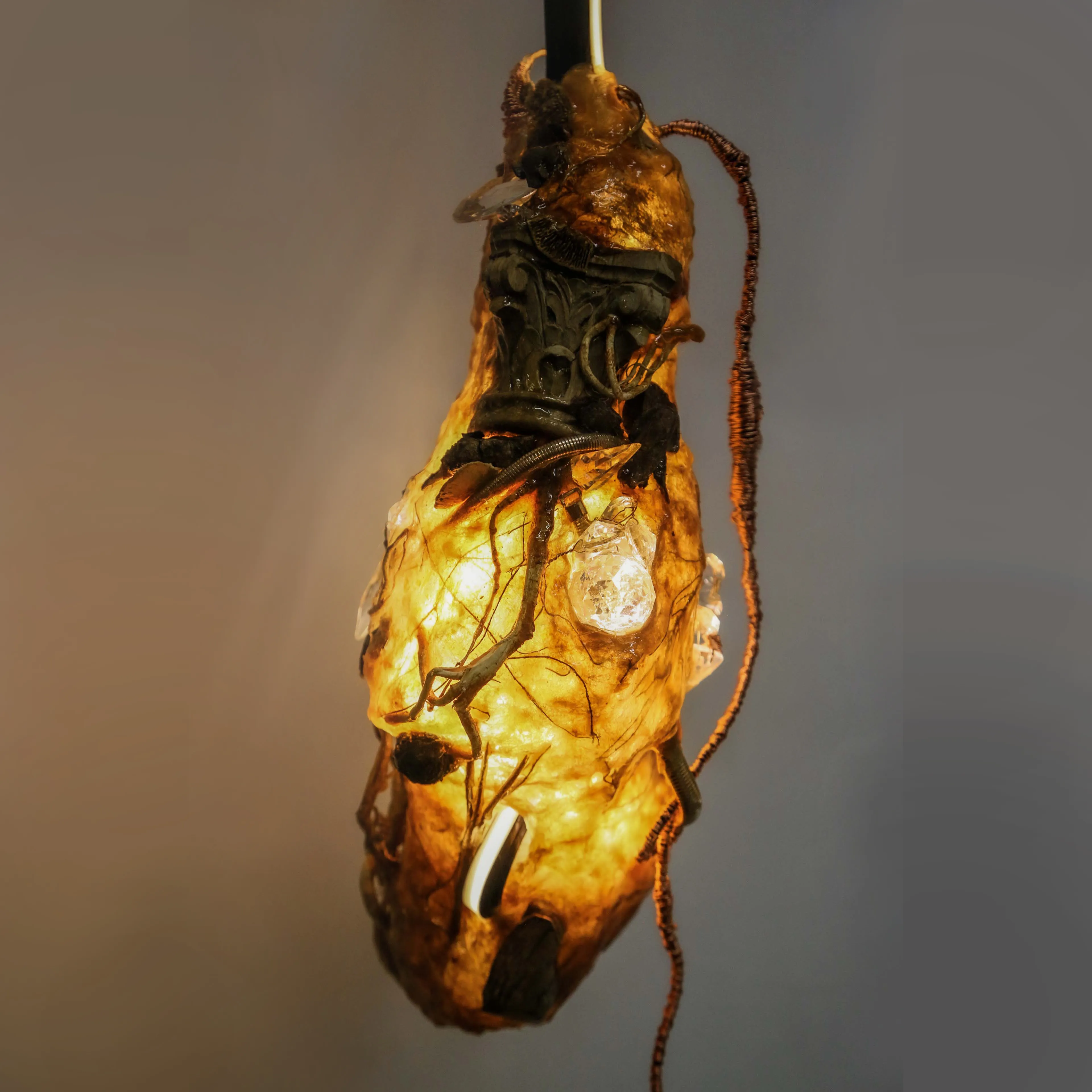
Formed in amber bioplastic, the Weaver Nest pendant echoes the woven structures birds build to shelter their young. Light glows through the translucent, organic surface. As a result, it reads as a living form suspended above the room, a striking pendant lamp.
€3.500 incl. tax
The Hive – Bioplastic Wall Lamp by Sabrina Merayo Nuñez
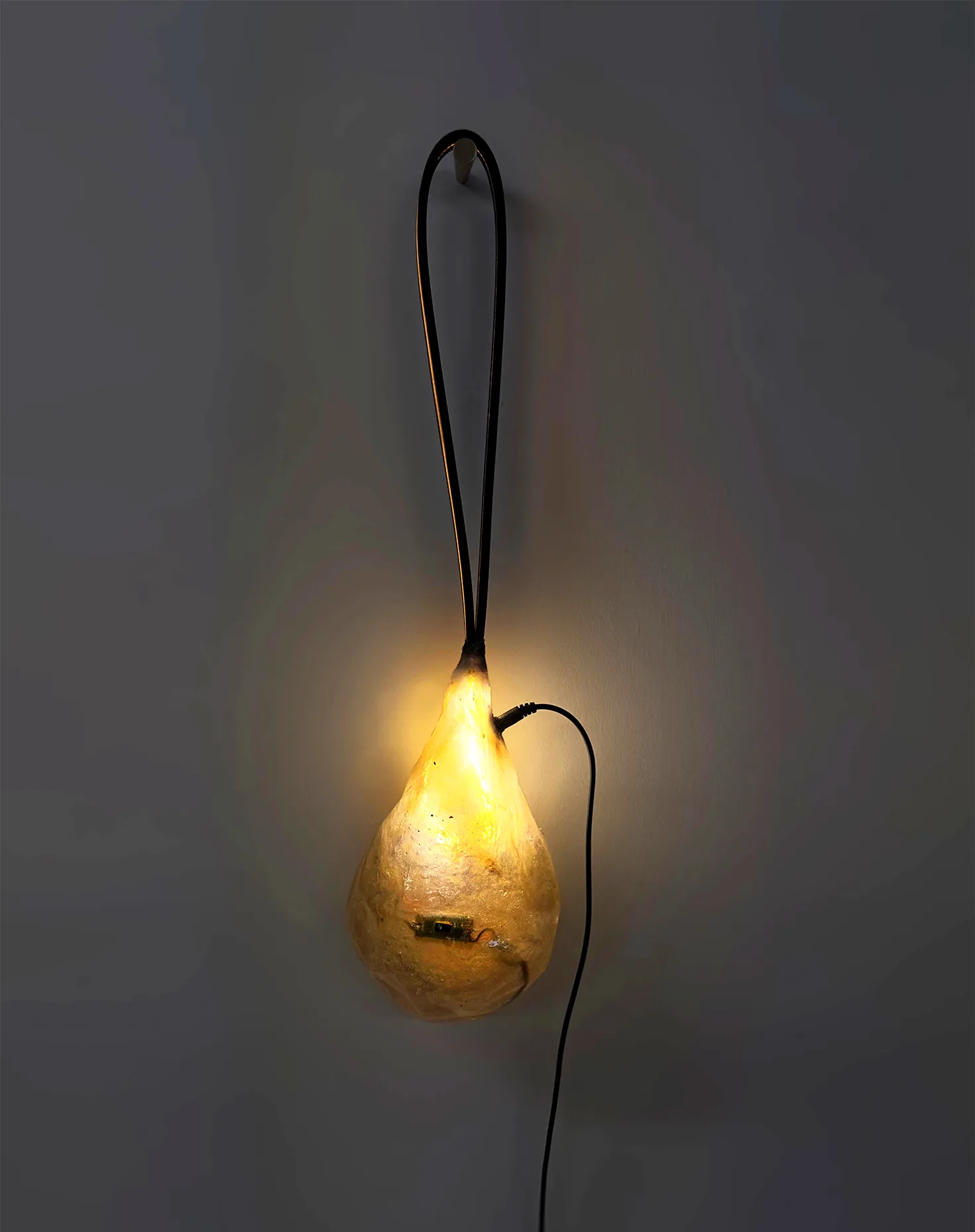
Part of her Sympoietic collection, The Hive is a wall lamp in bespoke bioplastic with electronic motion sensors that respond to people nearby. Each lamp is unique, a result of the handmade process and organic materials. Furthermore, it is designed to biodegrade at the end of its life, and is in stock.
€750 incl. tax
SOLATERRE: furniture grown, not molded
SOLATERRE grows its pieces from the mycelium of a regional tinder fungus, reinforced with earth concrete. The result is surprisingly light and tough, with a weight and stability comparable to cork and a surface reminiscent of leather. It can be cared for like leather too, with oil and wax.
Mycelium Stool No.3 by SOLATERRE
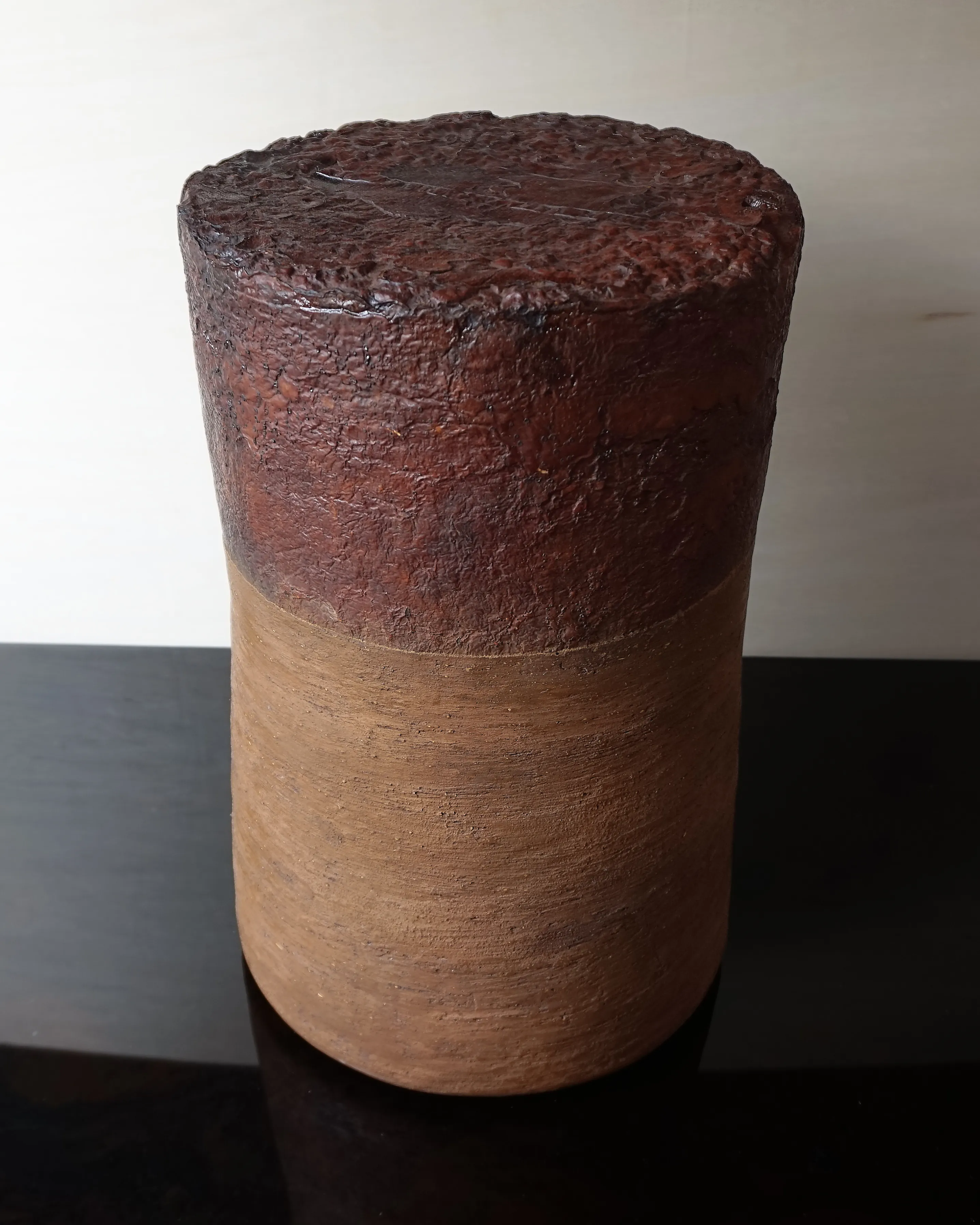
This stool is grown rather than molded, and its earthy play of nuances and colors tells of its origin. The treated surface is already water-repellent. In other words, it is a quiet echo of the hidden fungal networks beneath the forest floor, and a sculptural example of sustainable furniture.
By SOLATERRE
€1.303 incl. tax
10th Floor Studio: mycelium that listens
10th Floor Studio takes biomimicry into sound. Its work grows mycelium around engineered structures, creating hybrid objects that sit between utility and sculpture.
Hyphal Fidelity by 10th Floor Studio
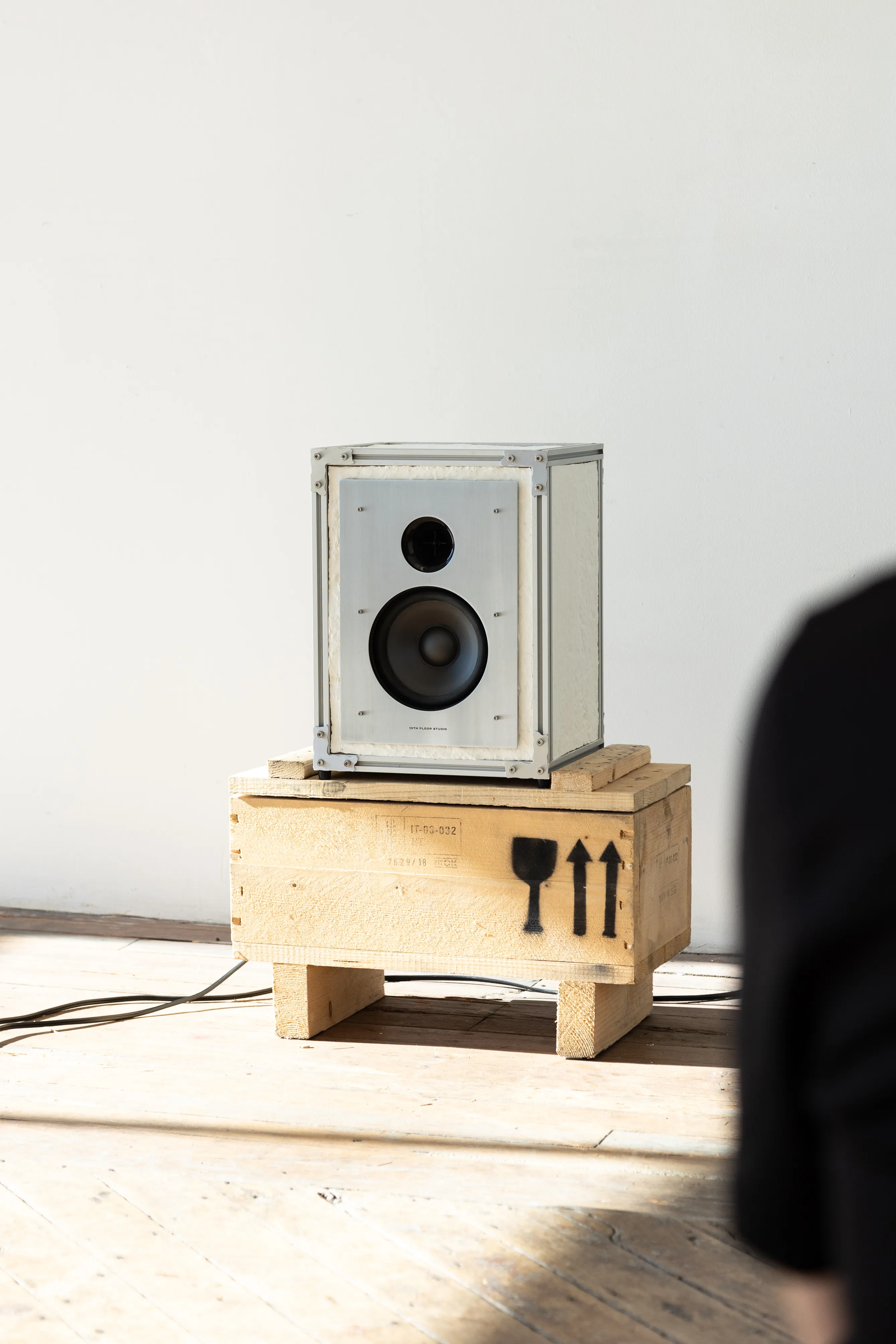
Hyphal Fidelity is a pair of bookshelf speakers with Reishi mycelium grown into aluminum frames. The patterned fungal surface and interior absorb reflected sound waves and dampen resonance. Notably, the mycelium is dehydrated and no longer living, and the speakers need an amplifier for 8-ohm drivers.
€6.200 incl. tax
Living with biomaterial design
Mycelium and bioplastic pieces are durable in everyday use but benefit from a little care. Keep them in a dry environment, away from direct water and high humidity. Dust with a soft dry brush or compressed air, and treat mycelium surfaces with oil or wax where the maker recommends it.
Frequently asked questions
What is biomimicry in design?
Biomimicry in design means learning from nature’s forms, processes and systems to solve design problems, creating products and buildings that are efficient, resilient and lower in environmental impact.
What are some examples of biomimicry?
The Eastgate Centre in Harare, which cools itself like a termite mound; wind turbines modeled on schooling fish; Velcro, inspired by burrs; and furniture grown from mycelium are all well-known examples.
What is the difference between biomimicry and biophilic design?
Biophilic design brings natural elements such as plants, light and natural materials into a space. Biomimicry borrows nature’s logic and processes to shape how an object or building works.
Is mycelium furniture durable?
Yes. Grown and dried mycelium is light but strong, and often reinforced with frames or earth concrete. Keep it dry and treat the surface as the maker recommends.
What is bioplastic made from?
Bioplastics are made from renewable sources such as collagen, starch, cellulose or algae. Many are designed to biodegrade at the end of their life.
Why is biomimicry important for sustainability?
Nature’s solutions tend to use minimal energy and materials and produce little waste. Applying them to design can reduce environmental impact while improving performance.
Designing with nature, not against it
Olle Sahlqvist, Sabrina Merayo Nuñez, SOLATERRE and 10th Floor Studio represent the leading edge of biomimicry in design. Their work shows that the path to sustainability is not one of renunciation but of inspiration, drawing on the endless creativity that nature offers.
