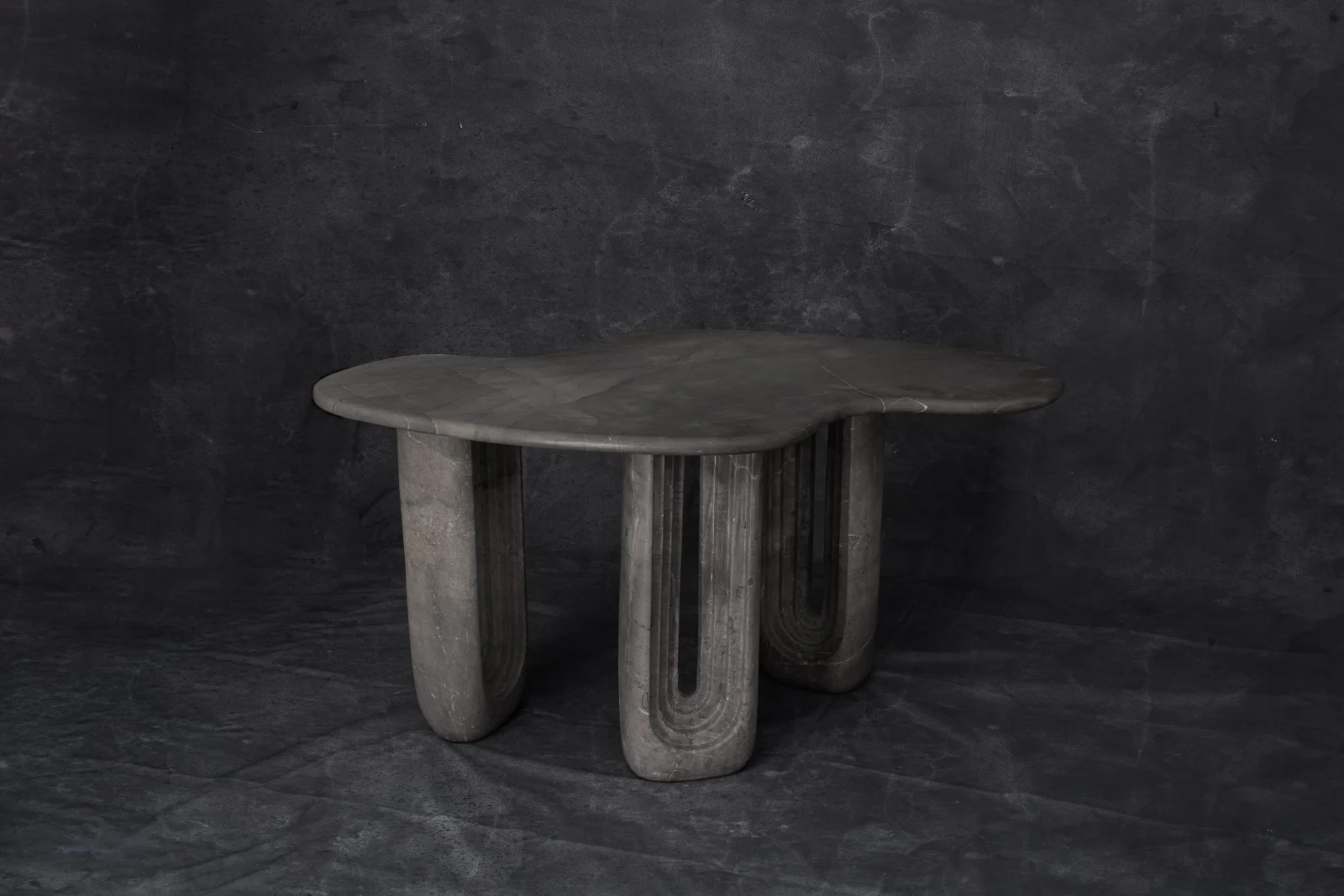
Brutalist Design: The Raw Beauty of Brutalist Furniture
Updated on: September 24, 2026
Nothing hidden, nothing softened, nothing apologized for.
Few styles divide opinion like brutalist architecture. For some, its concrete towers and fortress-like civic buildings are cold and imposing; for others, they are among the most honest buildings of the 20th century. Either way, brutalism has never gone away. In fact, it has moved indoors, where its raw materials and monumental forms now shape some of the most compelling furniture being made today.
Brutalist design in the home is less about concrete for its own sake and more about a way of making: materials shown as they are, construction left visible, forms that feel solid and permanent. This guide explains where the style comes from, how to recognize it and how to live with it, followed by eight pieces of brutalist furniture and lighting by independent designers.
What is brutalist design?
Brutalist design is a style that emerged from architecture in the 1950s and flourished until the mid-1970s. It is defined by raw, unfinished materials (above all concrete), heavy geometric forms and an honest display of how things are built. The name comes from the French béton brut, meaning raw concrete, rather than from the word brutal.
In furniture and interiors, the same principles apply. Brutalist furniture favors stone, cast metal, solid wood and concrete, often left with visible tool marks, casting seams or natural irregularities. Consequently, each piece reads as solid, sculptural and built to last, qualities that sit comfortably alongside mid-century modern and contemporary interiors.
The origins of brutalism
The movement traces back to Le Corbusier, whose Unité d’habitation in Marseille (completed in 1952) left its concrete surfaces rough and unpainted. British architects Alison and Peter Smithson then championed what became known as the New Brutalism, and the critic Reyner Banham gave the idea its name in a 1955 essay.
Initially valued for its utilitarian vision and cost-effective construction, brutalism shaped universities, housing estates and government buildings worldwide. Although many were later criticized or demolished, the best have gained iconic status. As a result, the style now enjoys a revival among designers who value its honesty, weight and permanence.
Key characteristics of brutalist design
Raw, honest materials
Concrete, stone, cast metal and solid wood are shown as they are. Surfaces keep their texture rather than being painted, veneered or polished away. Browse our concrete and stone pieces to see how different materials carry the same idea.
Monolithic, geometric forms
Brutalist pieces tend toward blocky, stacked or carved volumes. They feel heavy even when they are not, and their silhouettes are strong enough to stand alone in a room.
Visible construction
Joints, bolts, casting seams and tool marks are left exposed. Nothing is hidden, so the way a piece is made becomes part of how it looks.
Function first
Ornament is kept to a minimum. Instead, character comes from proportion, material and structure, which is why brutalist furniture often feels timeless rather than trendy.
How to bring brutalist interior design into your home
Start with one anchor piece: a stone coffee table, a cast metal chair or a carved console. Brutalist furniture has a strong presence, so a single piece often does more than a full set. Then balance it with softer elements, such as linen, wool rugs, warm wood and plants, so the room feels grounded rather than austere. In other words, the goal is contrast, not a concrete bunker. For more ideas, see our brutalist seats and brutalist tables guides.
Brutalist tables and consoles
Tables are where brutalism feels most at home: broad surfaces, heavy bases and materials that invite touch. Explore more coffee tables and console tables in the same spirit.
Amazonas Stone Table Low by Studio Ayres
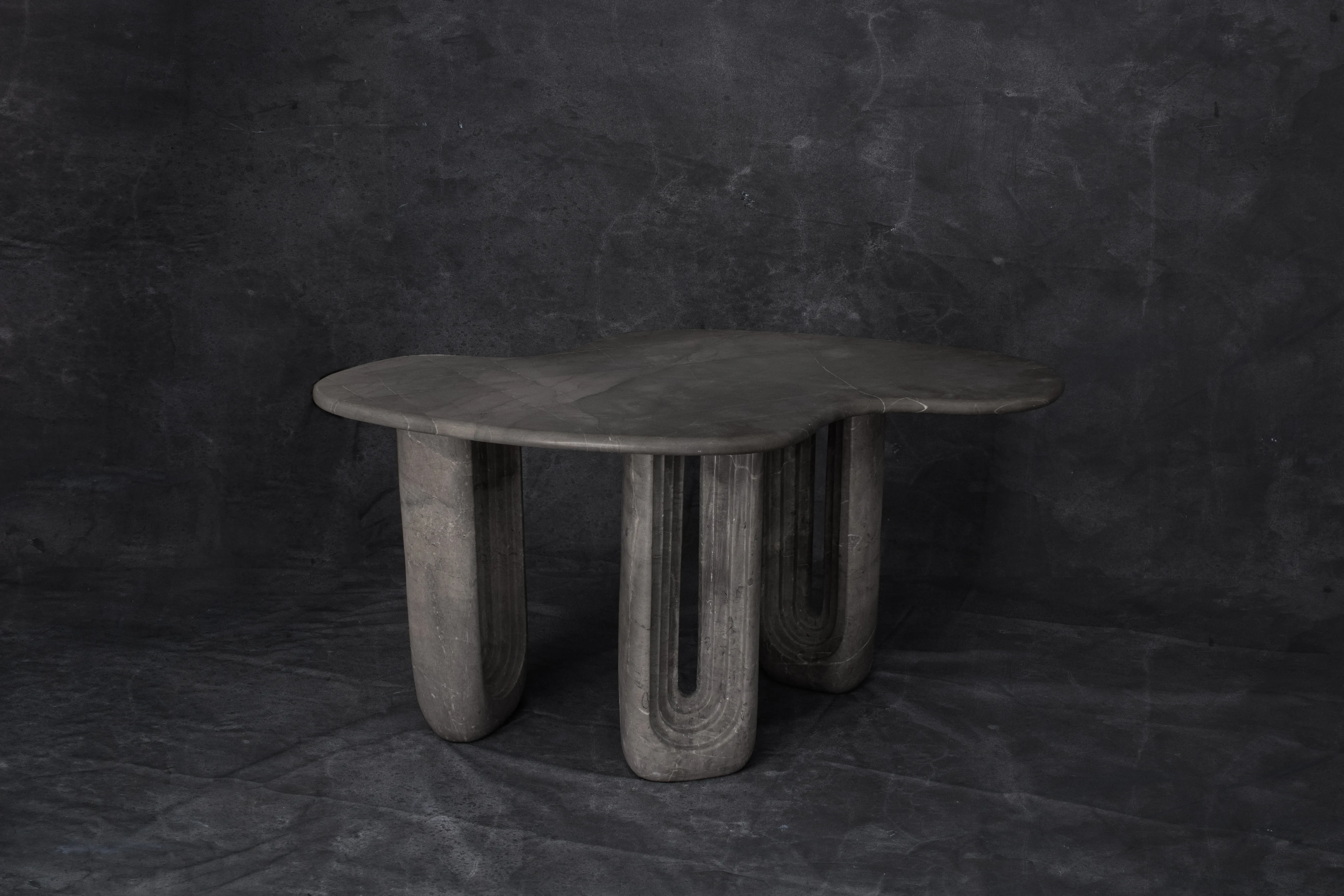
Hand-carved in marble by Mexico-based Studio Ayres, the Amazonas table is part of a collection inspired by the warrior spirit of the Amazon women and their altar, the Amazoneum. Each stone carries its own veining and color. As a result, no two tables are exactly alike, a quality at the heart of Mexican design.
By Studio Ayres
€1.896 incl. tax
Atlantis Cantera Coffee Table by Toro Manifesto
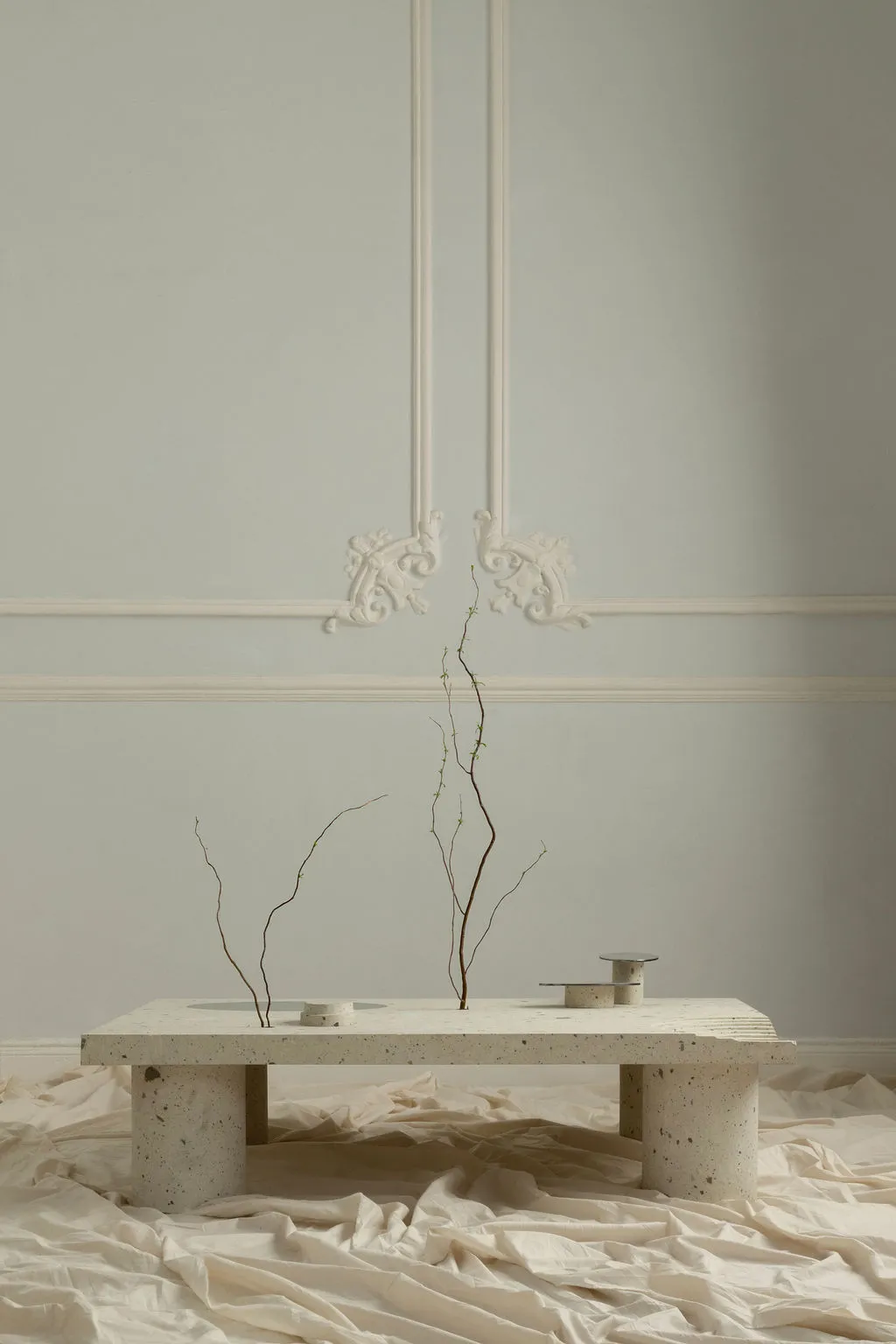
Designed by Montserrat Piña, Atlantis is carved from cantera stone with polished steel details. Its surface features platforms, miniature stairs and hidden receptacles for flowers, like a fragment of a lost city. Notably, it can be made to size or in other stones.
€5.250 incl. tax
Trapeze Tr4 – Travertine Dining Table by DFdesignLab
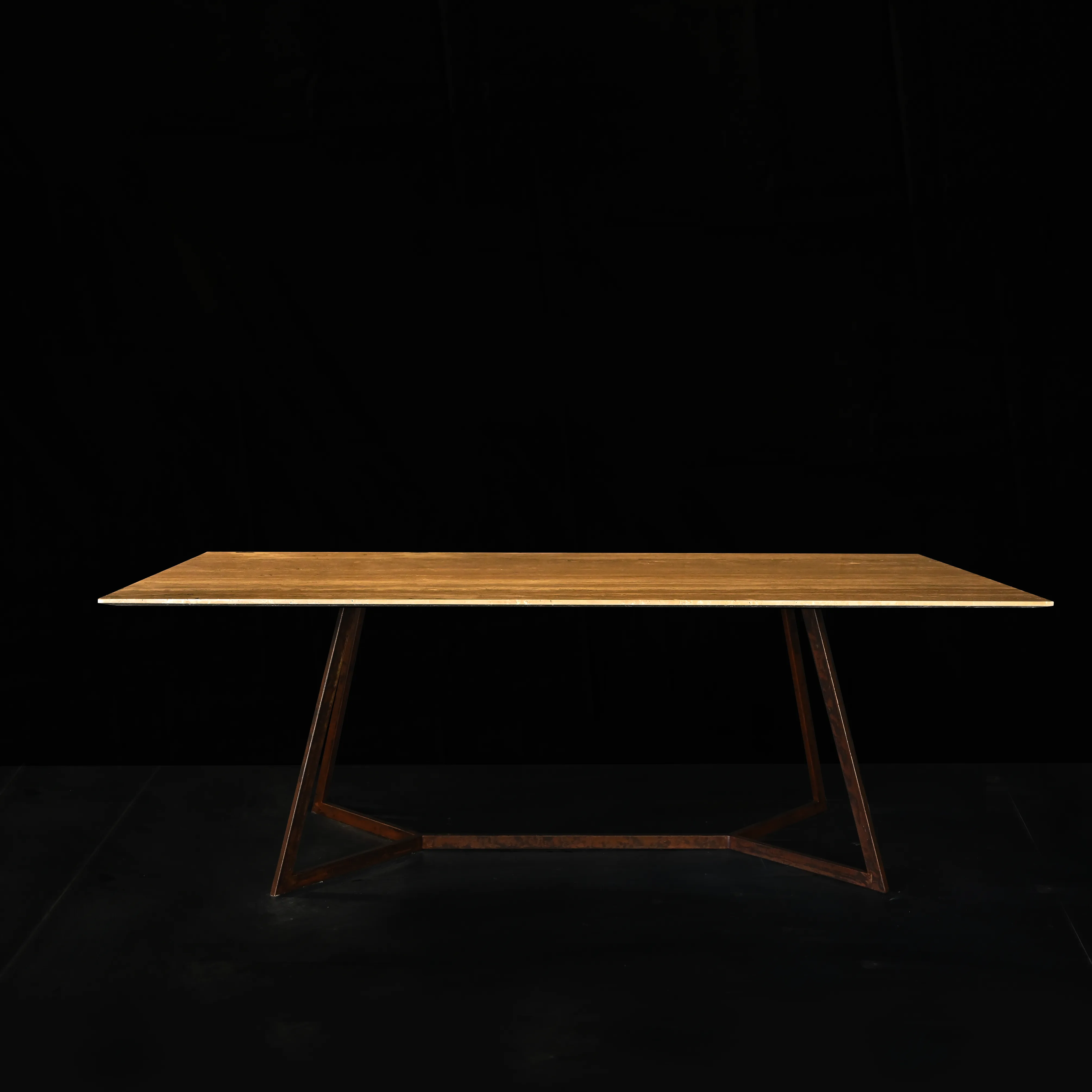
Designed by Nicola Di Froscia, the Trapeze dining table pairs a resined travertine top with steel legs in a Corten effect. The legs are shaped to frame the stone rather than compete with it. Therefore, it brings brutalist weight to a dining table without feeling heavy-handed.
By DFdesignLab
€6.000 incl. tax
Eros Coffee Table by aeny studio
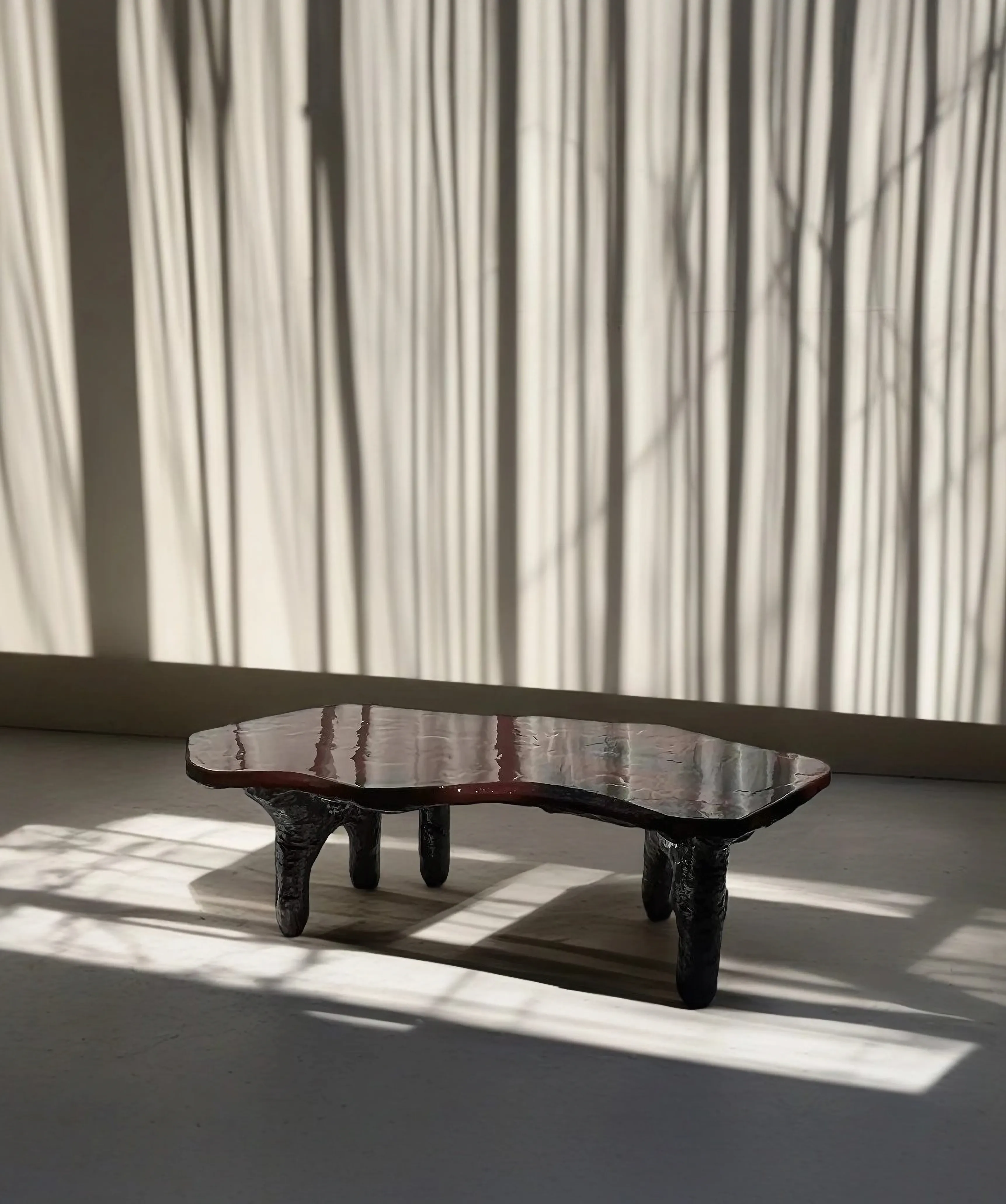
Inspired by the layered forms of native Brazilian art, the Eros table is finished in a deep oxblood tone drawn from urucum seeds. As light moves across its layered surface, new details appear. Moreover, it is signed, dated and customizable in size and color.
By aeny studio
€7.650 incl. tax
Erode Console – Cerused White Oak by Aaron Scott
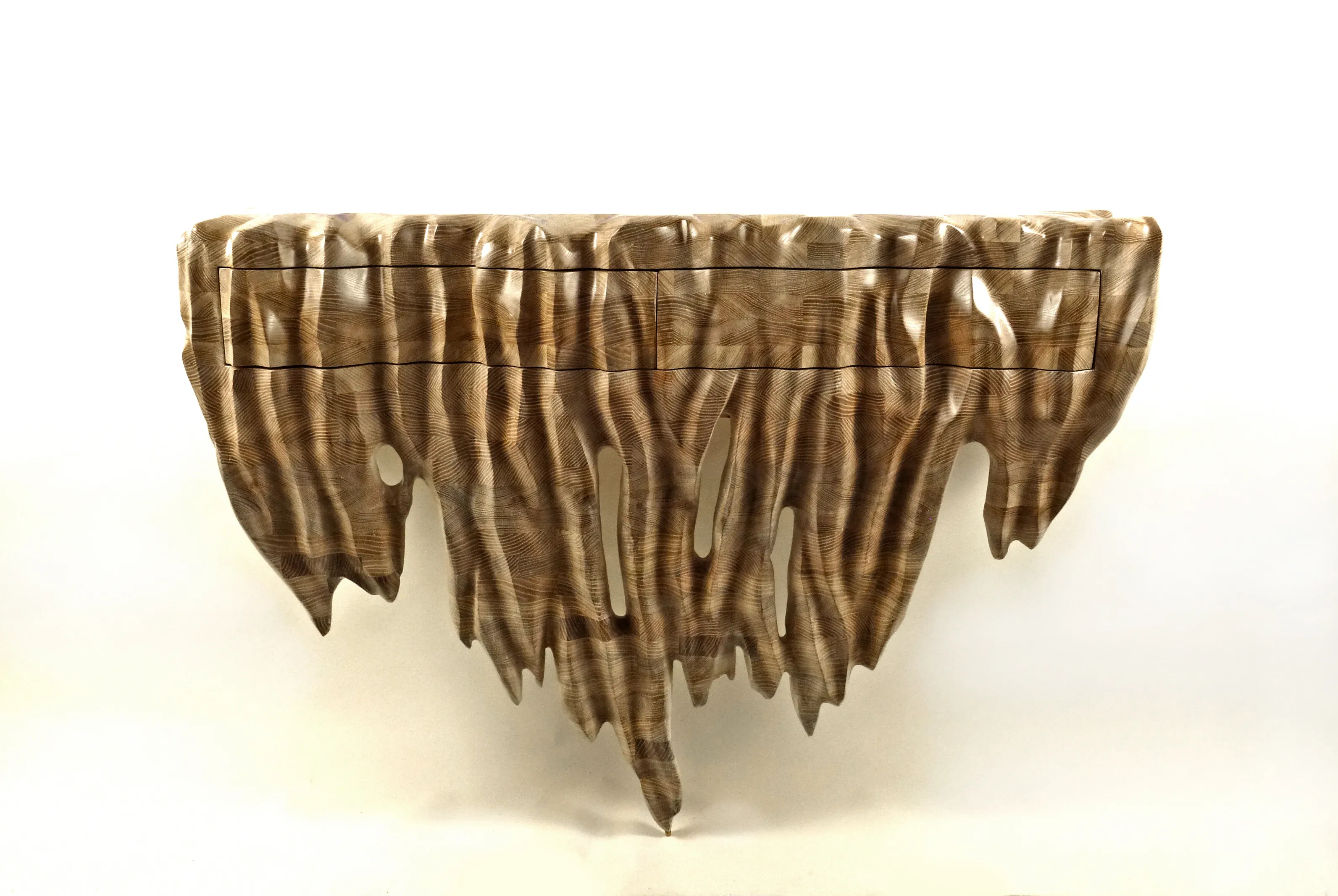
Aaron Scott’s Erode series treats carving like geological erosion: stacked, laminated oak is shaped into an undulating front, like a landscape worn by sand and time. Two drawers disappear into the surface. Indeed, it shows that brutalist design can be carved in wood as convincingly as it is cast in concrete.
By Aaron Scott
€8.650 incl. tax
Brutalist chairs, stools and lighting
Seating and lighting bring the style into daily use. Here, cast metal, steel plate and carved gypsum put process on display. Find more brutalist chairs in our collection.
Aluminum Chair by kyunchul kim
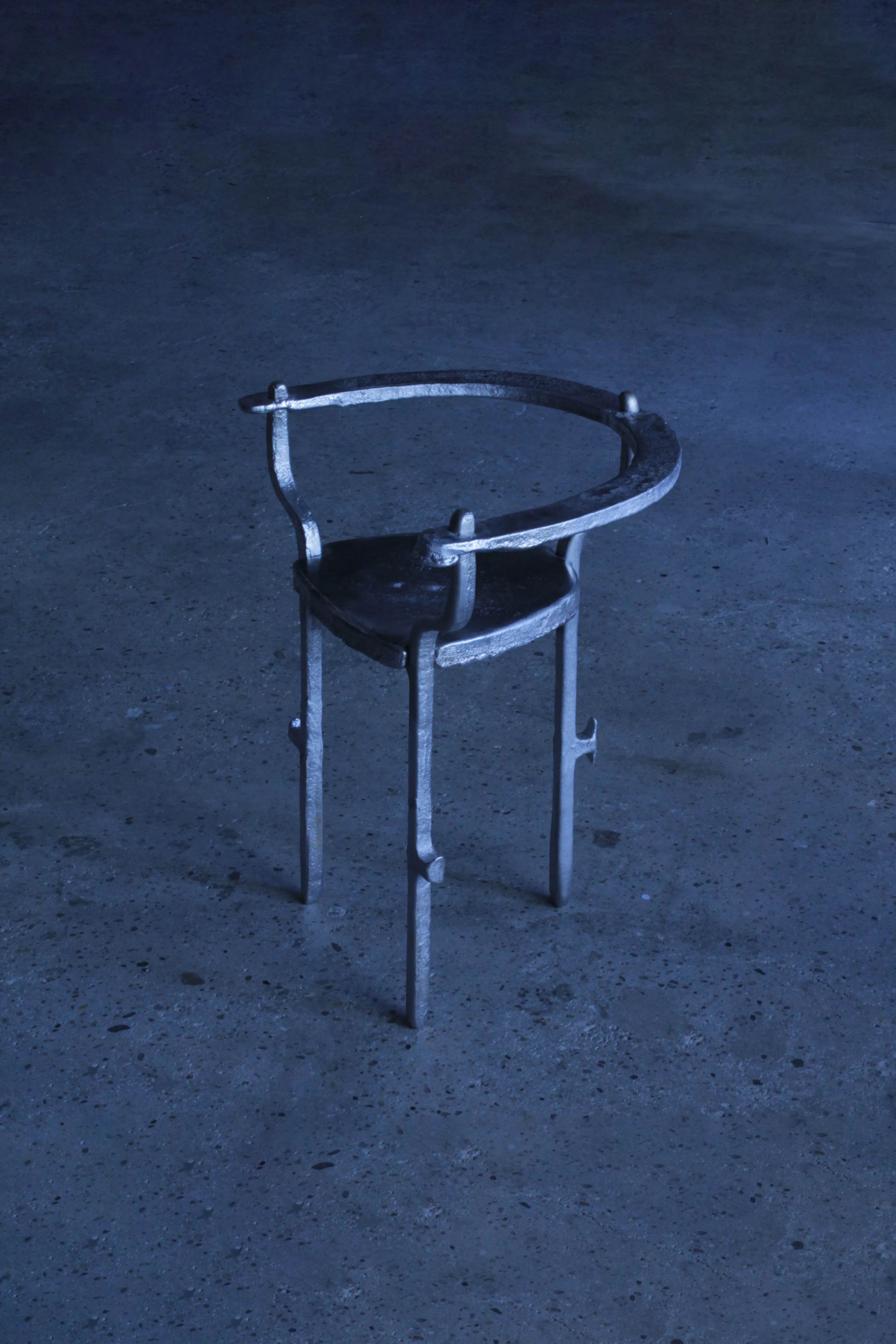
Each element of this chair is sand-cast individually, then joined by pouring molten aluminum directly onto the points of contact. The joints stay visible, records of where metal flowed and cooled. Consequently, the chair is as much a sculpture of its own making as a seat.
By kyunchul kim
€1.300 incl. tax
Wrp-003 Stainless Steel / Cowhide Stool by NAVE
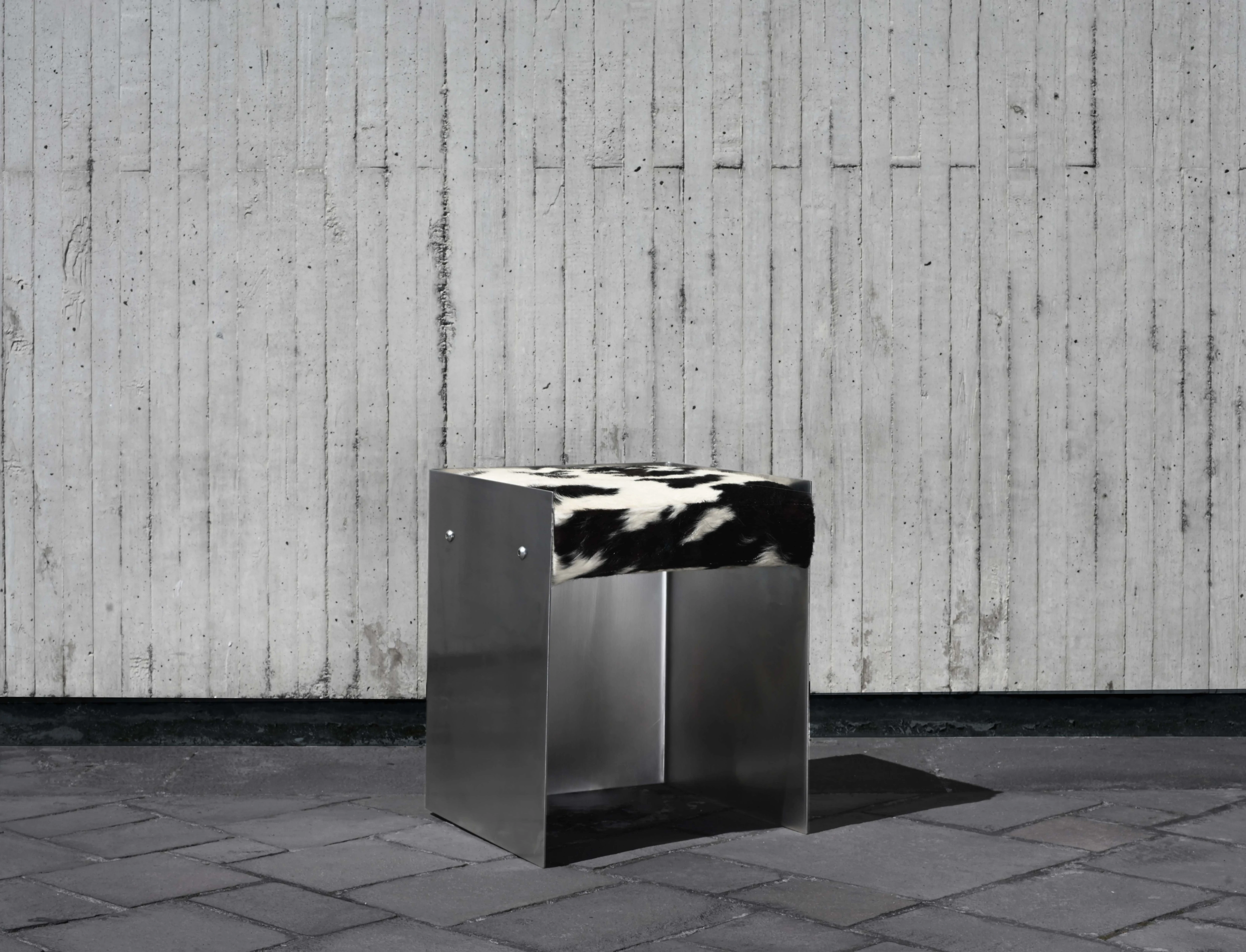
Made in collaboration between NAVE and STUHL, this stool is formed from a single 3mm sheet of stainless steel, bent to hold a cowhide seat. Exposed bolts anchor the cushion to the frame. In other words, nothing is hidden, and the hide is traceable to a small farm in Cotacachi, Ecuador.
By NAVE
€1.200 incl. tax
Lacuna Floor Lamp in Natural Stone by Studio AOAO
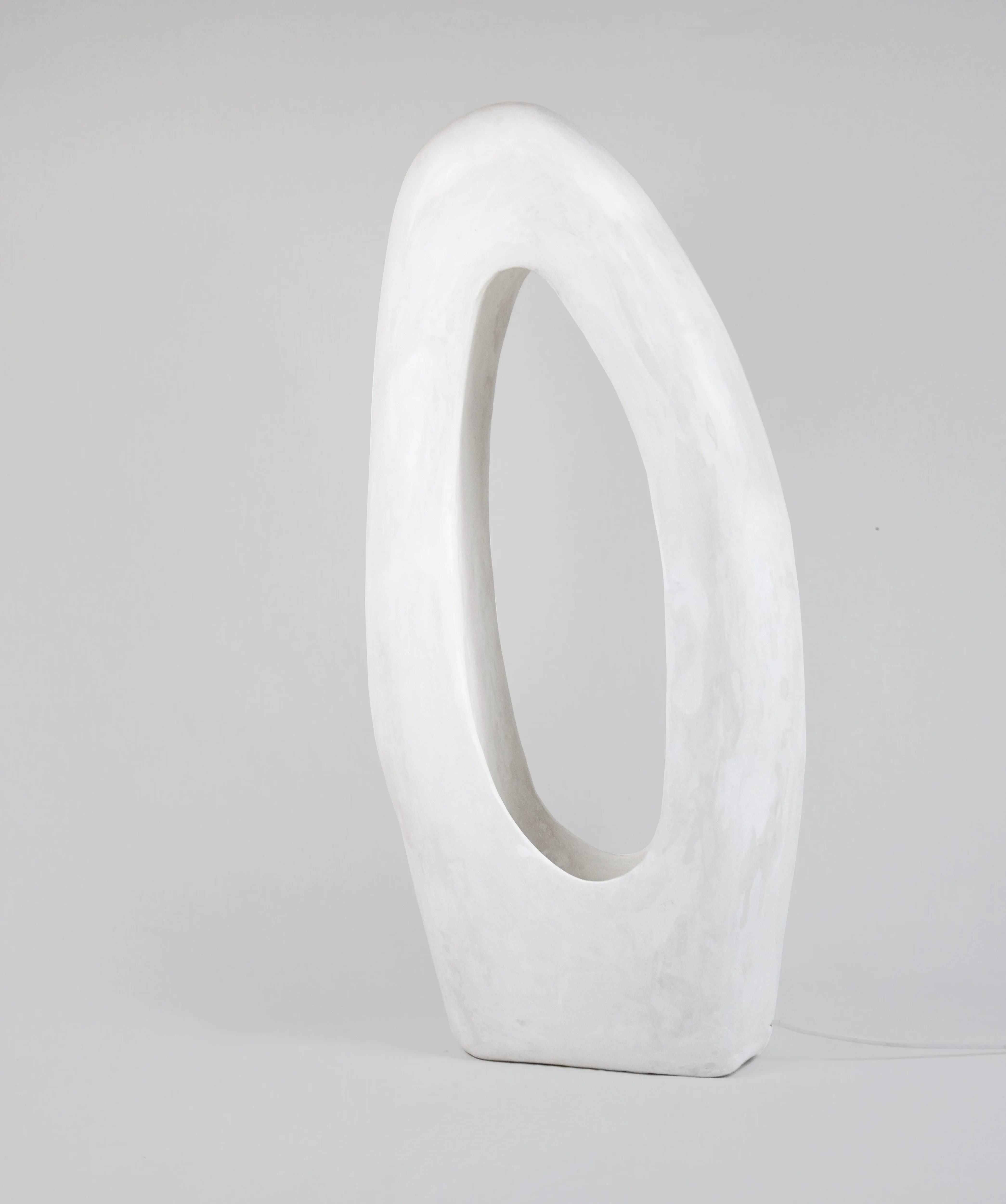
Cast in pigmented gypsum and hand-carved before a matte varnish, Lacuna hides two dimmable lights inside its form, so it glows from within. It belongs to the Living Forms collection, inspired by Henri Bergson’s ideas on intuition. As a result, this floor lamp reads as a monolith by day and a lantern by night.
By Studio AOAO
€4.500 – €8.500 incl. tax
Styling brutalist decor room by room
Living room
A stone or carved coffee table anchors the living room. Surround it with a soft sofa, a wool rug and warm lighting so the space feels inviting.
Dining room
A travertine or stone dining table pairs well with simple chairs in wood or metal. Keep the tabletop sparse so the material can speak.
Entryway
A carved console or a single cast metal stool makes a strong first impression. Add a mirror or sculptural lamp, and leave the rest of the wall bare.
Frequently asked questions
What is brutalist furniture?
Furniture that applies brutalist principles: raw materials such as stone, concrete, cast metal or solid wood, strong geometric or carved forms, and visible construction. Pieces tend to feel heavy, sculptural and built to last.
Why is it called brutalism?
The name comes from the French béton brut, meaning raw concrete, a term associated with Le Corbusier. The critic Reyner Banham popularized “New Brutalism” in the 1950s. It does not refer to brutality.
Is brutalist design still popular?
Yes. Brutalism has seen a strong revival in interiors, driven by interest in raw materials, craft and pieces that feel permanent rather than disposable.
How do you make brutalist interiors feel warm?
Balance hard materials with soft textiles, warm wood, layered lighting and plants. One or two brutalist pieces in an otherwise calm room usually works better than a full brutalist scheme.
What materials are used in brutalist design?
Concrete is the classic material, alongside natural stone, travertine, cast aluminum, steel, bronze and solid or carved wood. Surfaces are usually left textured rather than polished.
What is the difference between brutalism and minimalism?
Both avoid ornament, but minimalism aims for lightness and restraint, while brutalism celebrates mass, texture and visible construction. Brutalist pieces feel heavier and more sculptural.
Honest by design
Brutalism asks us to see materials for what they are and to value what endures. In the home, that translates into furniture with presence and integrity, pieces that age well and tell the story of how they were made. As a result, a single brutalist piece can give a room more character than a houseful of decoration.
