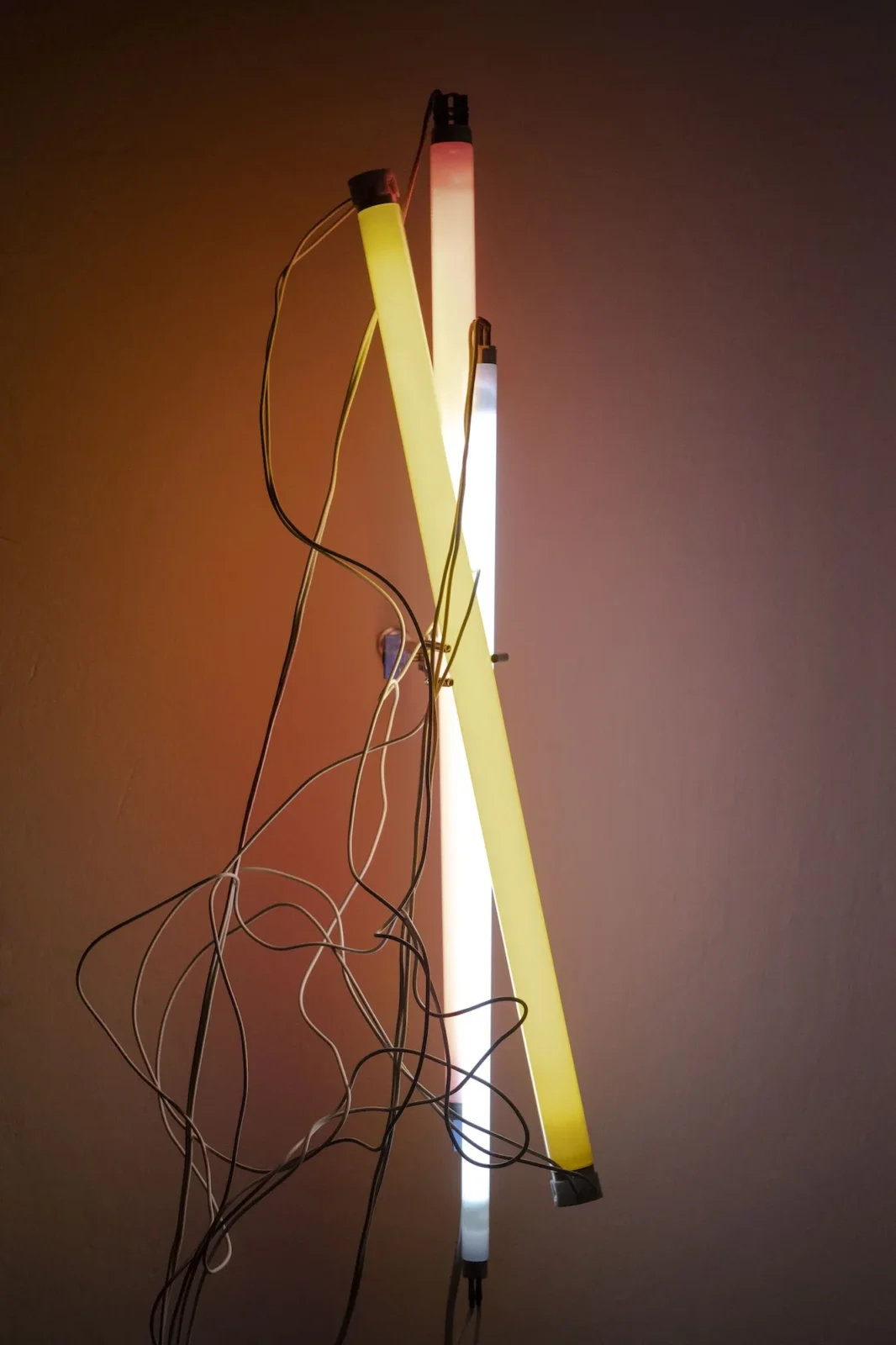
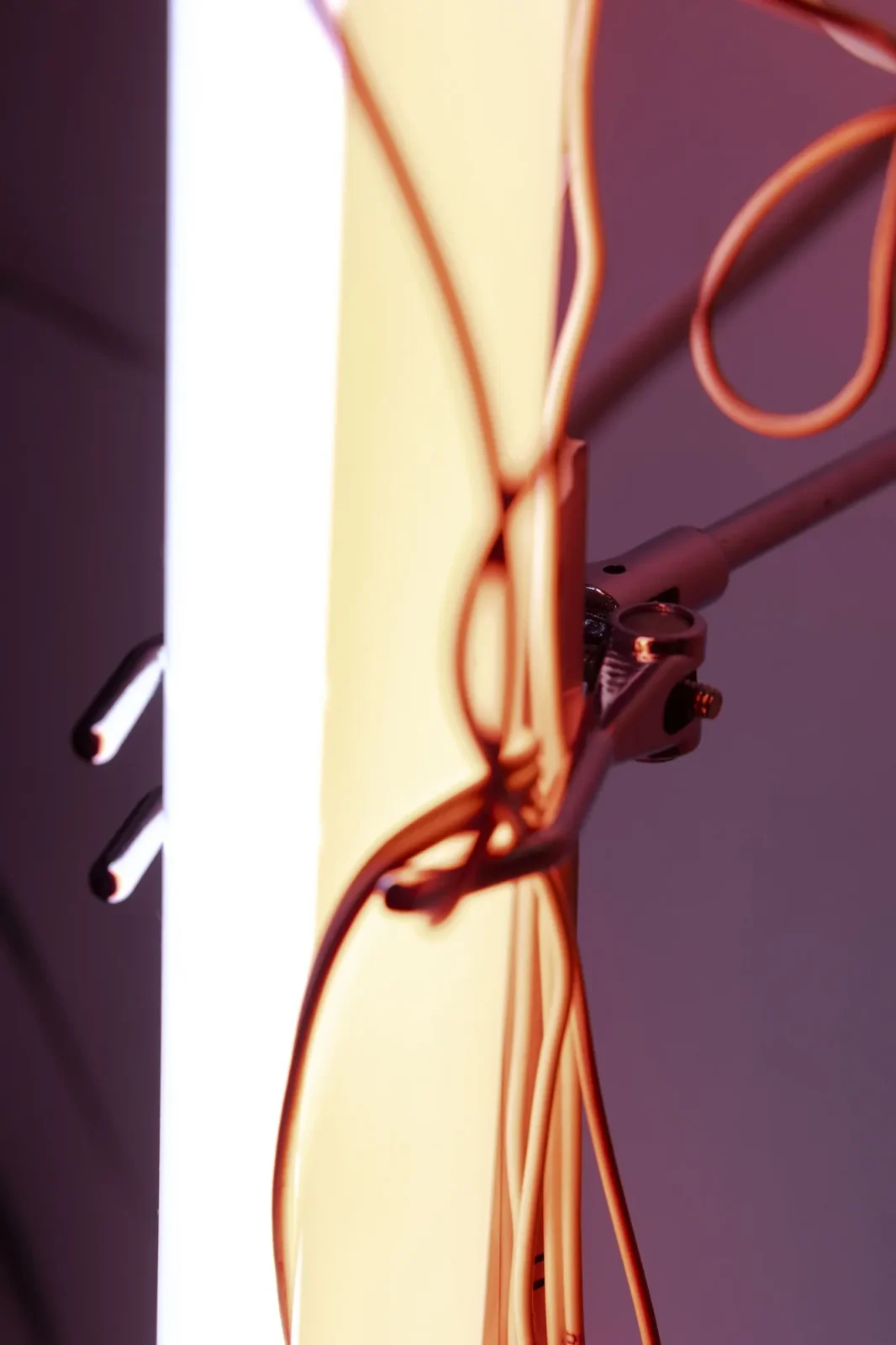
Does this wall lamp include the fluorescent tubes and bulbs?
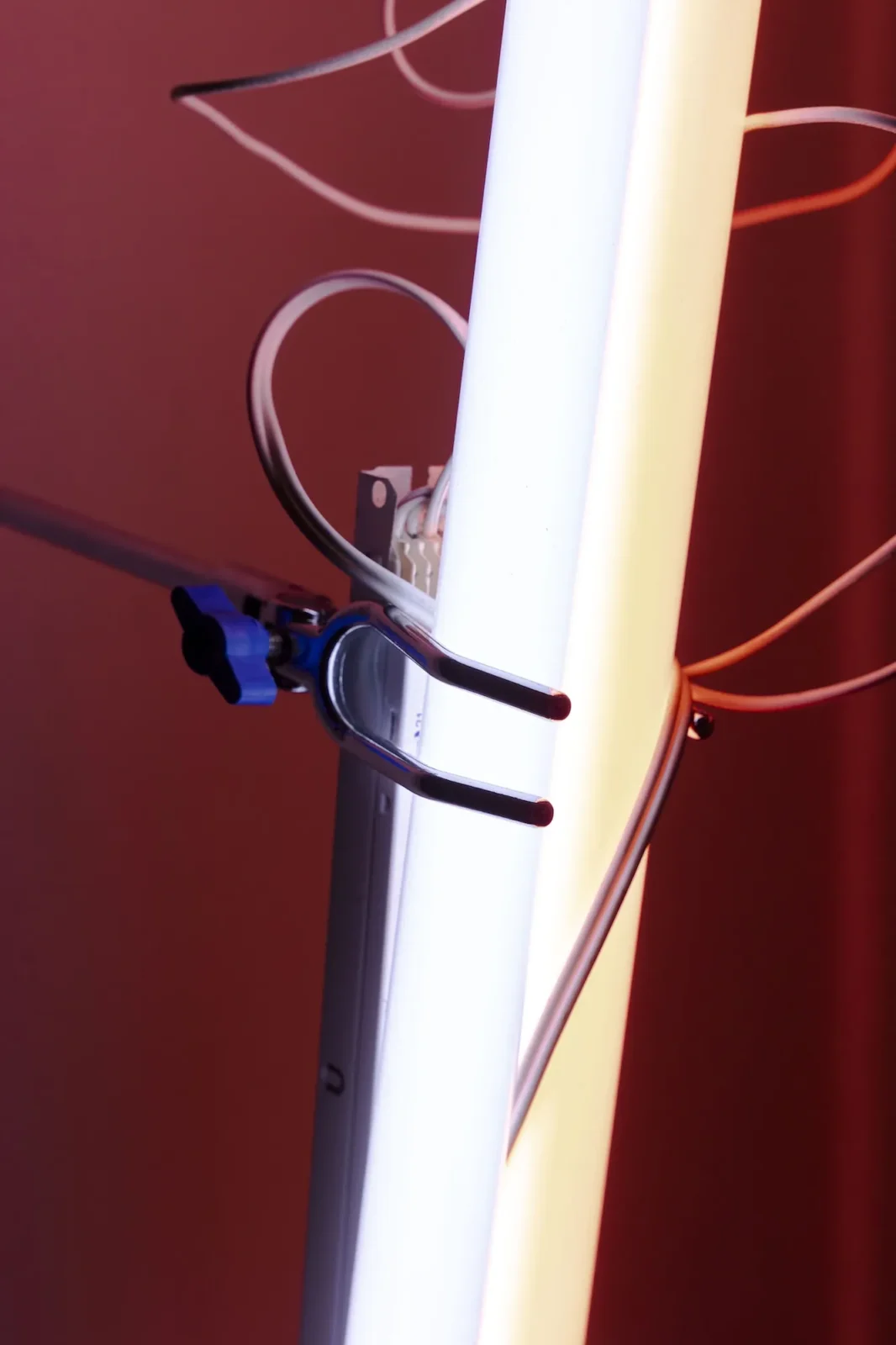
Yes, it comes with three T8 fluorescent tubes in cool white and warm white, clamped to the aluminum profile.
Is this piece made to order, and will it look exactly like the photos?
Yes, it is made to order and part of an open edition, so each piece may differ slightly from the images shown.
Can I customize this lamp?
Yes, customization can be requested — use Chat with the maker on this page to discuss options.
How is this lamp mounted and wired?
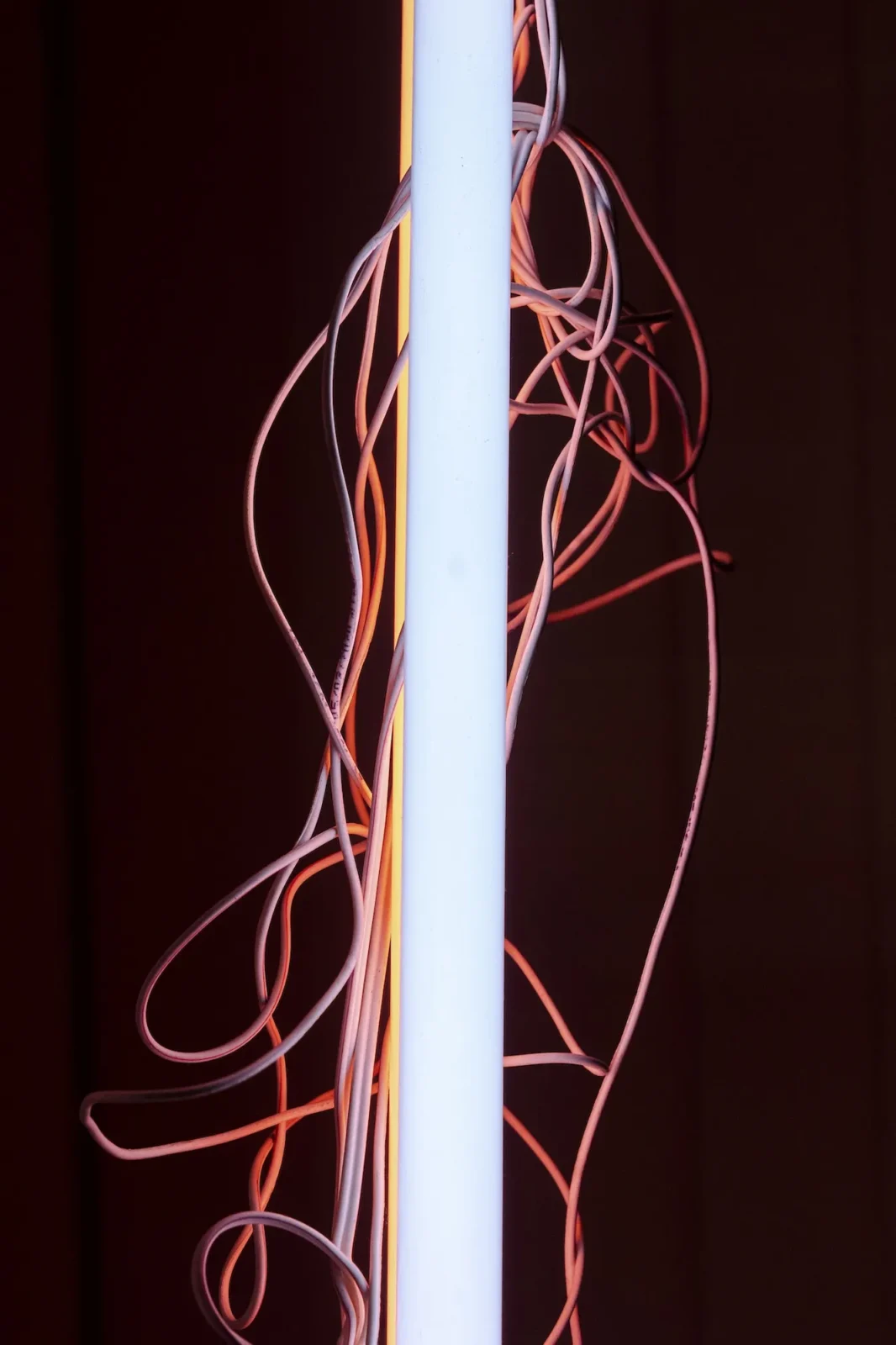
It is designed to be clamped to the wall using laboratory grips attached to an aluminum profile, with trailing wires as part of the design; the maker can confirm exact installation and wiring details — use Chat with the maker on this page.
Can this lamp be adapted for my country's electrical system?
The maker can confirm plug and voltage compatibility for your location — use Chat with the maker on this page.
Can I return this piece if I change my mind?
Made-to-order pieces like this one are excluded from the standard 14-day return policy.
What material is the lamp made from, and how do I care for it?
It is made from metals, using an upcycling and reuse approach; no specific care instructions are provided, so the maker can advise — use Chat with the maker on this page.
How long will it take to receive my order?
This piece usually ships within 1-2 weeks, and shipping is insured and worldwide.
What is a sconce?
A sconce is a light fixture mounted on a wall rather than standing on a surface or hanging from the ceiling. The word originally described a bracket holding a candle or torch against a wall, which is why candle sconces still exist alongside electric ones. Today it covers any wall-mounted light: hardwired, corded or non-electric.
What is the difference between a sconce and a wall lamp?
In practice, very little — the terms are used interchangeably, and most makers use whichever suits the piece. Where a distinction is drawn, "sconce" tends to describe a decorative fixture sitting close to the wall, while "wall lamp" is the broader term that also covers picture lights, swing-arm reading lights and larger projecting fixtures.
How high should wall sconces be hung?
150–165 cm from the floor to the center of the fixture for general wall positions — approximately standing eye level. The exception is any sconce you will use while seated or lying down, which should be considerably lower. If the bulb is visible from where you normally stand or sit, the sconce is too high or too shallow.
How high should sconces be beside a bed?
100–120 cm from the floor, roughly 60–75 cm above the mattress, and 15–25 cm out from the side of the bed. Sit up in bed before committing: light should fall on the page without the source entering your eyeline, and the switch should be reachable without leaning out.
Where should sconces go next to a mirror?
Flanking it, in a pair, with the centers at about 165 cm and 75–100 cm apart, so light crosses the face evenly from both sides. This is the arrangement that eliminates shadows under the eyes and chin — a single fixture above a mirror does the opposite.
Do you have plug-in sconces, or can I avoid hardwiring?
Some pieces are supplied with a visible cord intended to run to a socket, which is the usual solution for renters and for walls that cannot be chased. Most, however, are designed to be hardwired. The wiring method is stated on the product page — ask us before buying if a corded version is essential, as it is not something every studio offers.
Are there battery-operated or rechargeable wall sconces?
Very few, and none as a standard feature of this collection. Cordless wall lighting is dominated by mass-produced fixtures, whereas these are handmade pieces built around a wired light source. If you need a genuinely cordless solution, a rechargeable table lamp on a shelf or a wall-mounted candle sconce will serve you better than adapting a hardwired piece.
Do you have peel-and-stick or no-drill sconces?
No. Adhesive mounting is only viable for very light, hollow fixtures, and these pieces are made in stoneware, glass, brass and solid wood — they need a fixing appropriate to their weight and to your wall type. Product pages list weight; check it against your fixings, especially on plasterboard.
Do you have candle sconces?
A small number of designers make non-electric wall pieces for candles, which need no wiring at all and can go anywhere a fixing will hold. They give a very different light from an electric sconce and suit dining walls, entrances and fireplaces. Our candleholders collection includes related wall and tabletop pieces.
Can I use a sconce in a bathroom?
Only with an IP rating appropriate to the zone, and the rules differ by country — the area around a bath or shower has stricter requirements than the wall beside a mirror in a well-ventilated room. These are handmade decorative fixtures intended for dry interior use, so ask our curation team before specifying anything for a bathroom.
Do sconces come with their own switch?
It depends on the piece. Hardwired sconces are typically operated from the room's wall switch, which means planning the circuit in advance. Some designs include an integrated switch on the body or an inline switch on the cord — worth confirming if you want to control the sconce independently, particularly beside a bed.
Can I get an adjustable or swing-arm sconce?
A few designs pivot or rotate, which is useful for reading in bed or lighting artwork precisely. Most pieces here are fixed, since the form is the point — the light direction is set by the shape of the shade rather than by a mechanism. Filter by piece and check the description, or ask us for the currently available adjustable designs.