
Modern Side Tables: No Small Parts, Only Smart Design

Almost by definition, side tables are not meant to take center stage. Not lead actors, but certainly supporting ones, again, quite literally by definition. Award season has just begun, and the award of best supporting actor and actress often garner as much excitement and PR as the award for best lead actor and actress. They exist close to the action, beside sofas, chairs, beds, there for what the scene requires. Their presence is felt through use rather than spectacle.
Because they operate in this supporting role, side tables have a unique freedom to take risks in material, proportion, or form. Designers often use them as places to experiment, knowing the piece will move easily through a space and adapt as the setting changes. A modern side table might feel sculptural, minimal, or eclectic, but it always responds to use. It has to live close to the body, close to the hand, close to daily routines. Below, we explore modern side tables through how they are used, styled, and lived with, highlighting pieces that balance function, form, and presence.
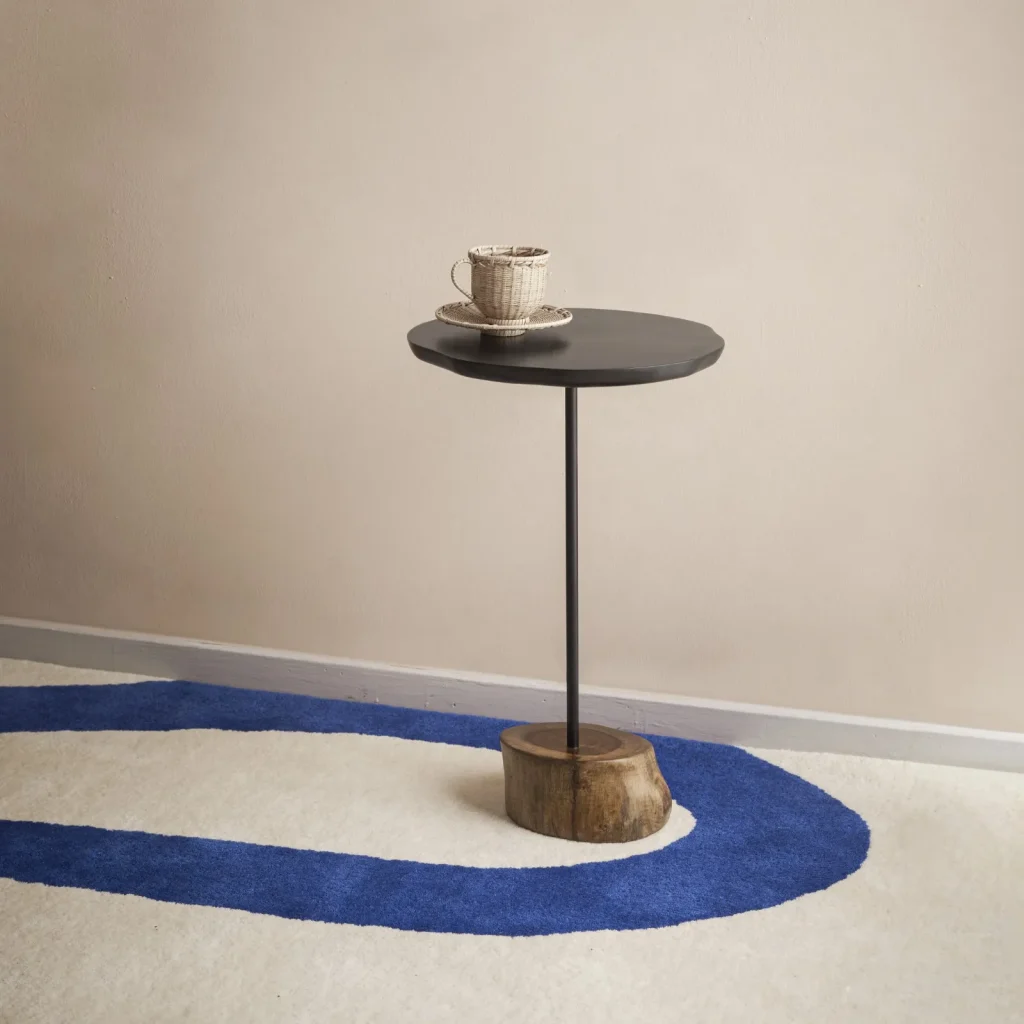
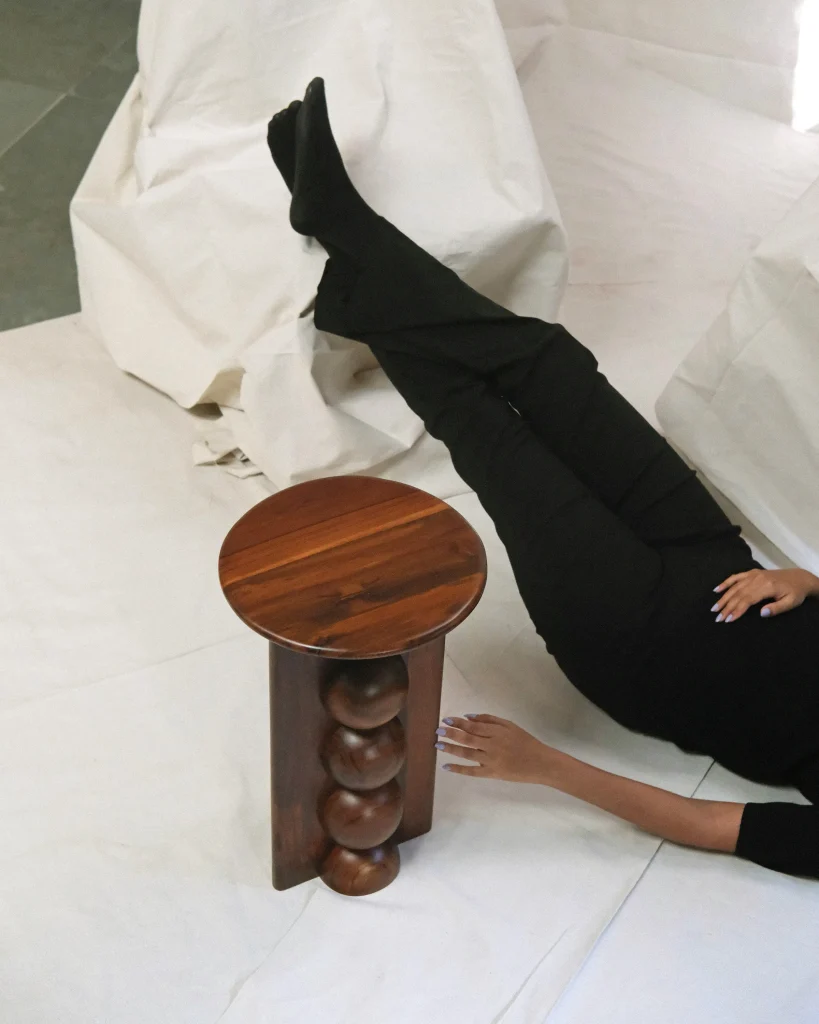
Side Tables: Small Roles, Big Responsibility
A modern side table succeeds when it feels considered from every angle. Height matters. Weight matters. So does how the piece interacts with seating nearby. The best designs manage to feel purposeful without calling attention to themselves, adding structure to a space while remaining easy to live with.
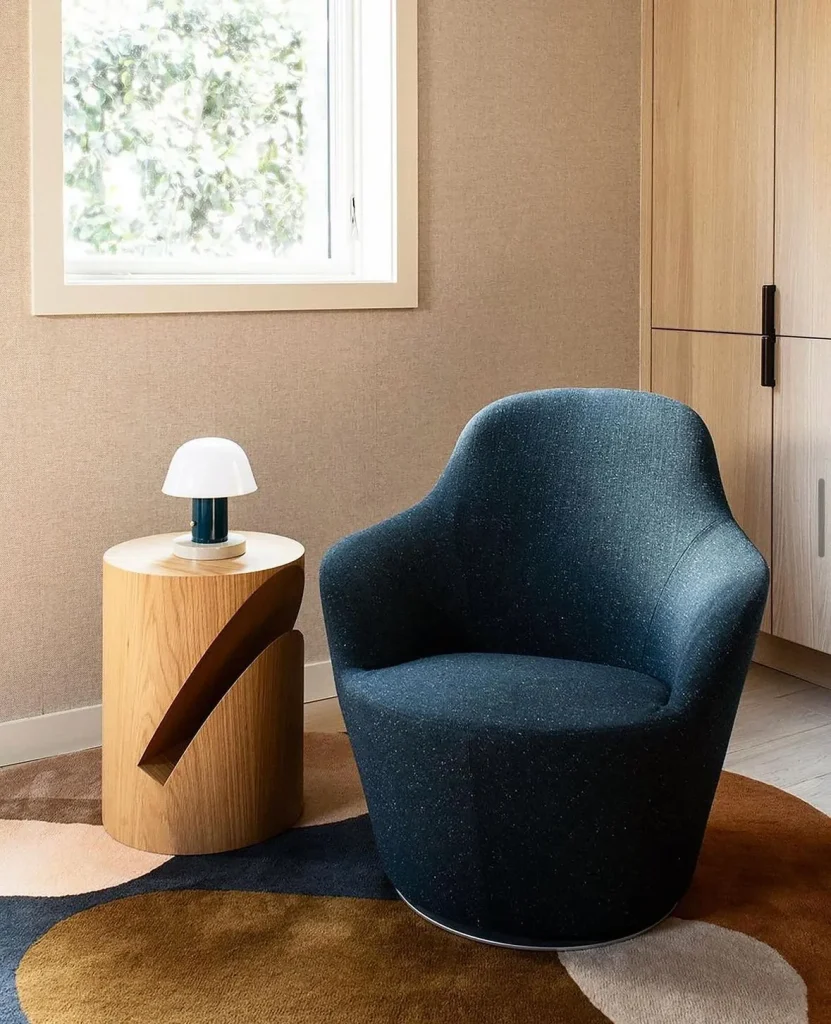
Modern Side Tables: Supporting Cast for Everyday Living
Unlike larger furniture, side tables rarely stay put. They shift from living room to bedroom, from beside a sofa to next to a reading chair. This mobility makes them ideal places for designers to play with material, form, and finish, creating pieces that adapt easily while still offering a point of visual interest.
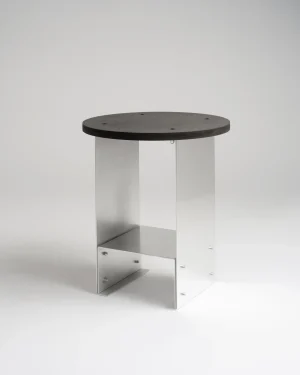
Domino Stainless Steel Side Table by Ford Bostwick Studio
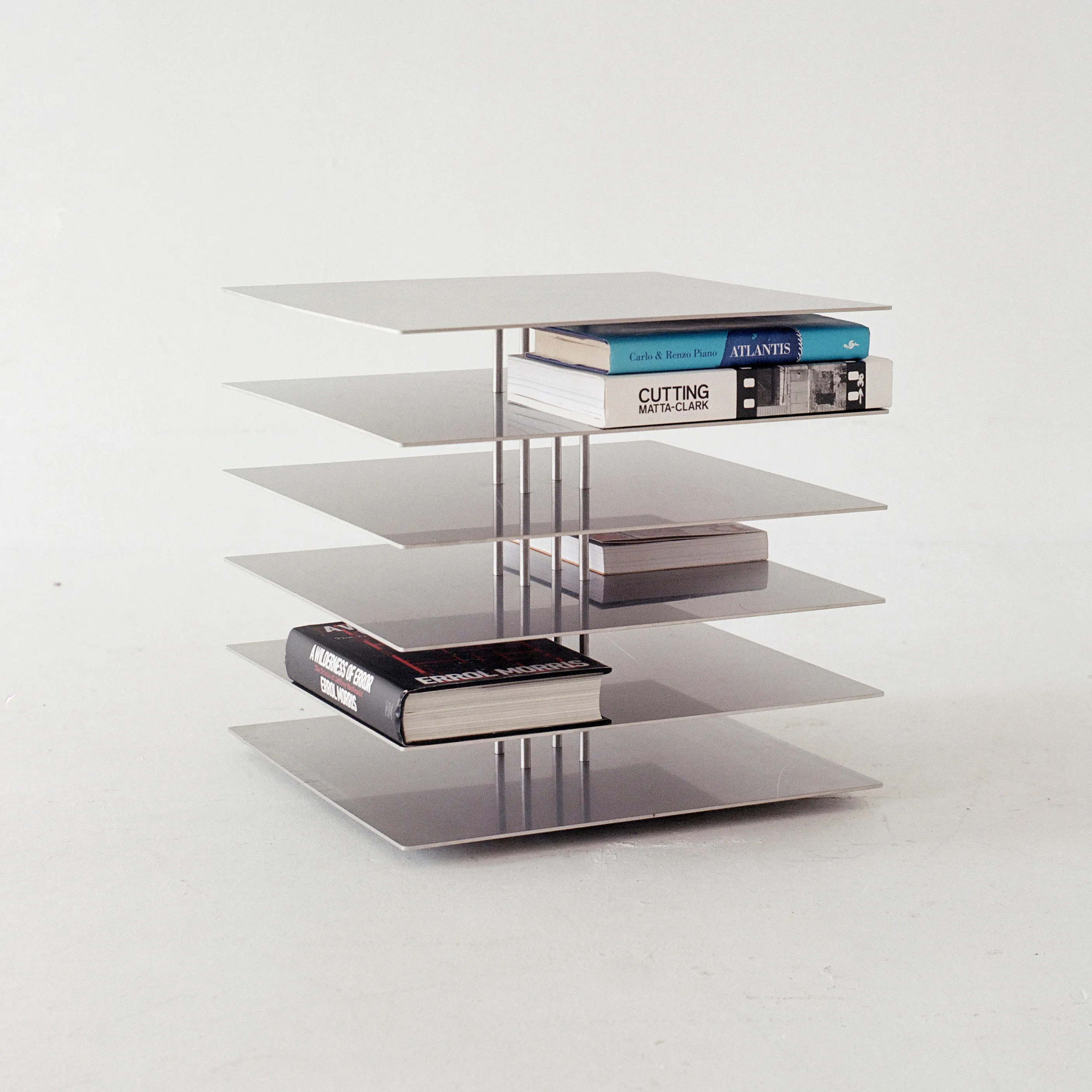
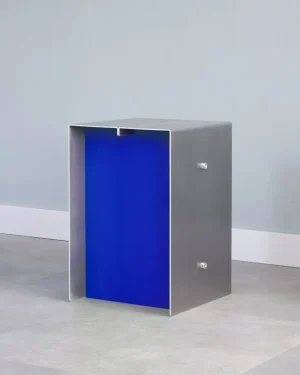
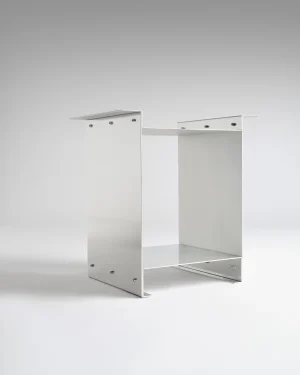
The Domino Side Table by Ford Bostwick Studio references Le Corbusier’s Dom-Ino House through a precise composition of stainless steel plates that appear to float in space. Reflective surfaces shift with light and movement, at times asserting structure, at others nearly disappearing, creating a side table that feels architectural, minimal, and quietly dynamic.
Zangbeto Side Table – Neutral by Salù Iwadi Studio
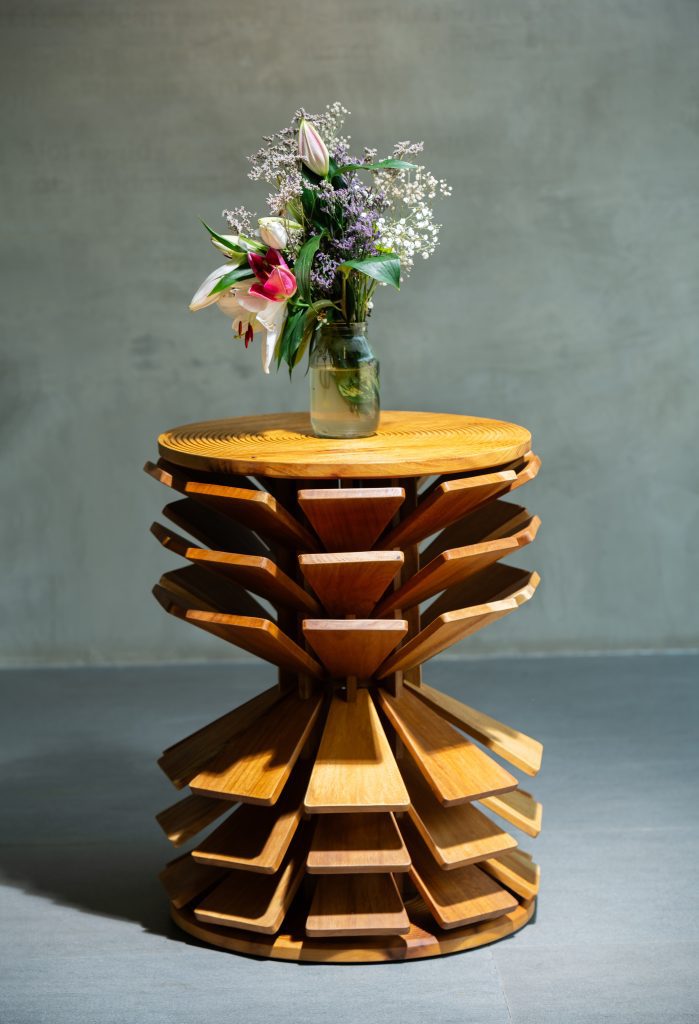
This wooden side table draws from the Zangbeto masquerade of Benin, a tradition tied to guardianship, protection, and communal life among the Ogu people. The form translates movement and symbolism into solid structure, turning ritual reference into functional design while carrying a clear cultural narrative into a contemporary context.
Paws – Cast Aluminum & Brass Side Table by LMNOH
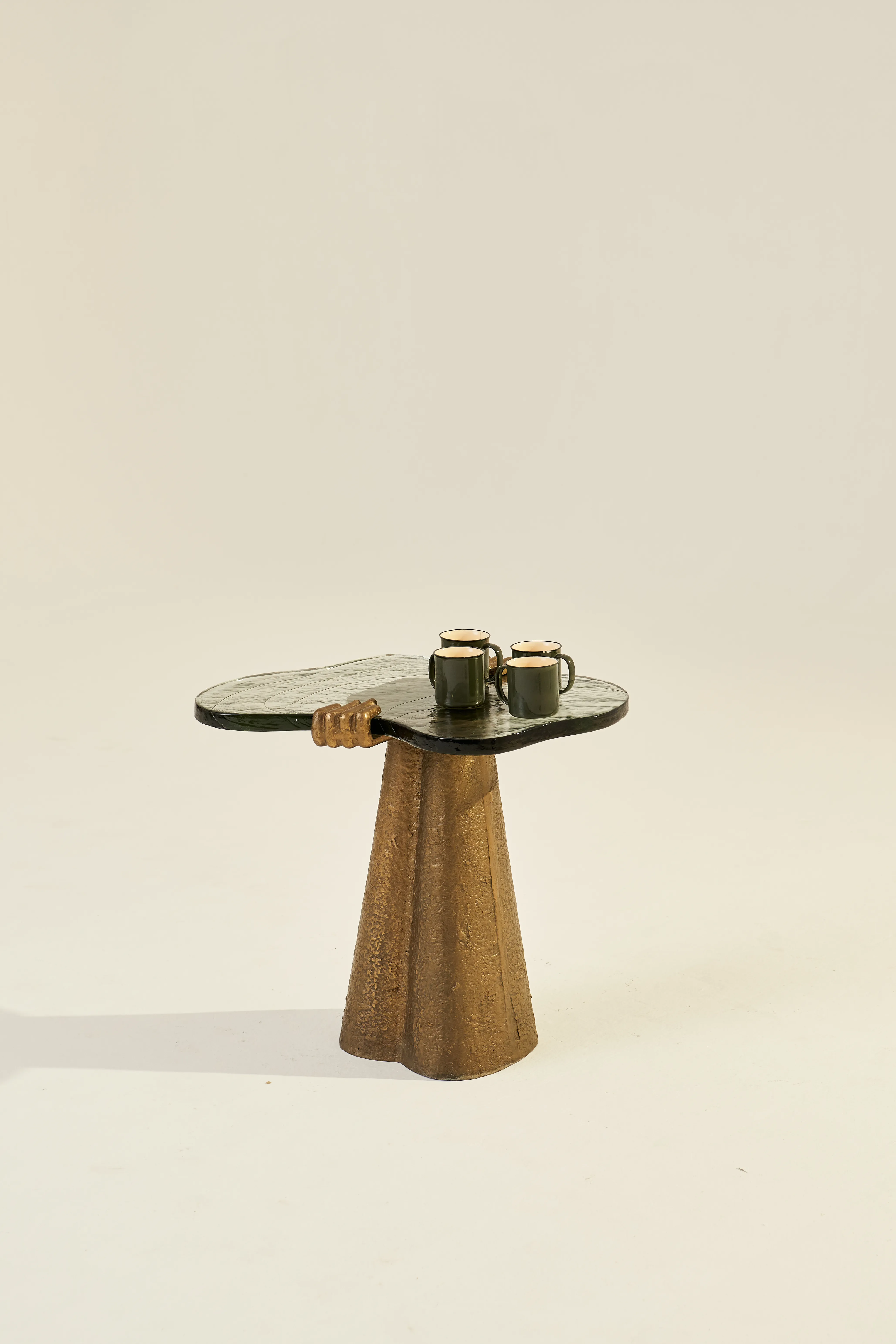
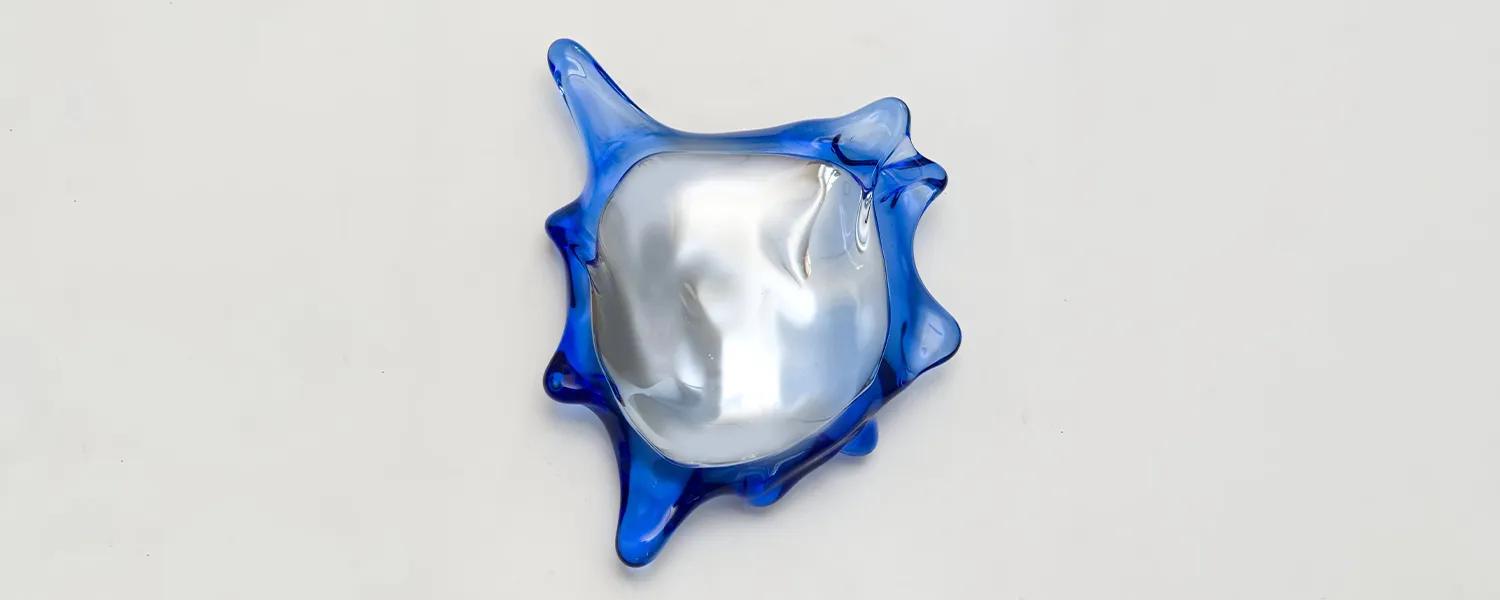
This limited-edition side table by LMNOH pairs a raw aluminum base with a heavy cast glass top supported by sculptural glass “paws.” The contrast between industrial metal and tactile glass gives the piece a bold, physical presence while keeping the form playful and deliberate.
Cork X | Table 01 – Cork / Metal Side Tables by Robert Megel
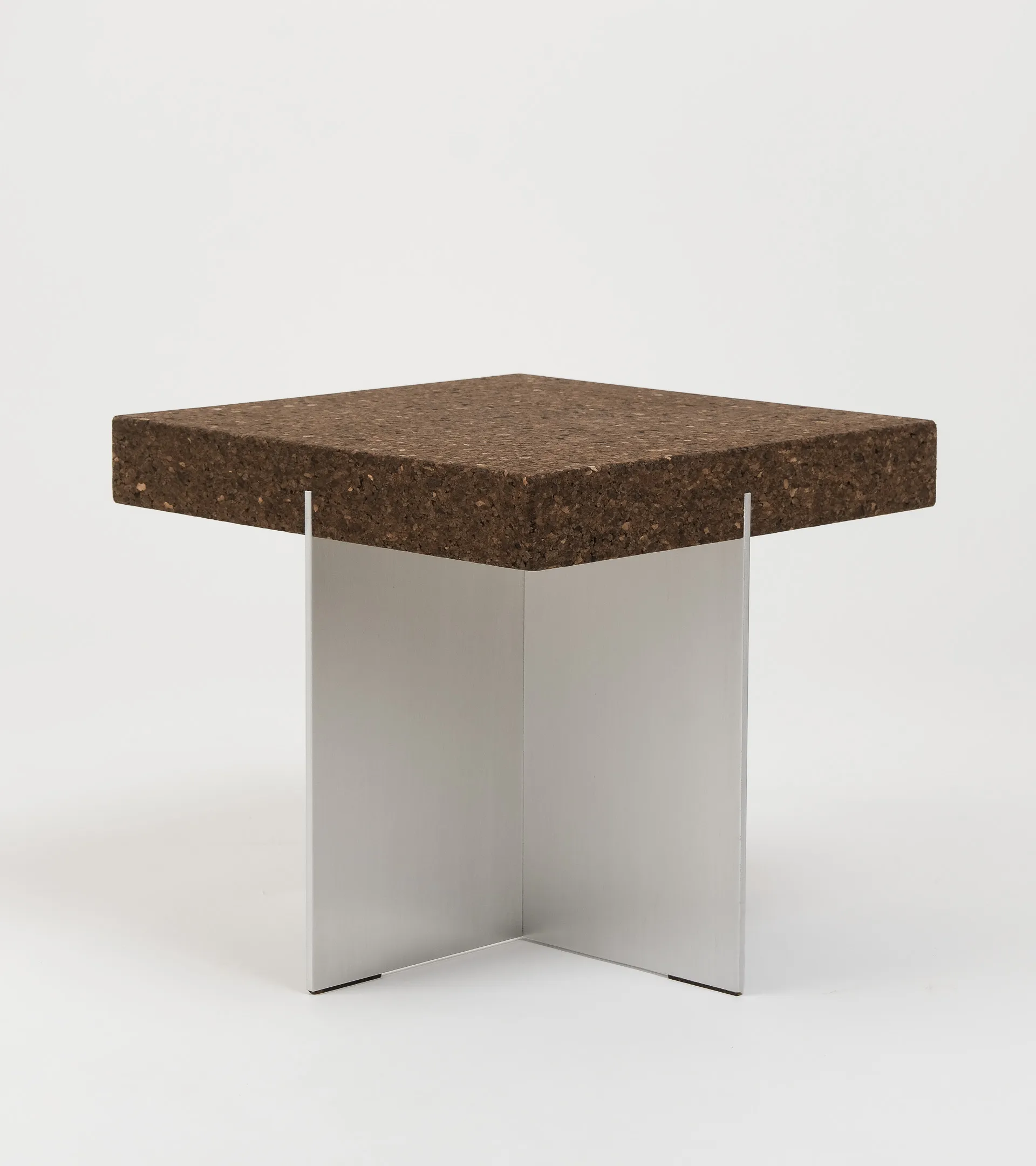
Table CX-TA-01 by Robert Megel pairs baked Portuguese cork with satin-finished aluminum in a restrained, material-driven composition. The grooved cork brings warmth and tactility, while the filigree aluminum structure adds precision and visual lightness. Together, the contrast highlights function, balance, and the expressive potential of simple joinery.
Liquid – Brass & Steel Side Table by FURN OBJECT
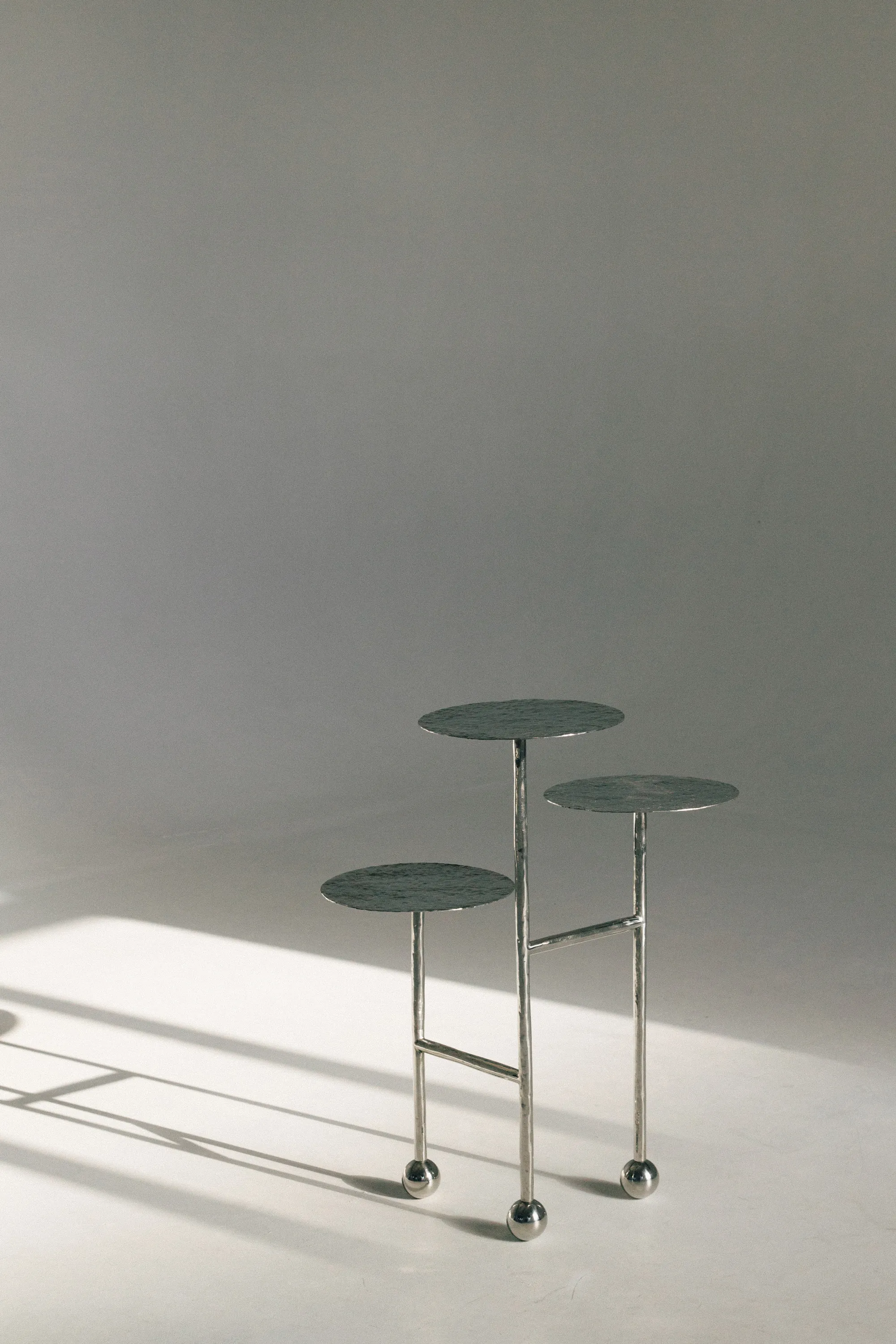
Inspired by water and the malleability of metal, the Liquid Table explores reflection, texture, and movement through a fluid geometric form. Hand-chased using a traditional metalworking technique, its surface shimmers like light on water, referencing the Black Sea near Odesa. Designed to function as a side table, coffee table, or pedestal, it moves easily between roles while reading as both furniture and sculptural object.
Inter – Side Table by Ieva Gudelaitytė
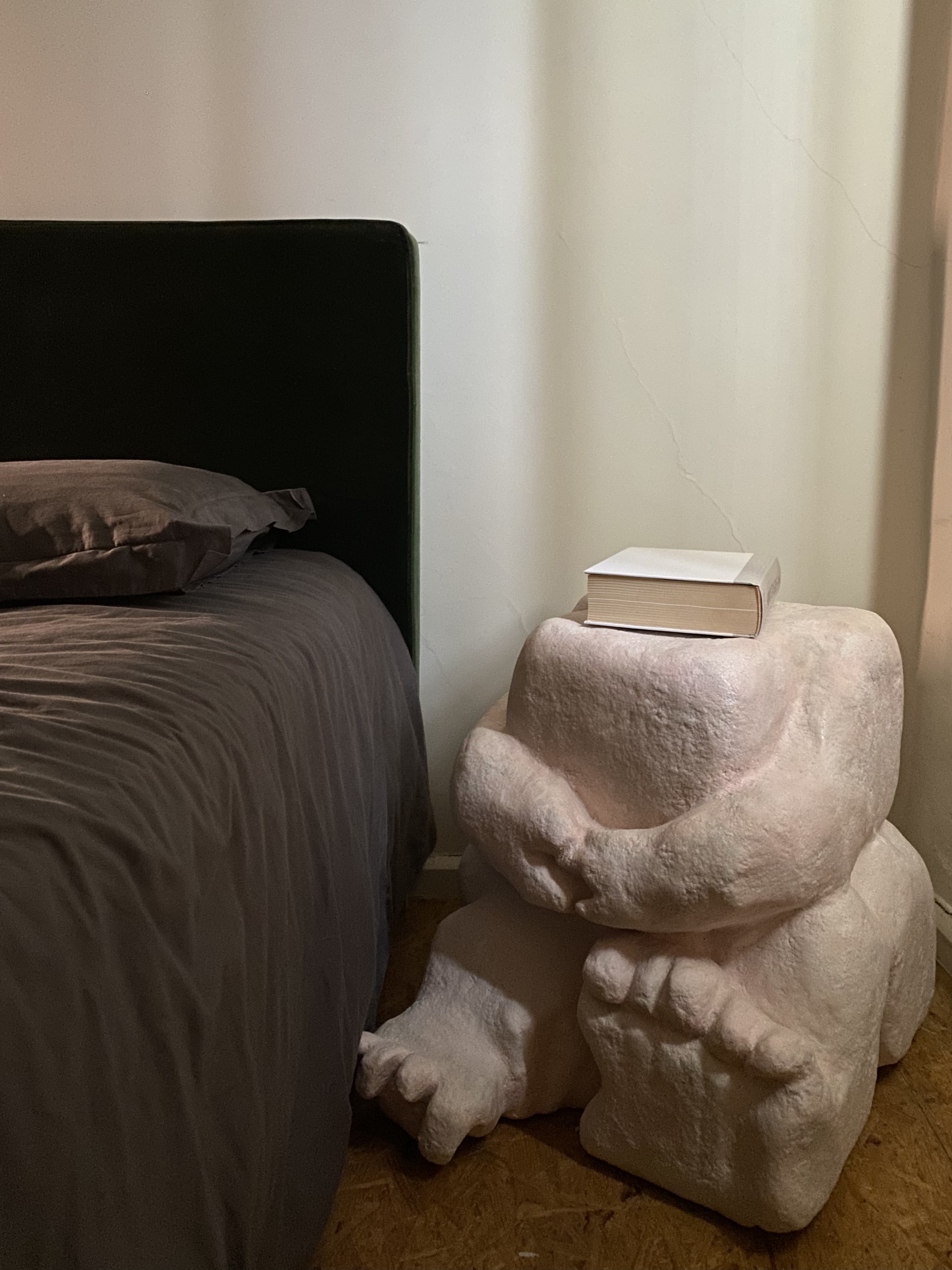
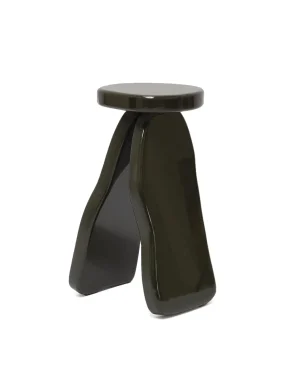
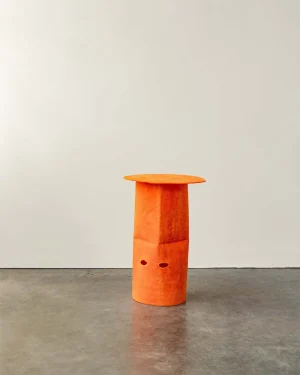
Inter by Ieva Gudelaityté draws on personal memory and myth, translating totemic figures with distorted proportions into a functional yet symbolic object. Rooted in ancient beliefs where unusual bodies signaled spiritual power or revelation, the piece treats the body as both vessel and surface. Furniture becomes a prompt for reflection, where form carries meaning beyond use.
Pupa – Woven Natural Fiber Side Tables by LØRDAG & SØNDAG
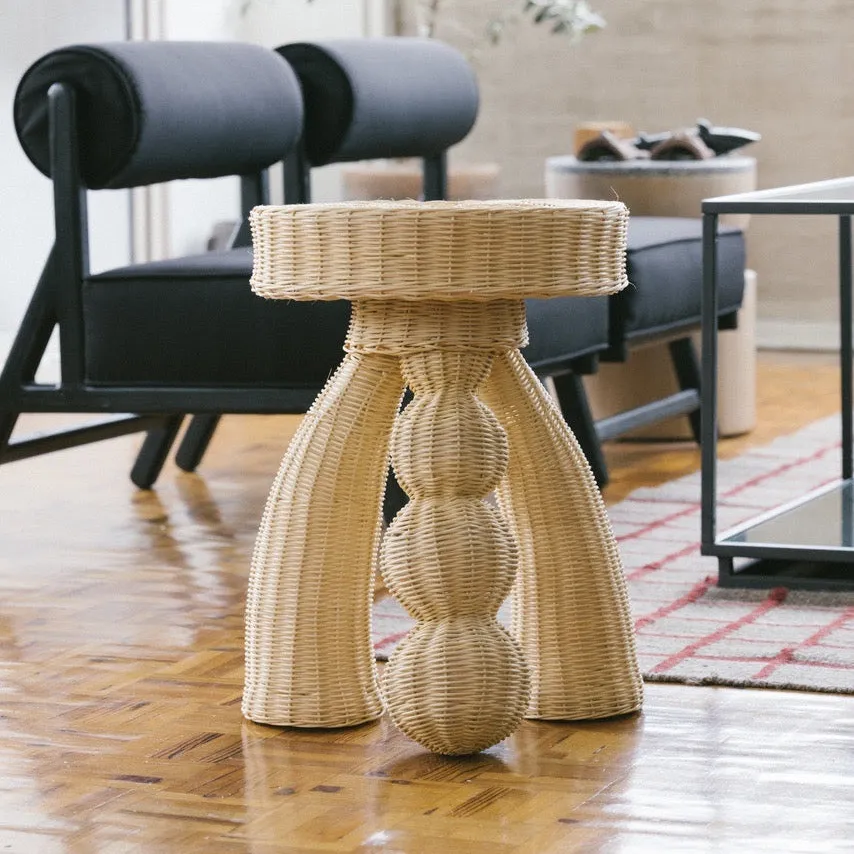
The Pupa Side Table by Lørdag & Søndag brings together contemporary design and traditional Mexican weaving, handcrafted by artisan Alberto Cruz Mejía in Querétaro. Its woven wicker body rests on sculptural legs inspired by stages of metamorphosis, with a concealed metal structure providing strength beneath the organic surface. The result feels tactile, symbolic, and grounded in process.
Stainless Steel Side Table by Undress House
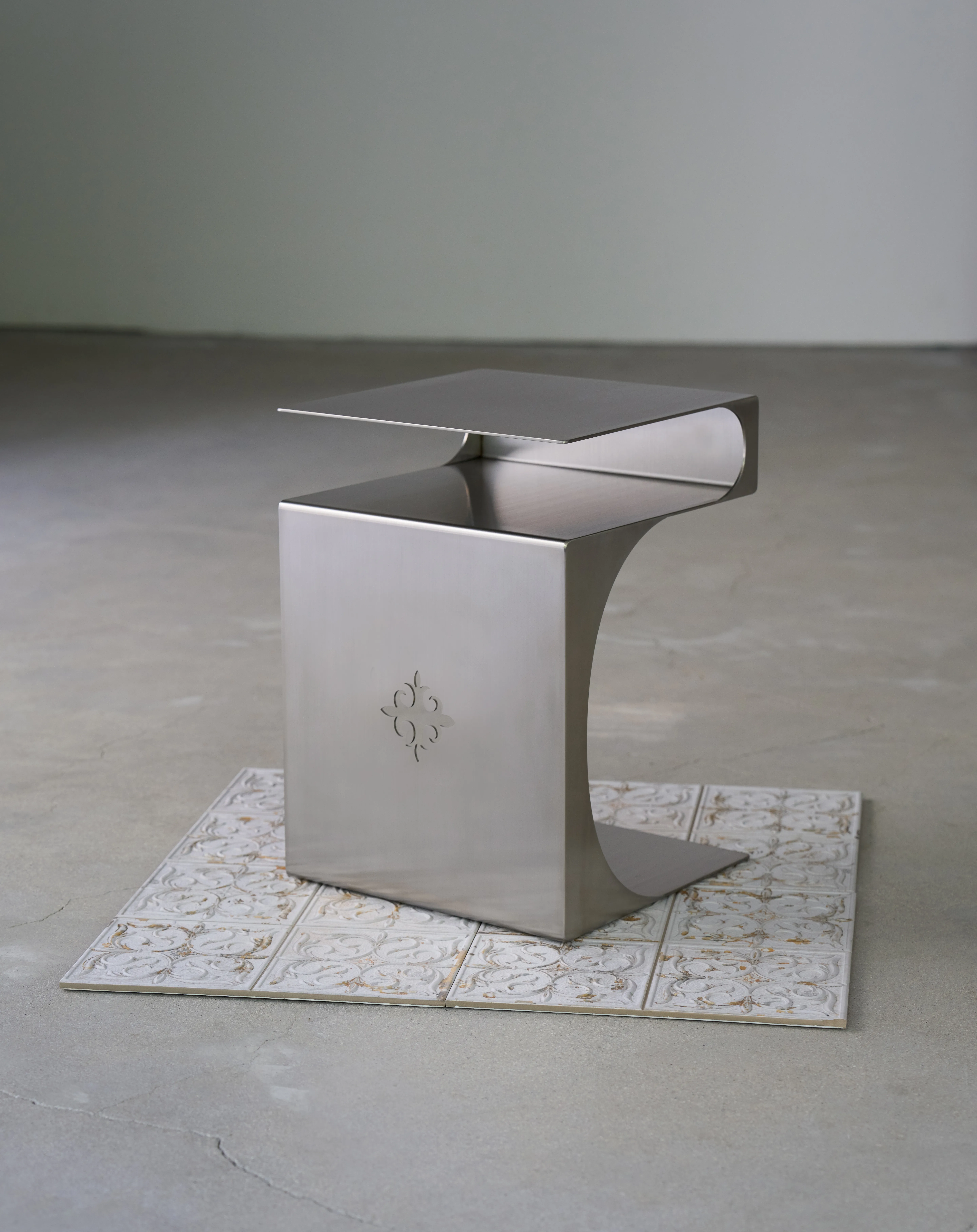
The Undress House Side Table captures the studio’s minimalist approach through a clean stainless steel form softened by subtle curves. A laser-cut motif on the front casts shifting shadows when light hits it, turning surface and illumination into part of the design. As the studio’s first piece, it sets a clear tone for material honesty and restrained experimentation.
Cherry – Steel Side Table by SALAK Studio
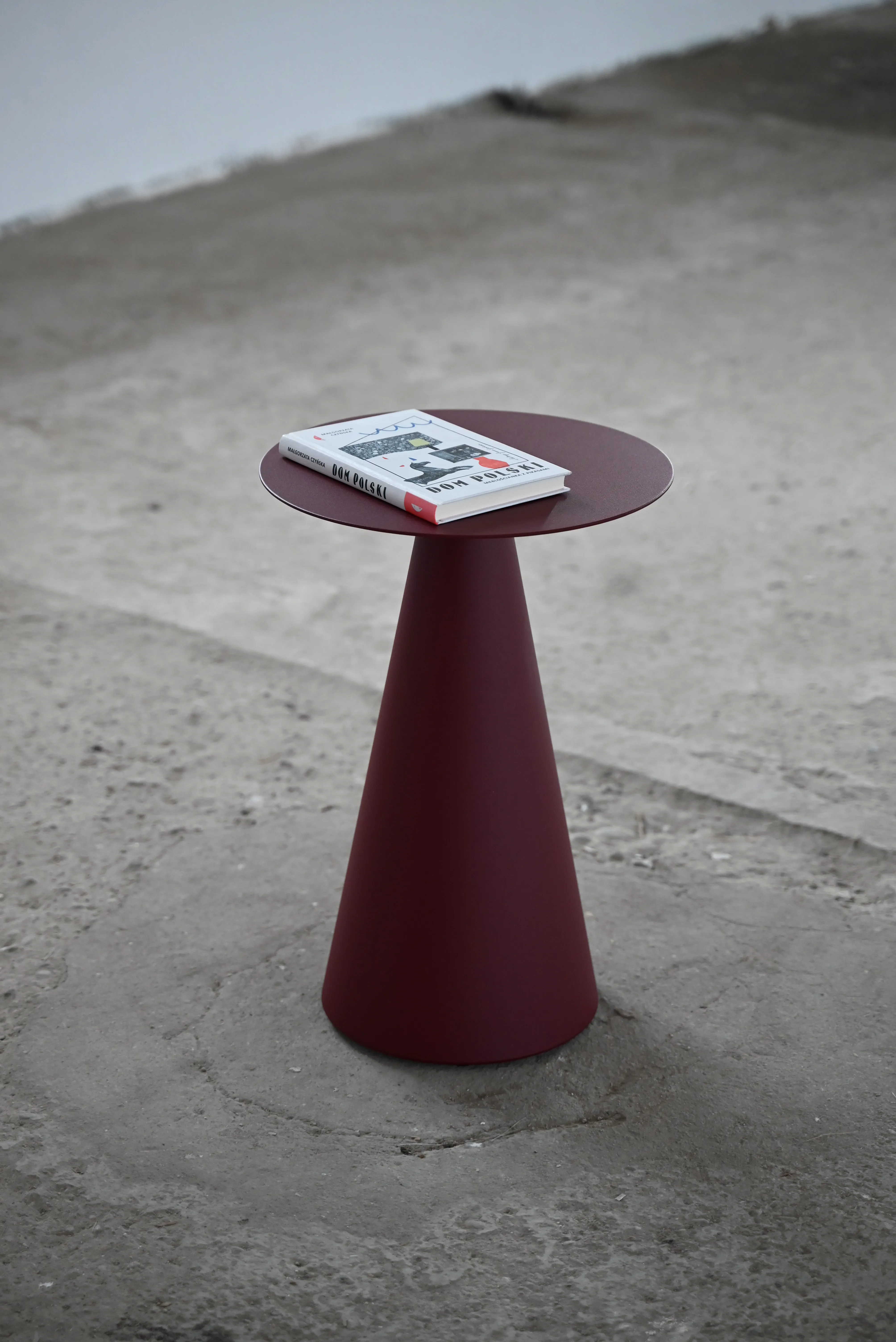
The CHERRY table by SALAK Studio pairs a slim steel structure with a smooth, understated top. The design balances industrial clarity with a restrained profile, allowing the material to speak without excess. It works as a flexible side table that feels current without chasing trends.
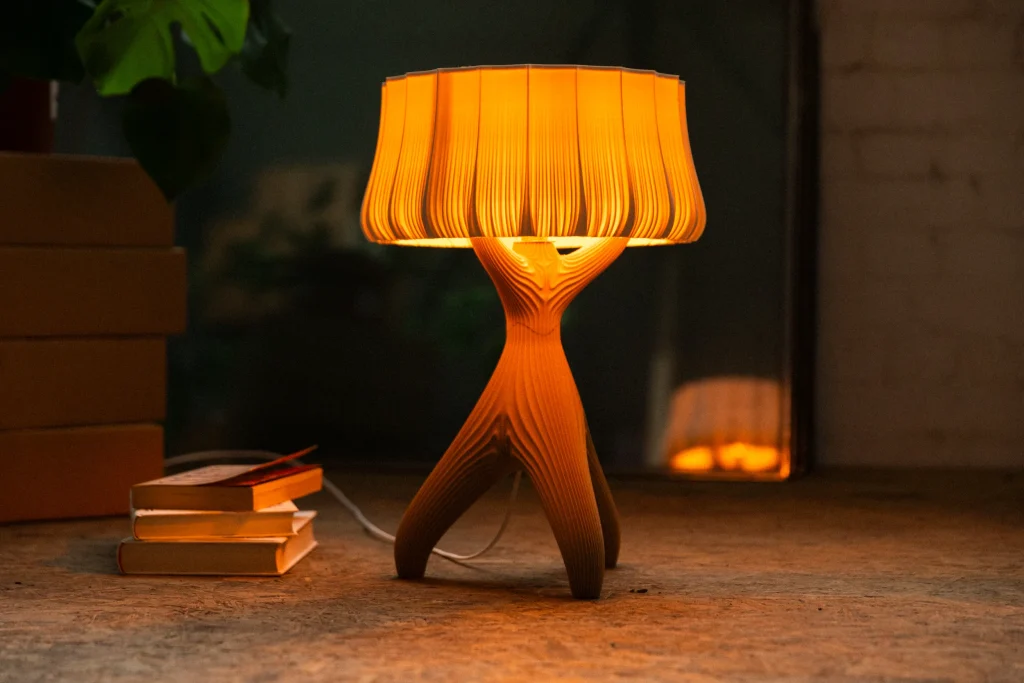
Lung 1.0 Honey Matte Side Tables by Szymon Keller
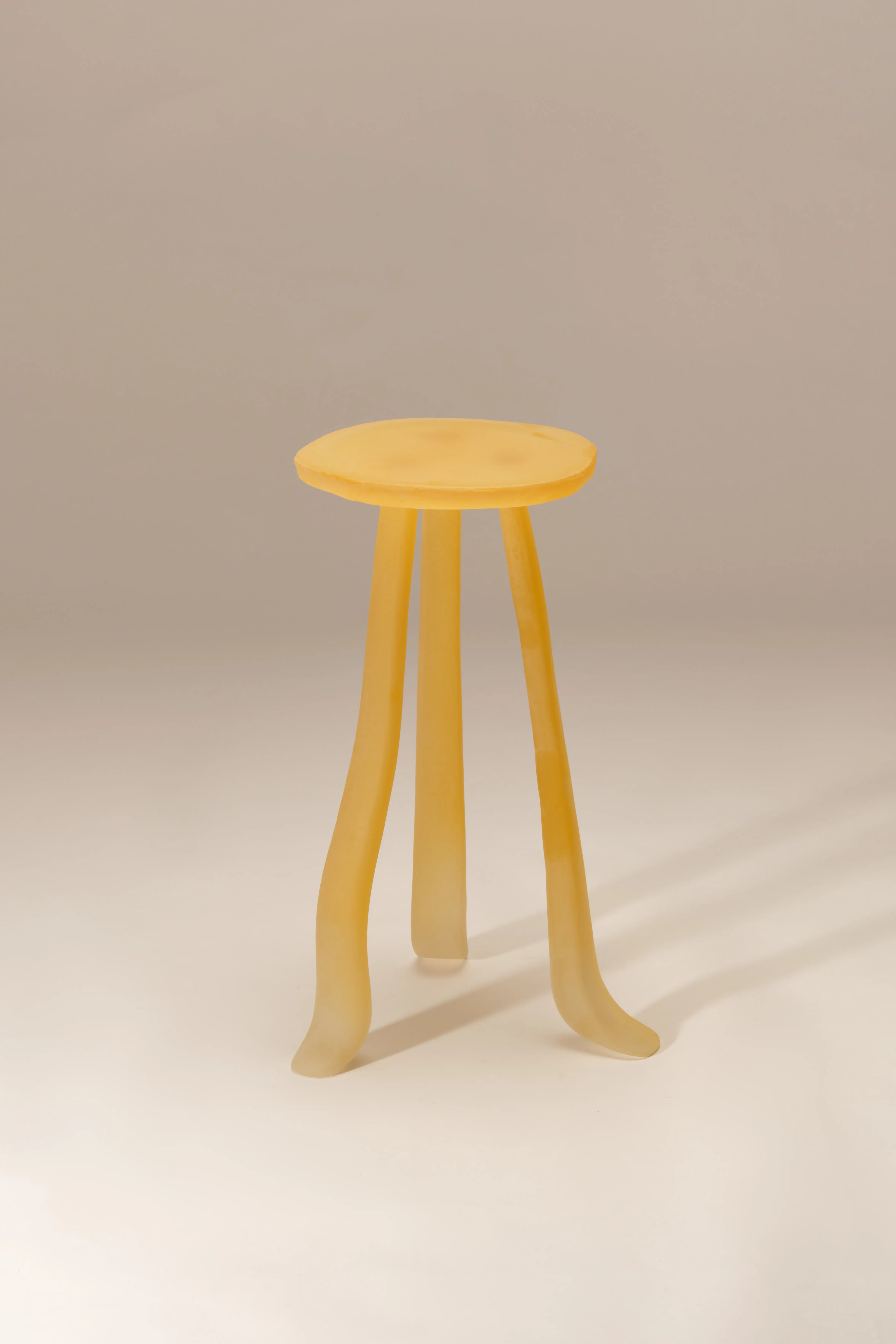
This martini table plays with the tension between delicacy and strength. Its fluid, organic form feels light in appearance, while the resin construction gives it durability and easy mobility. As light hits the surface, subtle reflections animate the piece, adding movement and atmosphere without overpowering the room.
Harmony Bedside Table by WOODTALES by Foteini Noti
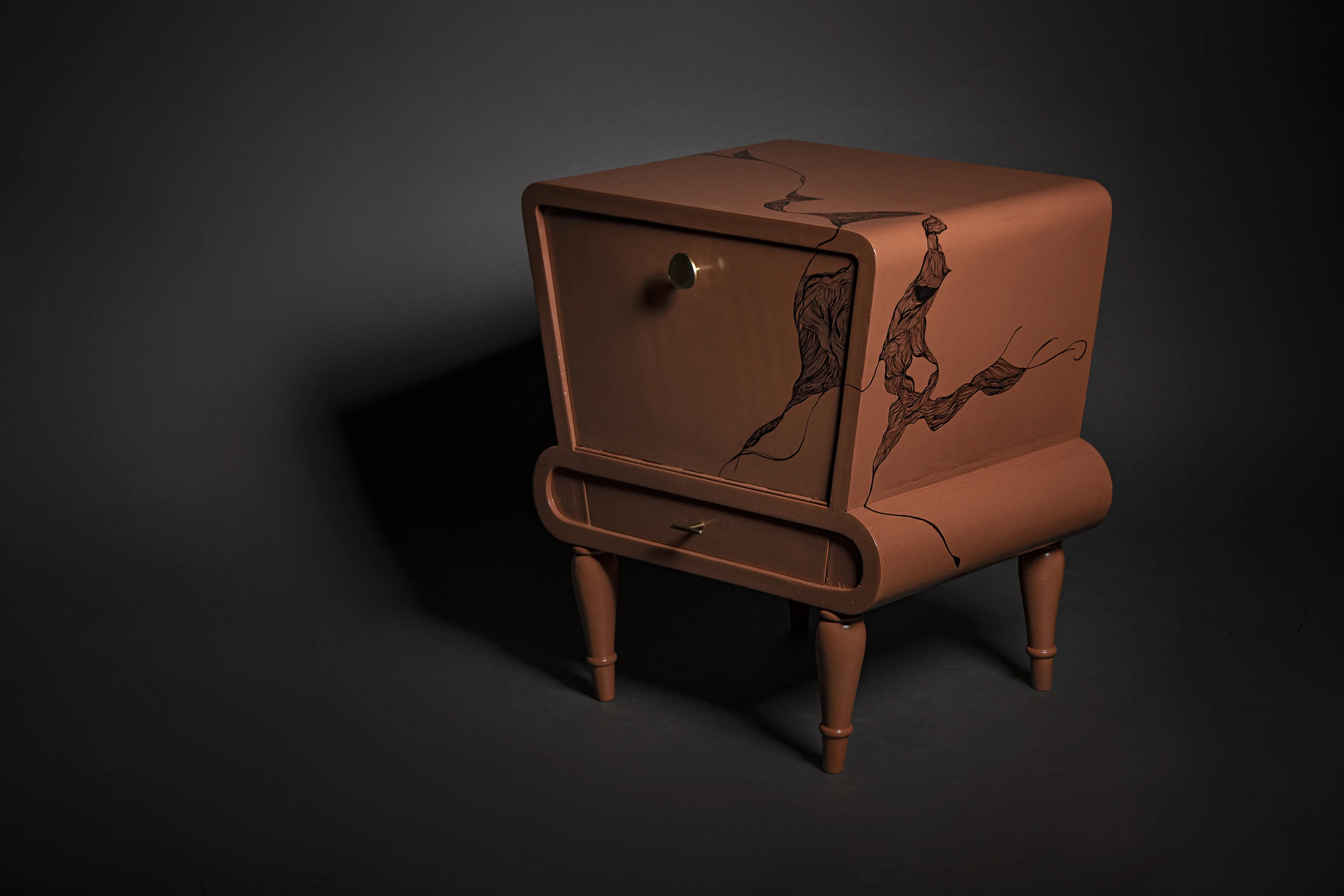
This bedside table by Foteini Noti explores harmony through line and movement. Crafted in oak, the wooden form feels grounded yet slightly offbeat, with proportions that introduce a playful, unexpected note. Functional and versatile, it fits easily across rooms while adding character through subtle design choices rather than excess.
The Mingo – Wooden Side Table by CHANDLER MCLELLAN
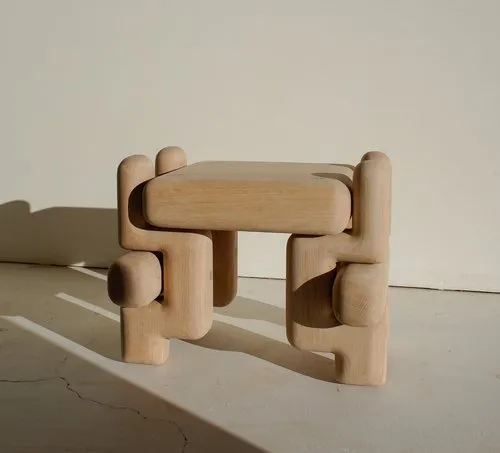
The Mingo Side Table by Chandler McLellan focuses on refined simplicity and flexibility. Made from North American white oak, the sculptural form serves as a stool, footrest, ottoman, or compact end table. Balanced proportions and careful joinery bring warmth and ease beside a lounge chair, at the end of a bed, or set freely in an open room.
Kinoko Dark Blue – Side Table by Studio Bovti
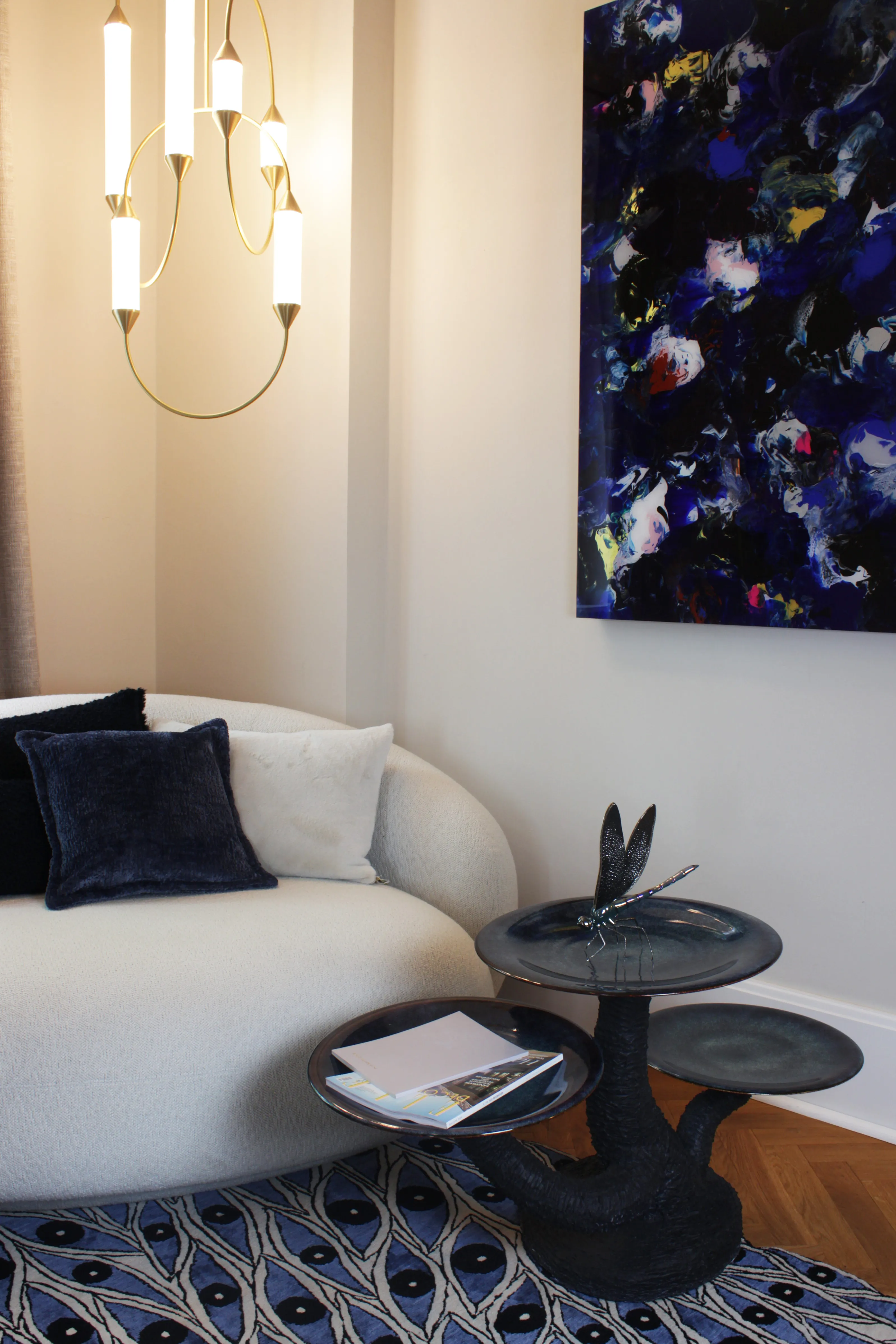
Kinoko is a series of side tables inspired by mushrooms and their organic role in interior spaces. The designs pair traditional ceramic craft with digital fabrication, finished in a Sea Cucumber glaze that gives each piece depth and texture. Three colorways reference elemental forces, while each form marks a different stage of growth and transformation.
Tronco Drinks Table by Nitush and Aroosh
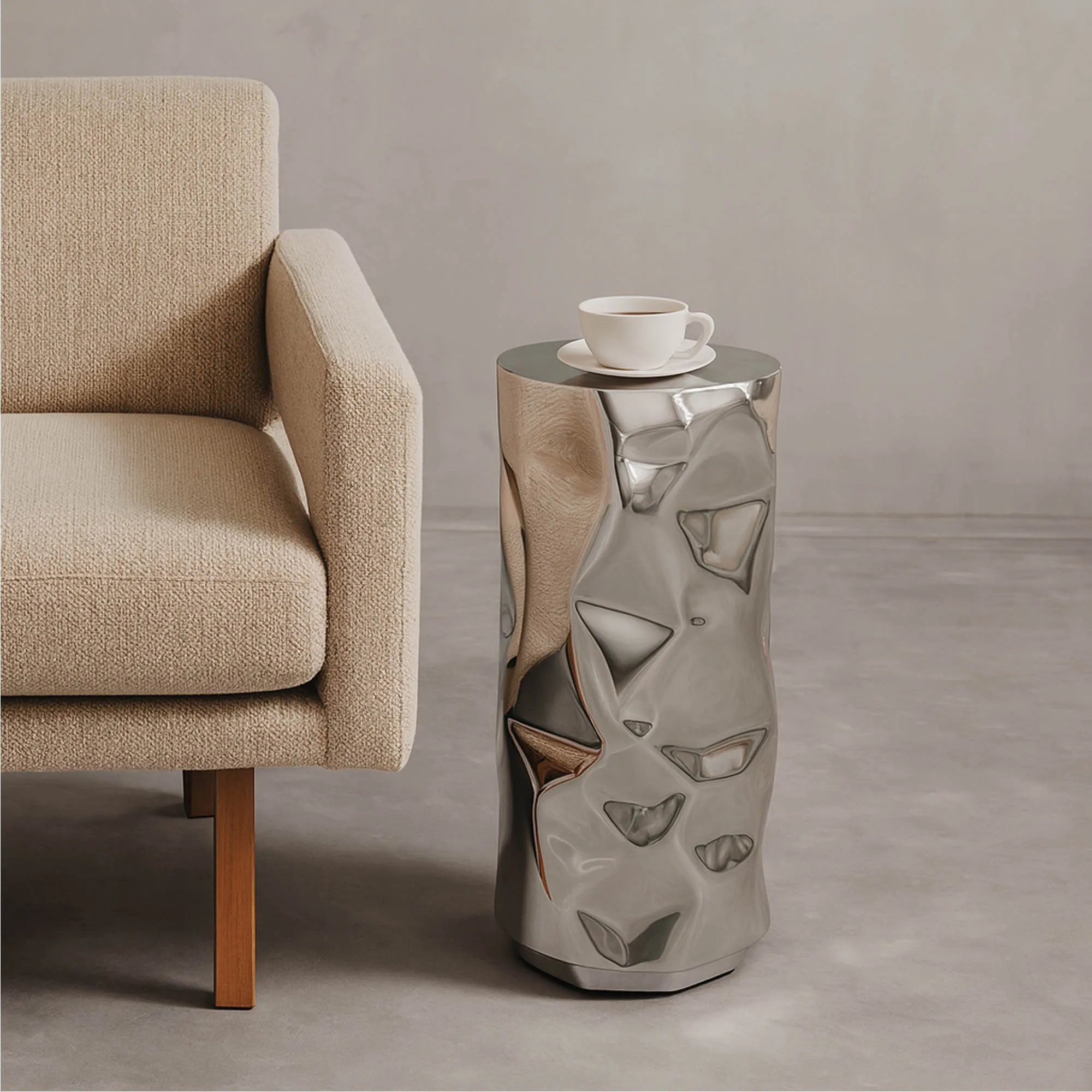
The Tronco Drinks Table distills the Tronco series into a single sculptural pillar, drawing on the vertical geometry of tree trunks and translating it into hydroformed stainless steel. Light, hollow, and reflective, the surface holds folds and creases shaped by pressure and hand-finishing, creating a compact side table that shifts with light and movement as it moves through a space.
Le Nomade Side Tables by FabBRICK
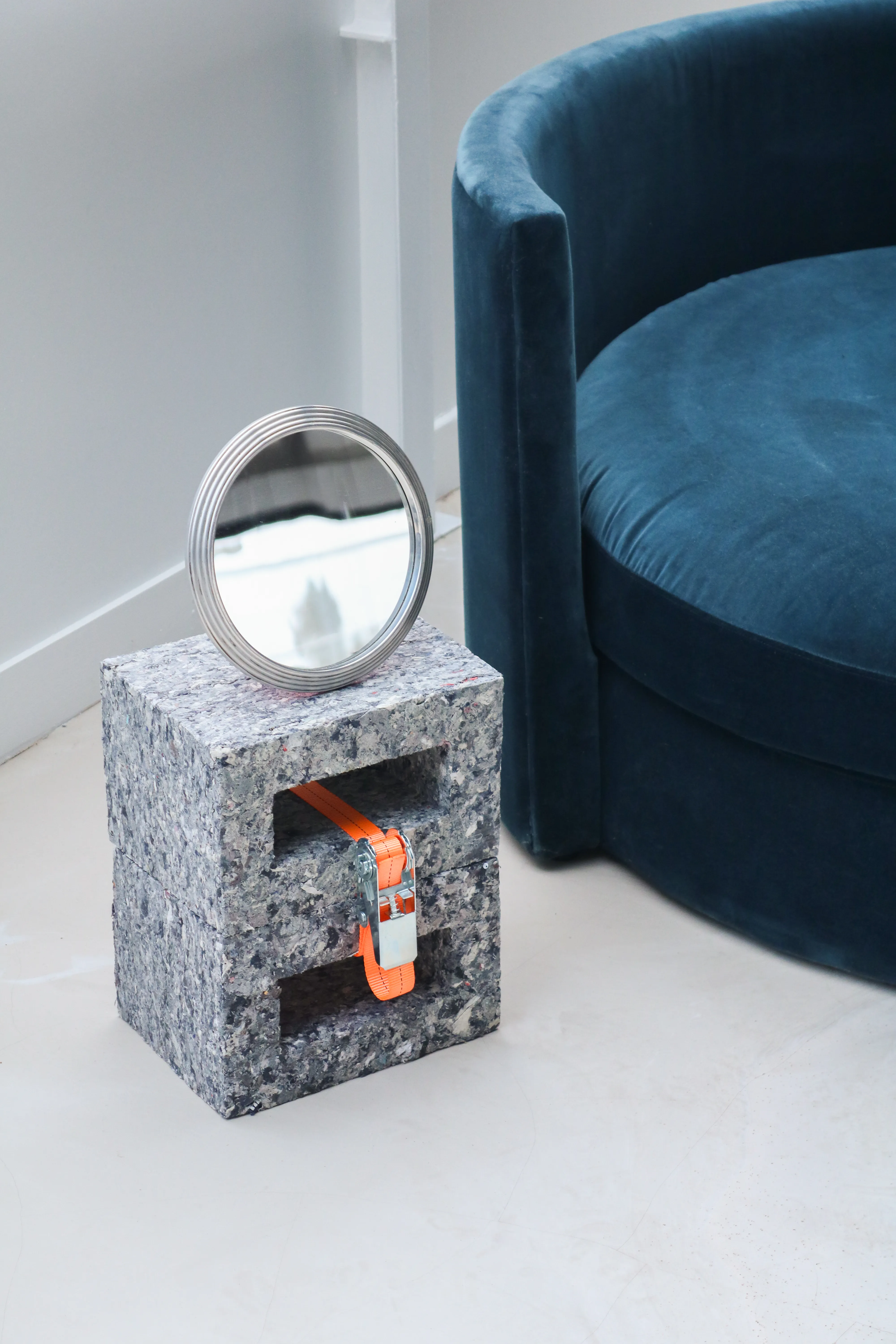
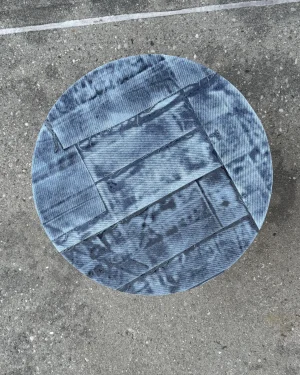
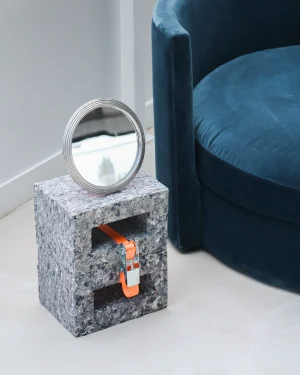
Two solid blocks of upcycled textile form this side table, held together by a single contrasting strap that becomes both structure and statement. The piece plays with tension and balance, pairing a concrete-like presence with a surface that feels soft and tactile to the touch. What reads as raw and weighty reveals a surprising gentleness, without losing its sense of strength.
Trunk Side Tables by Slō
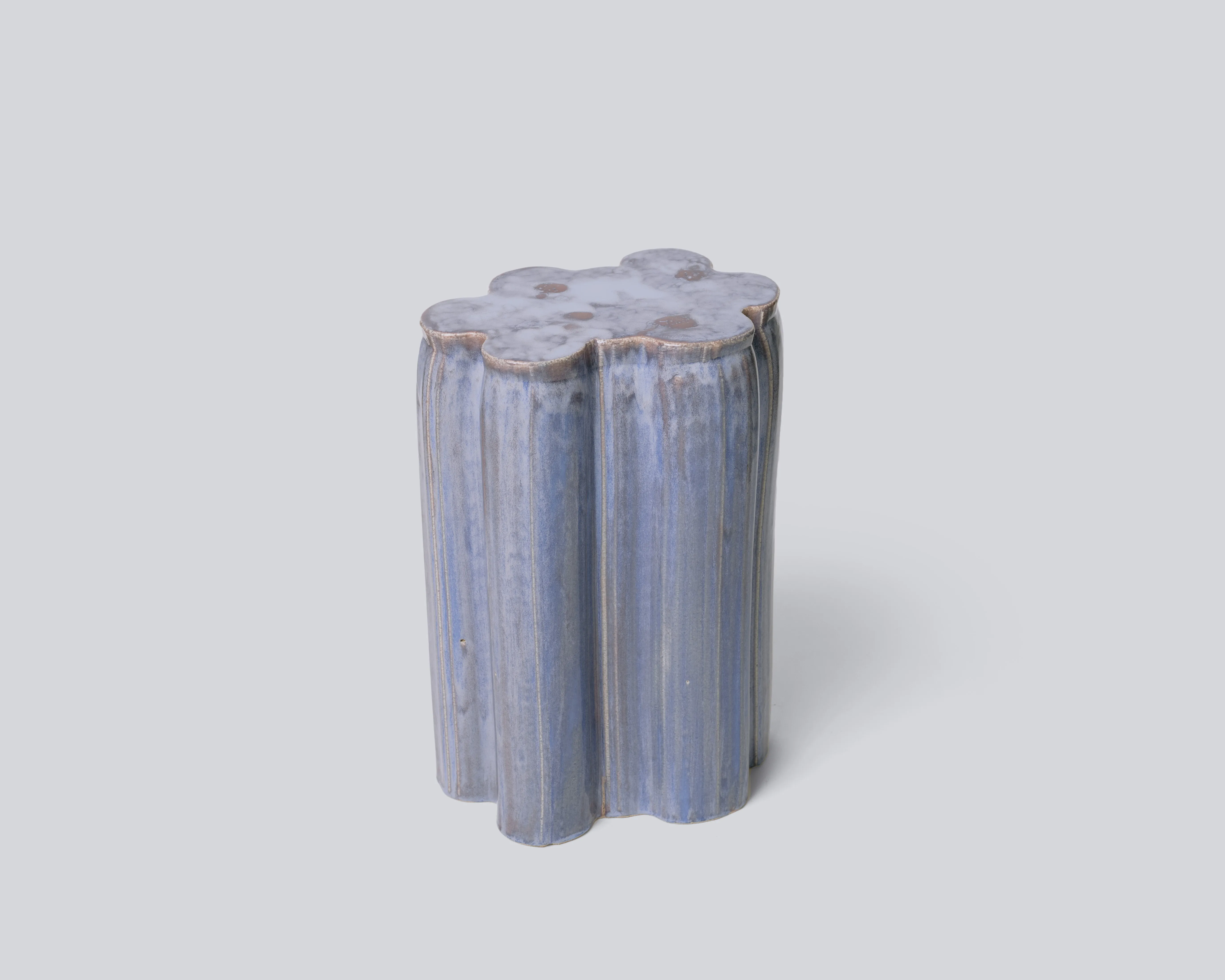
The Trunk Table in lavender blue is a hand-extruded stoneware ceramic side table from the studio’s latest collection of vessels, tables, and lamps. Layers of glaze create a marbled surface where flashes of pink break through the lavender, giving each piece depth and variation. Shaped with minimal intervention during extrusion, every table develops its own form, making each one entirely singular.
Splav Tin Side Tables by ZEMNA
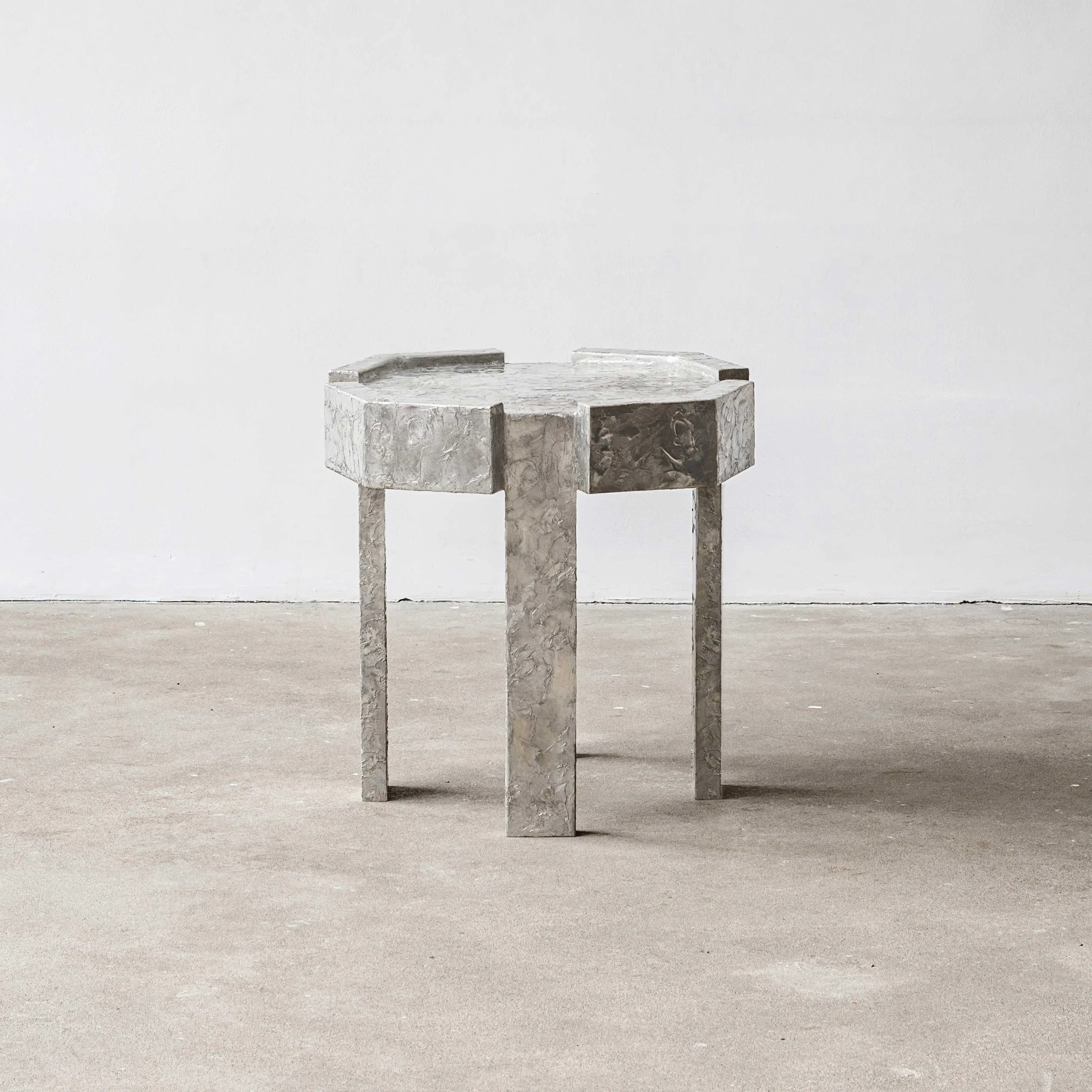
Named SPLAV, a Ukrainian word meaning “alloy,” these tables draw on ideas of strength, memory, and continuity between past and present. Each metal base is finished by hand with molten tin applied at 232°C, a process that leaves behind an unrepeatable surface texture. The result is a piece shaped as much by material and method as by symbolism.
Fos Hill – Volcanic Stone / Yucatan Wooden Side Tables by Daniel Orozco Estudio
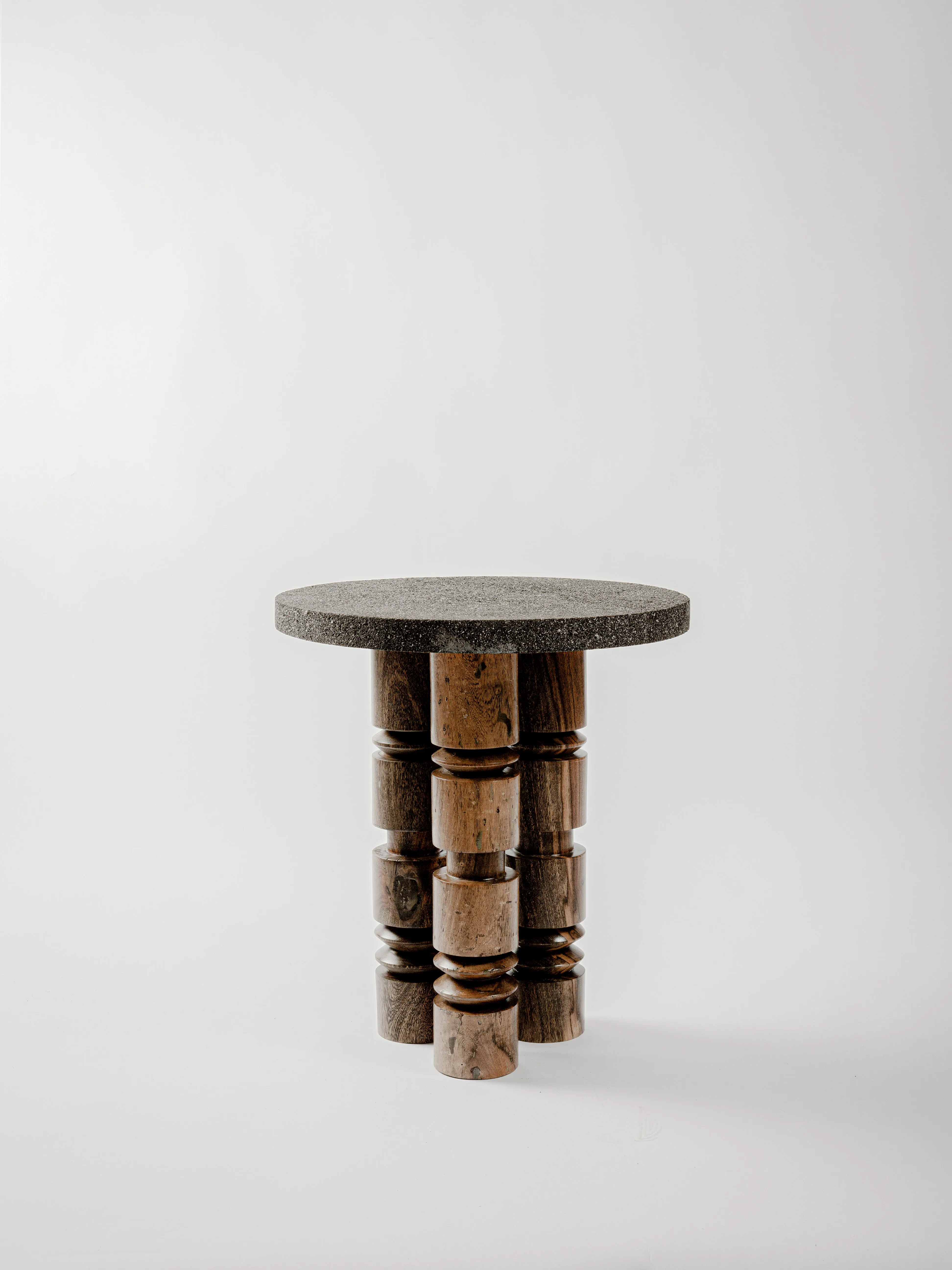
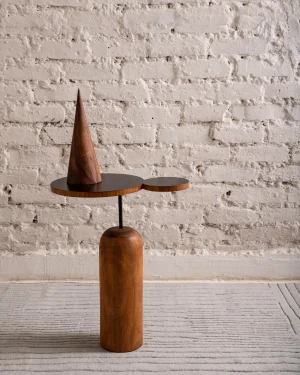
The FOS Hill Side Table by Daniel Orozco Estudio pairs a volcanic stone top from Jalisco with three turned Jabin wood totems finished in a natural tone. The contrast between dense stone and carved wood gives the piece weight without heaviness. It reads as grounded, tactile, and closely tied to material origin.
Bolero – Marble Side Tables by Alter Ego Studio
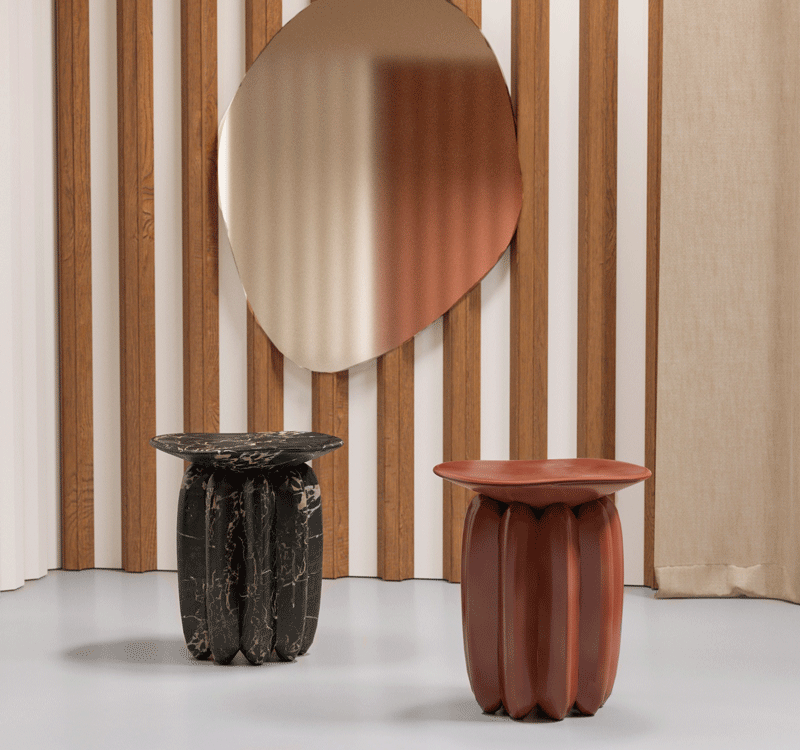
The emphasis of this marble side table sits firmly in its legs, which take on an asymmetrical, sculptural form with subtle ethnic references. A restrained, volumetric tabletop balances the composition, allowing the expressive base to lead without overwhelming the piece.
Mottled Tripod Side Table by Donatas Žukauskas
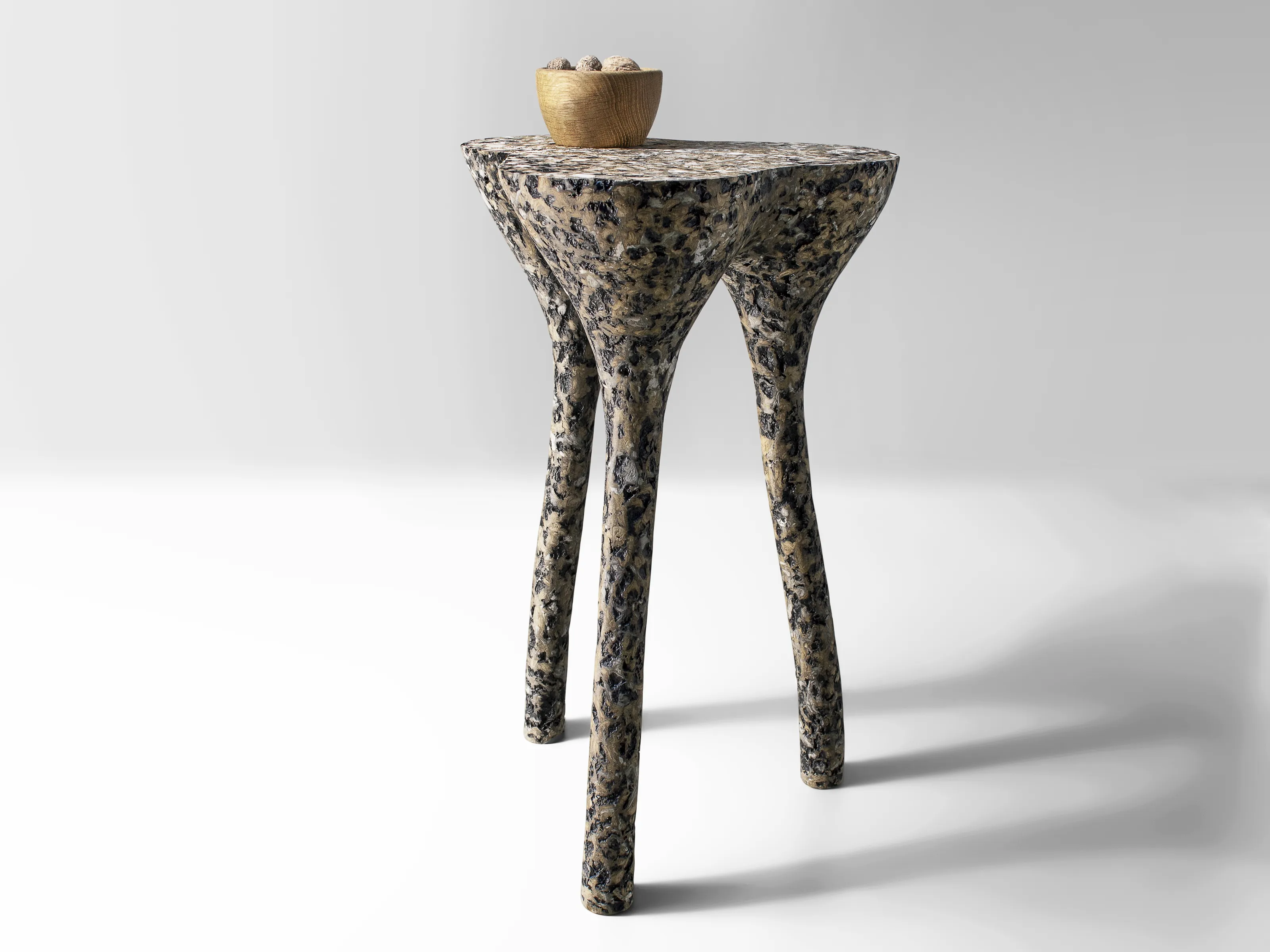
Crafted by Lithuanian designer Donatas Žukauskas, these minimalist side tables fuse archaic references with industrial clarity. Made from an experimental blend of paper pulp and cardboard, the material achieves the strength and texture of wood, challenging assumptions about fragility. The mottled finish softens the brutalist form, giving the tables a grounded, tactile presence that reads as both sculptural and functional.
Products by Tag

Cyborg – Metal Side Table
Core Aluminum Side Table / Stool
Coatcandy
Side Jable – Recycled Fabric Sheet Tables
Object107 – Lacquered Oak Wood Side Table
Sunrise End Table
Wing Side Table
Ball End Table
Le Nomade / Side Table // Reimagined Textile
Broken Wing Stool
Orange Mask Wowtable
Orange With Green Tape Wowtable
Yellow Circular Drape Wowtable
Tube End Table – Linear