Updated on: October 14, 2026
Three colors, endless combinations. Red, yellow and blue still say more than most palettes.
Primary colors are the starting point for almost everything we see. Red, yellow and blue cannot be mixed from other paints, yet together they produce countless shades. In design, they carry a directness few palettes can match: a red chair or a yellow lamp needs no explanation. That clarity is why primary colors have shaped art, architecture and furniture for more than a century.
This guide explains what the primary colors are, how artists such as Piet Mondrian made them iconic, and how to use them at home. It then brings together nine red, yellow and blue pieces by independent designers.
What are the primary colors?
The answer depends on what you are mixing. In traditional painting and art education, the primary colors are red, yellow and blue (RYB). Mixing them produces the secondary colors: orange, green and purple. For light, as on screens, the primaries are red, green and blue (RGB), which combine to make white. In printing, the primaries are cyan, magenta and yellow (CMY), usually with black added.
In interior and furniture design, however, “primary colors” almost always means the classic red, yellow and blue. That trio is what gives the palette its bold, graphic and slightly playful character.
Primary colors in art and design history
Primary colors became a design language in the early 20th century. The Dutch movement De Stijl reduced art to straight lines, white, black and the three primaries. Mondrian’s geometric paintings, such as Composition with Red, Blue and Yellow (1930), became its most famous expression, using pure color to create a sense of order and balance.
Furniture followed. Gerrit Rietveld’s Red and Blue Chair, first designed in 1918 and painted in its now-famous colors in the early 1920s, turned De Stijl principles into something you could sit on. Around the same time, the Bauhaus made color theory part of design education. Later, Postmodern designers like Ettore Sottsass brought primary colors back with a sense of humor. Today, independent designers still use red, yellow and blue to make objects feel joyful and direct.
Red: energy and warmth
Red is the most emotional of the primaries. It draws the eye immediately, so a single red piece can anchor a whole room. For more bold, colorful pieces, see our selection of maximalist decor.
Pin – Modular Shelf System by Hermhaus
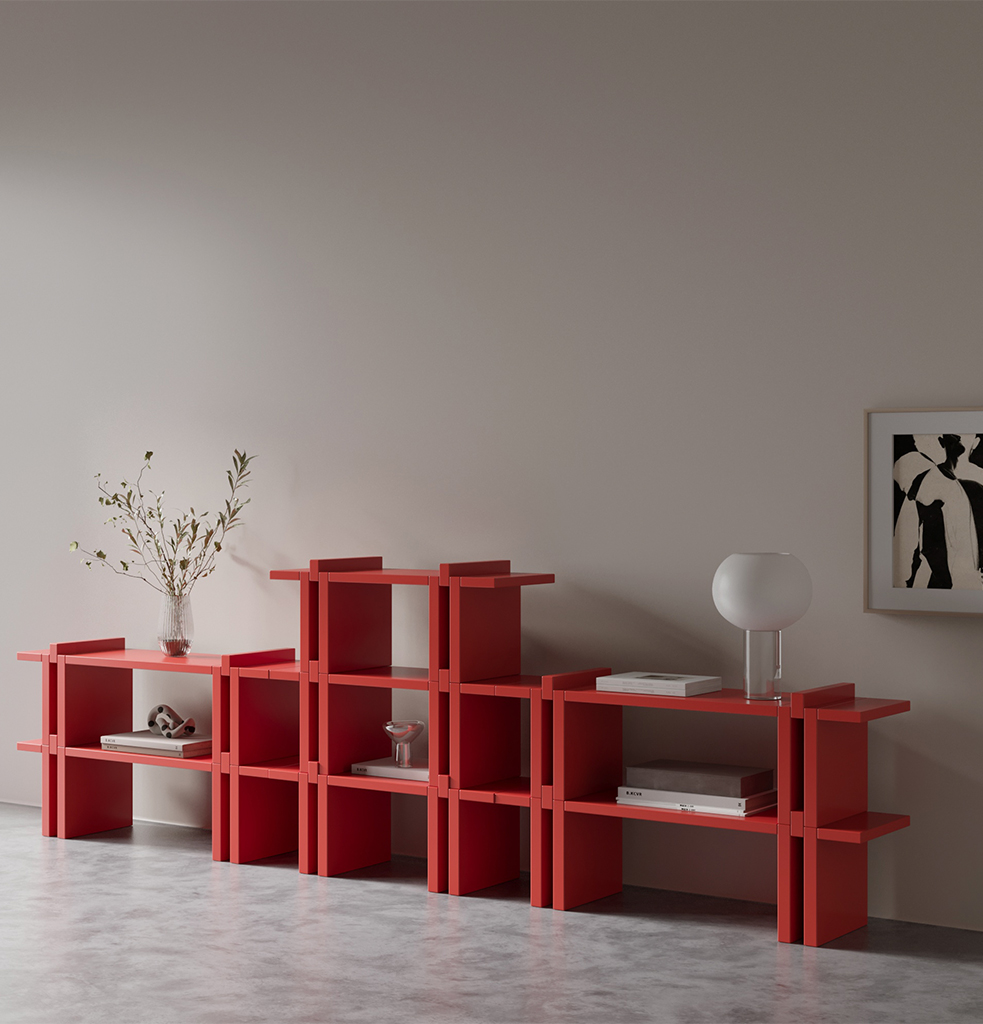
Pin takes its name from the simple connection that joins its shelves, so the system goes together without tools or hardware. Made from matte lacquered MDF in a strong red, it comes in two module sizes: about 47.2 x 13.8 x 13.8 inches (120 x 35 x 35 cm) and 35.4 x 13.8 x 13.8 inches (90 x 35 x 35 cm). Stack the modules side by side or on top of each other to build a red bookcase that grows with you. See more shelves.
By Hermhaus
€1.114 – €1.776 incl. tax
“Soft Non-Conformist” chair by AaltoAalto

Inspired by yarn bombing, this red chair wraps a steel frame in hand-crocheted cotton yarn. It was created for the Rephrasals project at Form/Design Center in Malmö, as an interpretation of Inez Svensson’s 1986 Randig Banan textile print. As a result, the cold metal becomes soft and warm to the touch. Other colors are available on request. See more accent chairs.
By AaltoAalto
€1.300 incl. tax
Yellow: optimism and light
Yellow is the brightest primary and the most cheerful. It works especially well in small doses, like a lamp, a stool or a single chair, where it can lift a neutral room without overwhelming it.
Zampa by Jonathan Bocca
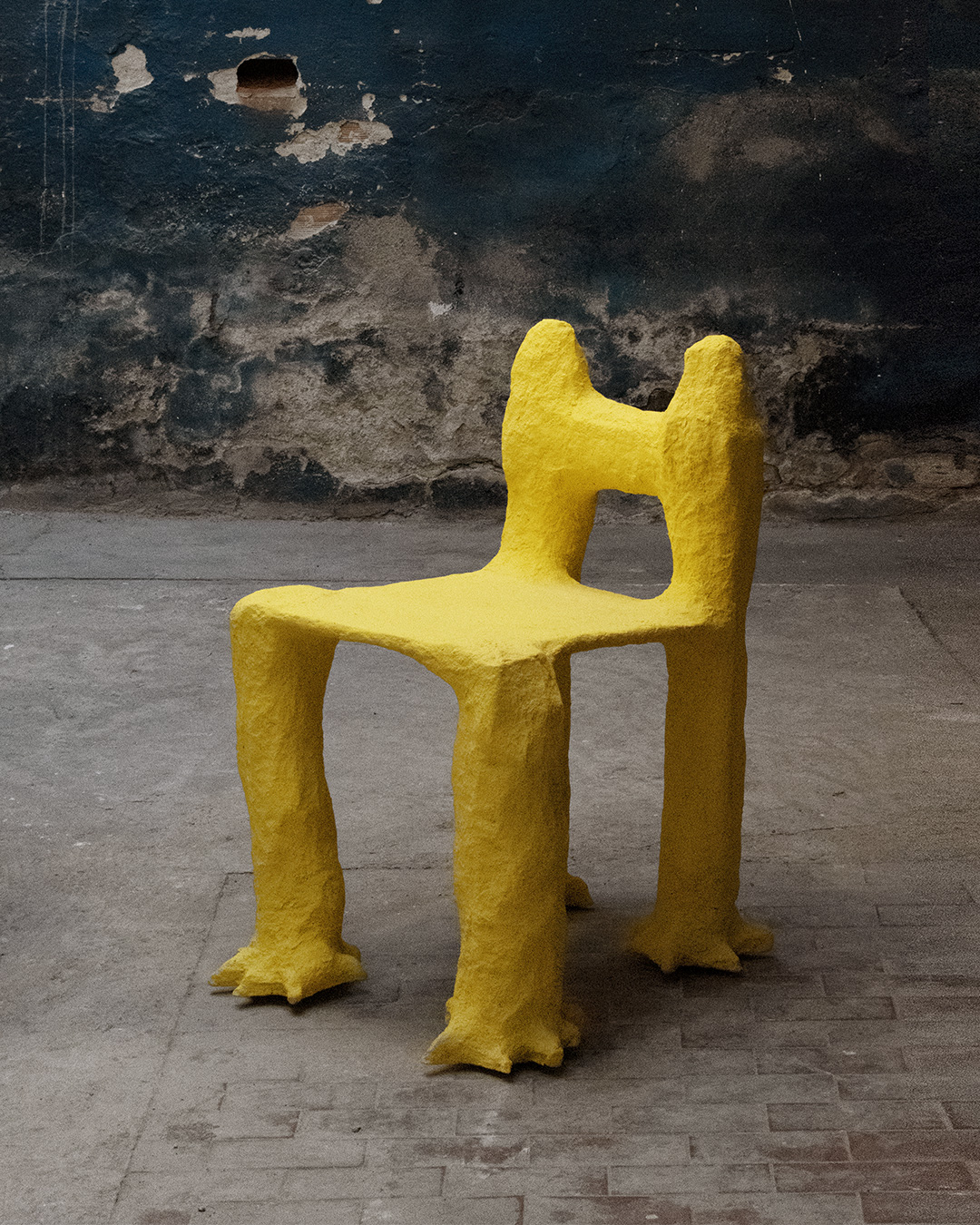
Zampa means “paw” in Italian, and this yellow chair takes its playful form from an animal’s foot. Jonathan Bocca builds it using the techniques of the carnival floats of Viareggio, Italy, which keep the chair light yet sturdy. Consequently, it works as well in a living room as in a child’s playroom. Explore more Italian design.
€2.700 incl. tax
Cumula Table Lamp in Yellow Crochet by AaltoAalto
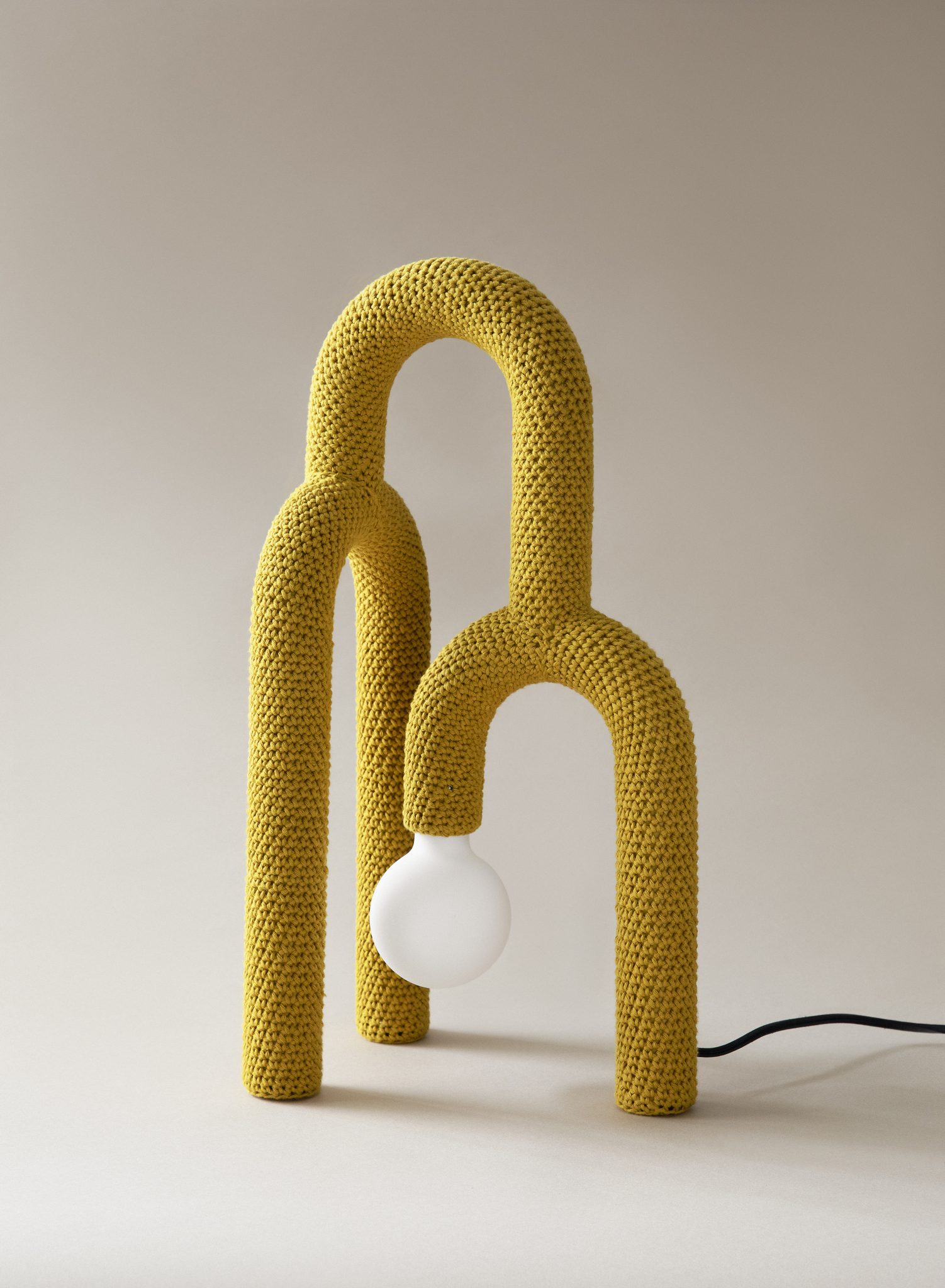
First shown at the Fiskars Village Art & Design Biennale in 2022, Cumula looks like a stack of identical yellow arcs until you notice that it is a lamp. A painted steel frame, a quiet nod to Bauhaus design, is wrapped in hand-crocheted yarn, so the lamp is soft to the touch. It takes a standard E27 bulb. See more table lamps.
By AaltoAalto
€1.600 incl. tax
Bold Shkam Chair – Yellow by SHAPE & SHADE
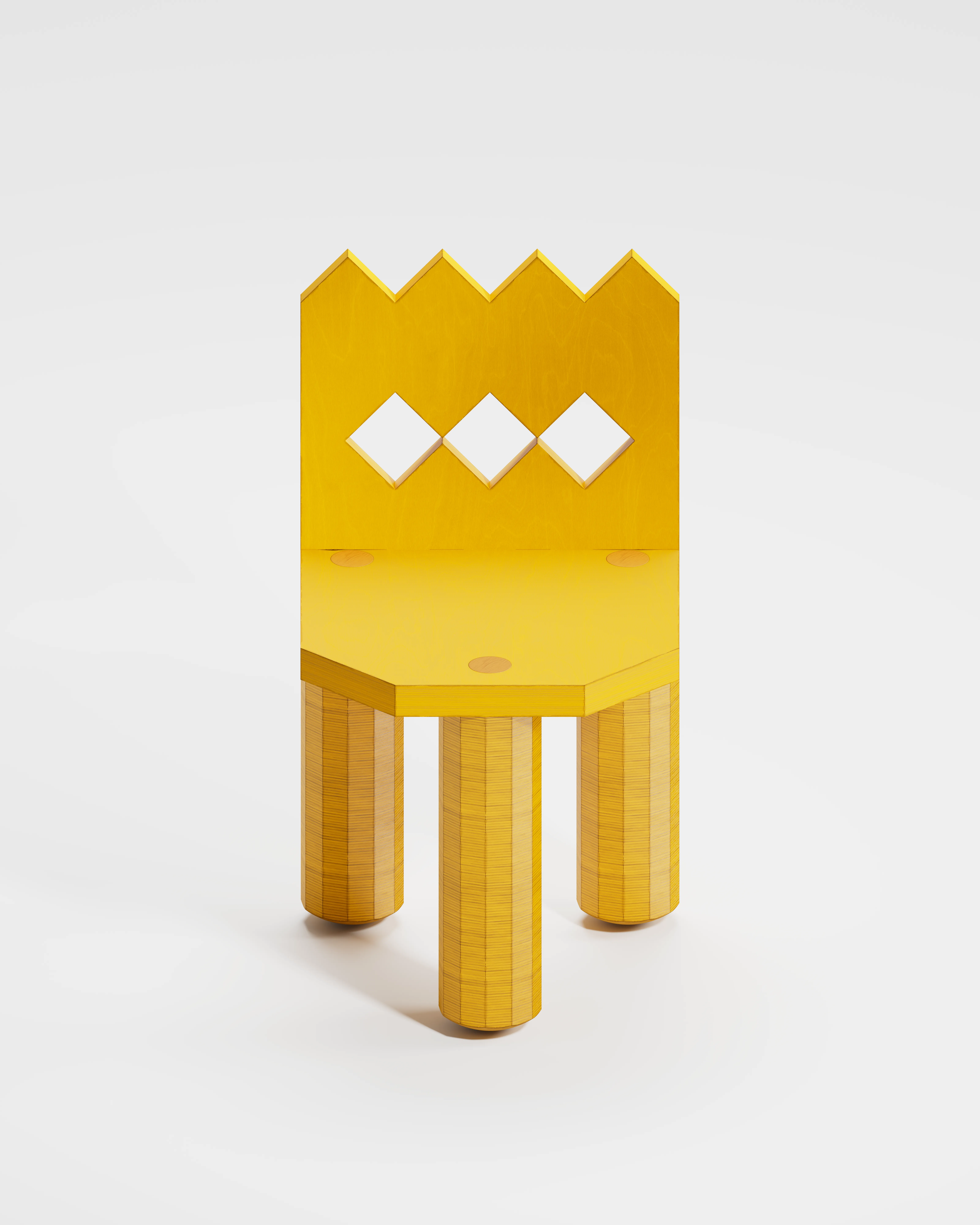
The shkam is a traditional stool or stone found in nearly every Albanian home, used for sitting, storytelling and ritual. SHAPE & SHADE reimagines it as a monolithic yellow chair in plywood with a water-based color finish. Notably, it doubles as a side table and works indoors or outdoors. See more chairs.
€333 incl. tax
Blue: calm and depth
Blue is the coolest primary and the easiest to live with. Deep blues feel calm and grounded, so they suit larger pieces like tables, drawers and seating. Blue also pairs naturally with wood, steel and white walls.
Baccello – Solid Wood Modular Drawer Units by Costantini Design

Each Baccello unit has an identical shape, so the natural grain of the solid wood becomes the main variation. Stack them to make a pedestal, stairs, a dresser or a nightstand. Each unit measures about 22 x 16 x 21 inches (54 x 41 x 53 cm), and the blue finish brings color to a warm wood surface. It is made to order in any size, material or finish. See more drawers.
€1.000 incl. tax
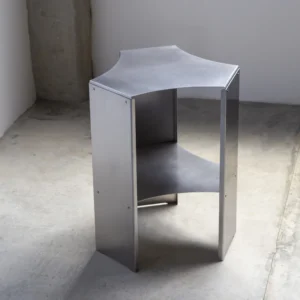
120 Blue Coffee Table in Steel and Iron by Matteo Giustozzi
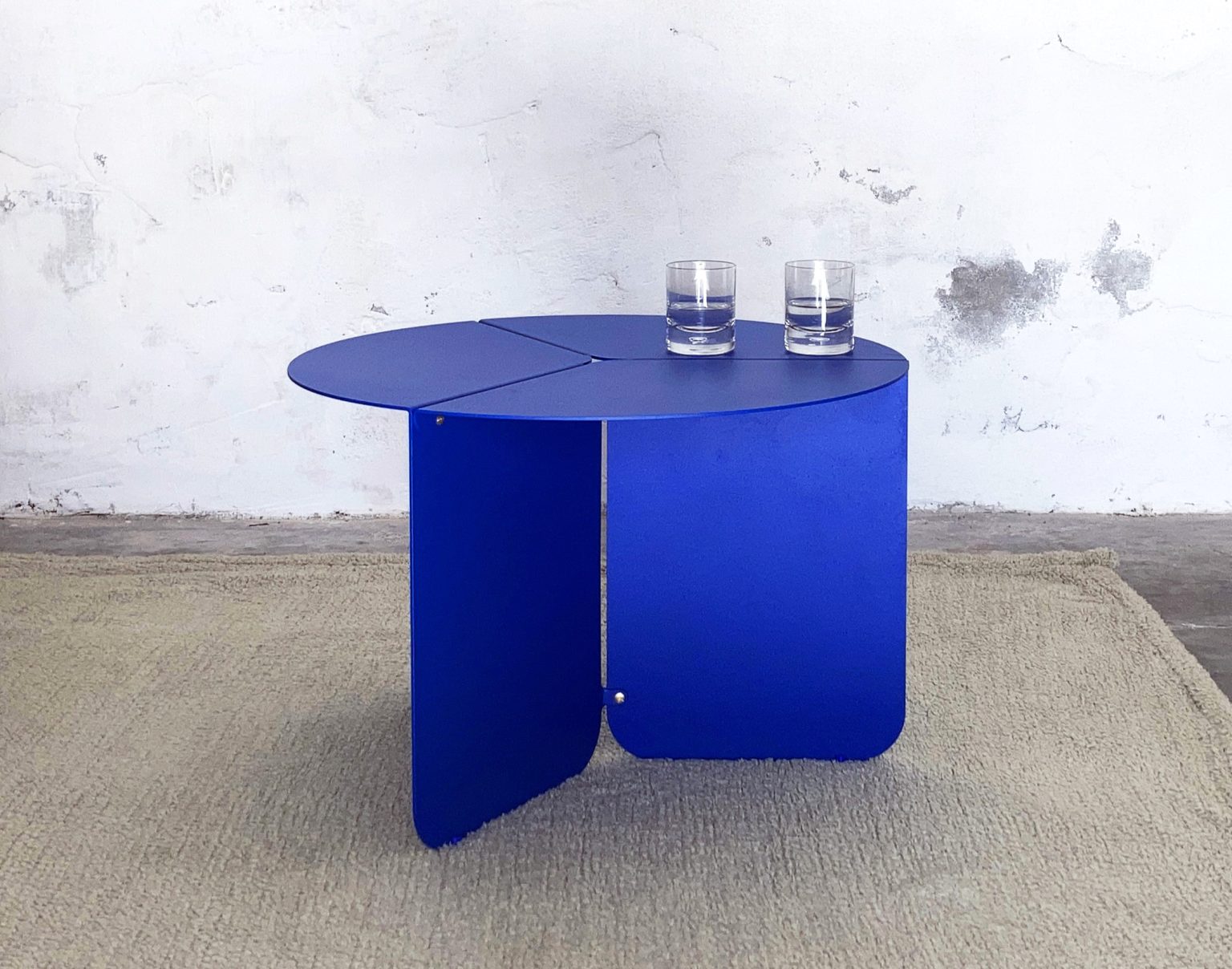
The 120 table starts with a sheet of metal. Matteo Giustozzi laser-cuts and folds it into three 120° segments that join to form a circle. Finished in deep blue powder coating (RAL 5005), it stands about 15.7 inches (40 cm) high and 23.6 inches (60 cm) in diameter, and it is made entirely in Italy. See more coffee tables.
€720 incl. tax
Meta – Modular Merino Wool Stool by Jaclyn Pappalardo
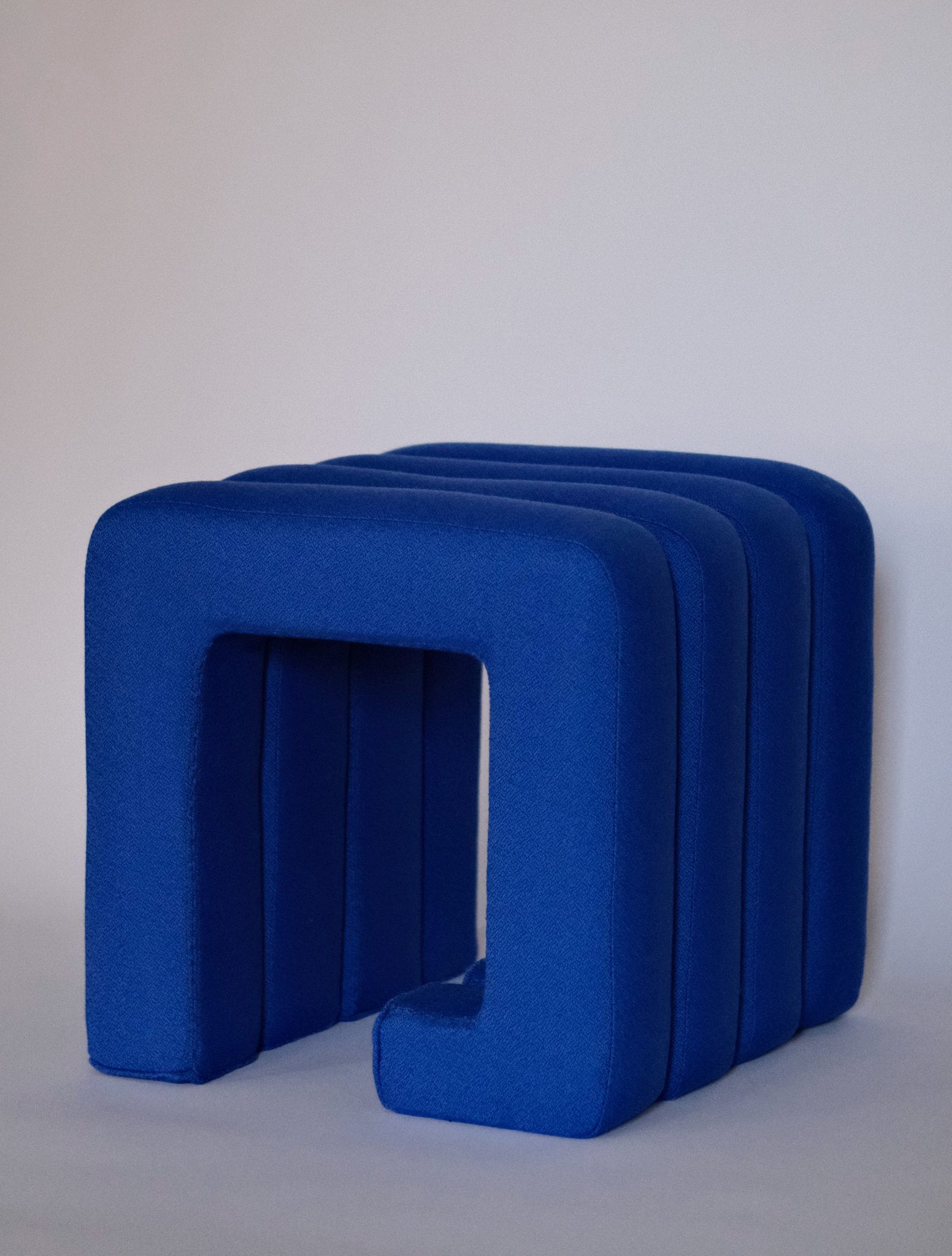
Meta is a modular stool upholstered in Bute merino wool. An interlocking system joins its sections, so you can extend it into a five-part, six-part or even endless bench and choose the colors yourself. In deep blue, it adds softness and color to an entryway or bedroom. Custom colors and sizes are available. See more stools.
€1.403 incl. tax
Sedia 2 by Julia Chiaramonti
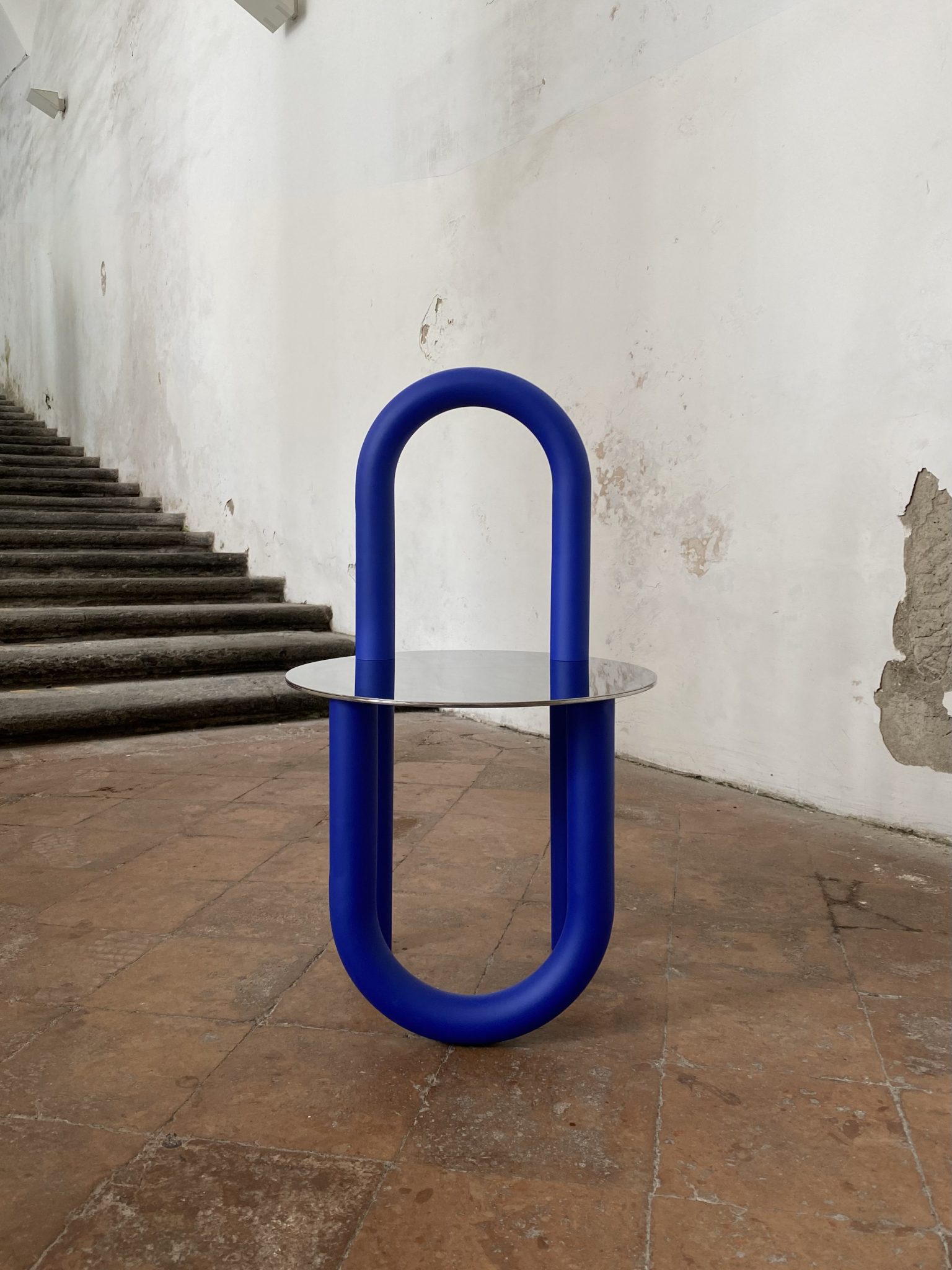
Sedia 2 turns a thin graphic line into a bold, inflated blue form that makes up the backrest and legs. The mirror-polished stainless steel seat reflects that line, so the chair seems to change as you walk around it. In this way, color, material and perception work together in one piece. See more dining chairs.
€3.200 incl. tax
How to use primary colors at home
Start with one hero piece
If you are new to bold color, choose one primary-colored piece, such as a blue coffee table or a red shelf, and keep the rest of the room neutral. The single color becomes a focal point.
Repeat each color at least twice
To use all three primaries, repeat each one somewhere else in the room: a yellow lamp, a yellow cushion, a yellow print. Repetition makes a bold palette feel intentional rather than random.
Balance with white, black and natural materials
Mondrian framed his colors with white and black lines. At home, white walls, black details, wood and steel do the same job, giving red, yellow and blue room to breathe.
Mix textures, not just colors
A crocheted red chair, a lacquered red shelf and a wool blue stool feel very different even in similar tones. Varying texture keeps a primary color scheme rich rather than flat. For more ideas, browse our candy-inspired design selection.
Frequently asked questions
What are the three primary colors?
In traditional art and design, the three primary colors are red, yellow and blue. For light, they are red, green and blue, and for printing, cyan, magenta and yellow.
Why are they called primary colors?
They are called primary because they cannot be created by mixing other colors, while they can be mixed to create many other hues.
What are the secondary colors?
In the red, yellow and blue system, the secondary colors are orange (red and yellow), green (yellow and blue) and purple (blue and red).
Who is famous for using primary colors?
Piet Mondrian is the best-known artist for primary colors. In furniture, Gerrit Rietveld’s Red and Blue Chair is the most famous example.
Can primary colors work in a contemporary interior?
Yes. Used sparingly and balanced with neutral tones, primary colors give contemporary interiors a bold, graphic and playful character.
Which primary color is best for a living room?
Blue is the easiest for large pieces because it feels calm. Red and yellow work best as accents, such as a chair, a lamp or a shelf.
Why primary colors never fade
From Mondrian’s canvases to today’s independent studios, red, yellow and blue keep proving how much three colors can do. They bring clarity, energy and a sense of play to any space. Start with one piece in your favorite primary, then let the palette grow.