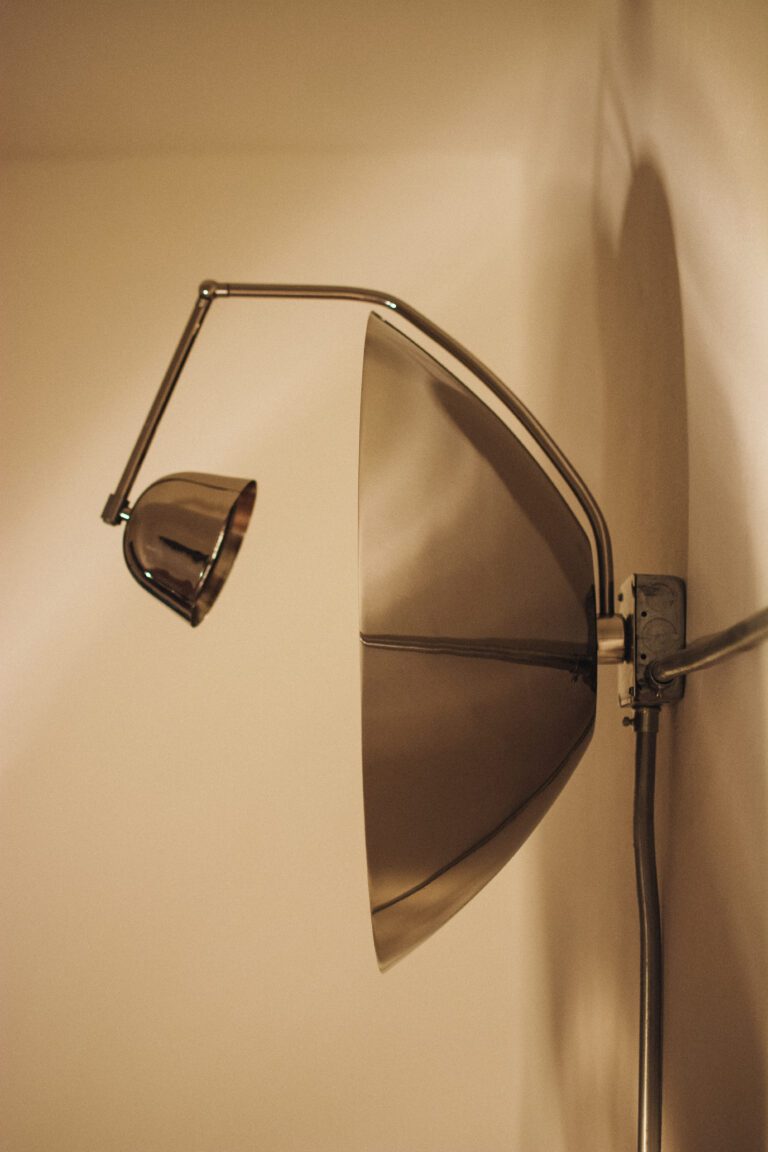
Yacaman Wall Lamp
by Paola Jose · Mexico City, Mexico

60x42x63cm (24x17x25")BrassMetal
The “Yacaman Wall” is part of the Yacaman collection, the first series of luminaires designed by Paola Jose. The proje… Read more
Limited Edition
Only 25 identical pieces will ever exist. Yours will be numbered.
Sold
No longer available. Inquire for something similar.
Delivered between12 – 19 Dec
We arrange insured delivery from door to door.
Buyers protection
  • Certificate of Authenticity A signed certificate from the maker is always included in the box.

  • Lowest price guaranteed Find a lower price from the seller, we'll match it.

  • Secure online transactions All personal information that you send to us is encrypted and cannot be viewed by others.

  • 100% insured global deliveries We arrange worldwide delivery, and every shipment no matter the price is fully insured against damages.

  • 14 days return policy In the rare event, you receive a piece that you are not fully satisfied with, you can return it within 14 days of receipt for a full refund except return shipping costs. Made-to-order items are not eligible for return.

Shipping and delivery
Ships fromMexico City, Mexico
Delivery toyour location
Estimated delivery dateDecember 12 - December 19
Custom Crate75x75x75cm, 10kg
  • Tracked from studio to doorstepYou receive a tracking link as soon as the piece leaves the studio, and can follow it through every carrier hand-off until it reaches your door.
  • 100% insured, door to doorEvery shipment is fully insured from pickup to delivery. If anything happens in transit, you are covered for the full purchase price.
  • All made to order purchases are finalThis piece is produced specifically for you once you order, so it cannot be returned or exchanged.
  • Duties and taxes may applyWe declare all pieces as original duty-free works, however, your local customs office makes the final decision. Learn more
Specifications
Piece Weight (kg)

10

Production Year

2021

Material

, ,

Technique

Design Class

Limited Editions

Number of Editions

25

Dimensions LxWxH
Number Of Pieces Created

25

FAQ
What are the different types of lamps?

Lamps are grouped by where they sit. Table lamps stand on a surface, including desk lamps for task light and bedside lamps for low, warm light. Floor lamps stand on the floor and include arc, tripod, torchiere and column forms. Wall lamps mount to a wall, sconces among them. Ceiling lamps hang or fix overhead as pendants, chandeliers or flush mounts. Everything else — cordless, outdoor, candle-lit — is a variation on one of those four positions.

What are the parts of a lamp?

A base or body, a socket that holds the bulb, a switch, a shade or diffuser, and the cord and plug. Traditional constructions add a harp — the wire frame arching over the bulb — and a finial that screws down to hold the shade on it. Contemporary and sculptural designs often merge base and diffuser into one form with the socket hidden inside, in which case there is no harp, no finial, and no removable shade.

What kinds of lamp shades are there?

By shape: drum, cylinder, empire, cone, coolie, globe and bell, plus irregular forms in handmade work. By material: fabric and linen for soft diffusion, paper for an even glow, glass for brightness with sparkle, metal and ceramic for directed light downward, and stone or alabaster for light that appears to come from within the material. Shape decides where the light goes; material decides how it feels.

How do I measure a lamp shade?

Four figures: the diameter across the top, the diameter across the bottom, the slant height down the side, and the fitting type. Measure the widest point for the bottom diameter and measure slant rather than vertical height on any sloping shade. If you are replacing a shade, measure the old one and check the fitting — a shade that fits the dimensions but not the fitting is no use.

How do I choose the right shade size for a lamp?

Two proportions work reliably. The shade should be roughly one third of the lamp's total height, and its width one and a half to two times the width of the base. It must also be deep enough to conceal the socket and bulb from anyone standing or sitting nearby. A shade narrower than the base looks top-heavy; one much wider swallows the lamp.

What is the best lamp for reading?

One that puts 400–800 lumens onto the page from beside or slightly behind your shoulder, with a shade deep or opaque enough that you never see the bulb. Position matters more than power: light coming over your shoulder onto the page beats a brighter lamp facing you. Add a second, dimmer source in the room to reduce the contrast between page and surroundings, which is what actually causes eye fatigue. Adjustable table and floor lamps suit reading best; translucent sculptural pieces are for atmosphere.

How do you clean a lamp shade?

Dry first, and gently. Dust fabric and paper shades with a soft brush or a lint roller, working from top to bottom, and never wet paper. Fabric shades tolerate a barely damp cloth on a small mark, tested somewhere hidden. Glass, ceramic and metal shades can be wiped with a damp cloth and dried at once. Always switch off and let the bulb cool first, and support the shade rather than pressing against it — handmade frames are not as rigid as they look.

How do I look after a brass or copper lamp?

Decide first whether you want patina, because most designers do. Unlacquered brass and copper darken over months into the finish the piece was designed to reach, and that process is not damage. If you prefer it bright, polish occasionally with a product made for the metal and dry thoroughly. If a piece is lacquered, do not polish it at all — dust it, since polish removes the lacquer unevenly. Ask us which finish a specific piece has.

How should I care for handmade ceramic, glass and paper lamps?

Dust dry, and often, since dust dulls a glaze faster than anything else. Use a barely damp cloth on glazed ceramic, stone and glass, drying immediately, and never spray liquid onto a fixture. Keep paper, textile and untreated wood dry, and out of direct sun where fading is a risk. On unglazed or raw surfaces, avoid solvents entirely. We can supply the maker's own care notes for any piece.

Do you sell lamp shades, bases or parts separately?

No. Everything here is sold as a complete designed object, because the shade and base are conceived together and are frequently one piece. If you need a replacement shade for a lamp you already own, an established shade maker is the right supplier — and if something on a piece bought from us needs attention, contact us and we will approach the studio.

Can I rewire an old lamp, or convert a vase into one?

Both are common projects, and neither is something we supply parts for. Rewiring is straightforward work for an electrician and legally restricted to one in some countries; conversion kits for vessels exist but require careful drilling and strain relief, and a poorly made conversion is a genuine fire risk. If the appeal is a one-off object with real material character, buying a finished piece from a maker gets you there without the risk.

Which lamp should I choose for which room?

Living rooms want several: a floor lamp beside the seating, one or two table lamps, and something overhead on a dimmer. Bedrooms want low, warm light at bedside height and little else. Home offices want directed task light plus a second source to soften screen contrast. Hallways want wall lamps, which take no floor space. Dining rooms want one considered piece over the table rather than several small ones.

Are the lamps dimmable, and what switches do they use?

It varies by piece, and switching is worth checking as carefully as the light itself. Lamps with standard E14 or E27 sockets can usually be dimmed with a compatible bulb and an inline or plug-in dimmer, even where the lamp itself has a simple on/off switch. You will also find pull chains, rotary dimmers, touch-sensitive bases and inline cord switches — a detail that matters most on a bedside or a hard-to-reach piece.

Are the lamps unique, and are they made to order?

Many are unique or produced in limited editions, and most are made after you order in the designer's studio, with lead times stated on the product page. A unique piece exists in one example, so once it sells it is not repeated. If you want a pair or a set, order in one batch so glazes, glass color and grain match, and tell us any fixed deadline before you buy.

Description

The “Yacaman Wall” is part of the Yacaman collection, the first series of luminaires designed by Paola Jose. The project has a personal and profound meaning: It is a tribute to her father and grandfather, both doctors, brilliant, and both departed.

These luminous objects are the creation of a living memory, a memory that will remain present, infinite. When Paola was a child, she used to visit them at their medical office and saw these giant metallic objects, these luminaires that directed light towards the patient’s wound to heal. Now, these objects make sense to her, to her work, to her memories, to her lineage.

Convex figures project a distorted light yet warm and subtle. A golden light expands, travels through space, and heals, just like the great Dr. Yacaman.

The “Yacaman Wall” generates a harmonic interaction between the materiality of the light that is reflected on a secondary body, and the sobriety of the metallic pieces that conform the luminaire.


For installation, use latex gloves and for cleaning, use a microfiber cloth with alcohol.

Piece Weight (kg)

10

Production Year

2021

Material

, ,

Technique

Design Class

Limited Editions

Number of Editions

25

Dimensions LxWxH
Number Of Pieces Created

25

About Paola Jose Visit Showroom →

Paola Jose is a Mexican lighting designer, founder of SOMBRA an architectural lighting design studio based in Mexico City. Paola studied mechanical engineering at the University of Texas and a master of science in architectural lighting design at Kungliga Tekniska Högskolan in Stockholm, Sweden. Her work emphasizes the opposition to the over illumination and her constant fight to pursue the power of darkness in the creation of spaces that oscillate between the poetical and the practical, echoing her constant explorations on nocturnal geographies.Her primary interests are the search of darkness on this over-illuminated spaces/cities. Darkness has become a luxury, we are so disconnected to this very natural phenomenon that artificial light has taken away from us.Likewise the past years, loss has become a primary inspiration on her work. The Yacaman collection is the first series of luminaires designed by Paola Jose. The project has a personal and profound meaning: it is a tribute to her father and grandfather, both doctors, brilliant, and both departed.These luminous objects are the creation of a living memory, a memory that will remain present, infinite. When Paola was a child, she used to visit them at their medical office and saw these giant metallic objects, these luminaires that directed light towards the patient’s wound to heal. Now, these objects make sense to her, to her work, to her memories, to her lineage. Convex figures project a distorted light yet warm and subtle. A golden light expands, travels through space, and heals, just like the great Doctor Yacaman.
Question for the maker?
Paola Jose
Photo Paola Jose
· Mexico City, Mexico
We are here to make sure you get the answers you need - in time.
Member since 2022 · Expect a reply within 24 hoursReply in 24 hours
More Ways To Browse
Wall Lamps Lamps Table Lamps Ceiling Lamps Floor Lamps Battery Operated Lights Outdoor Lights