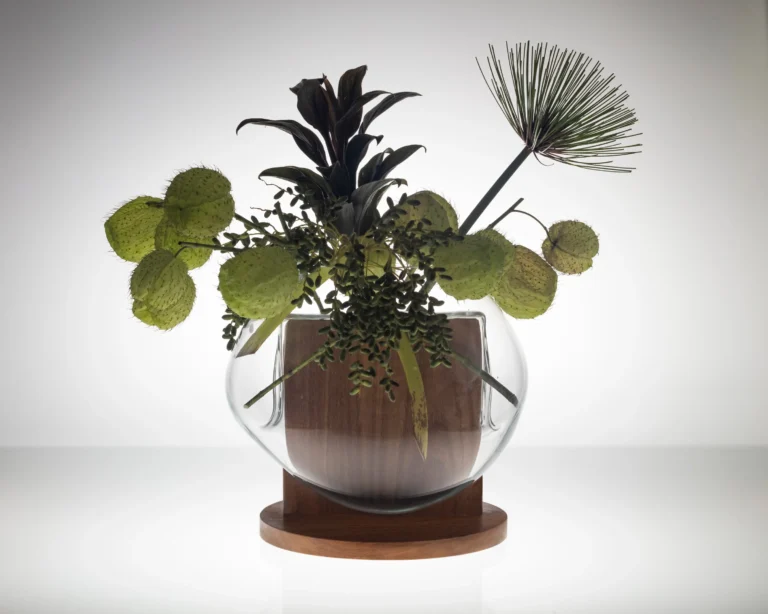
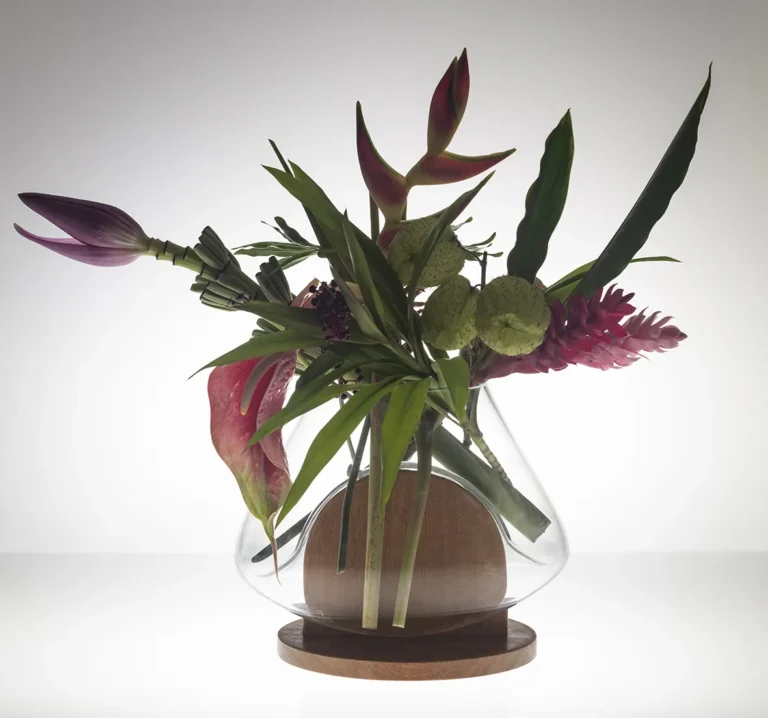
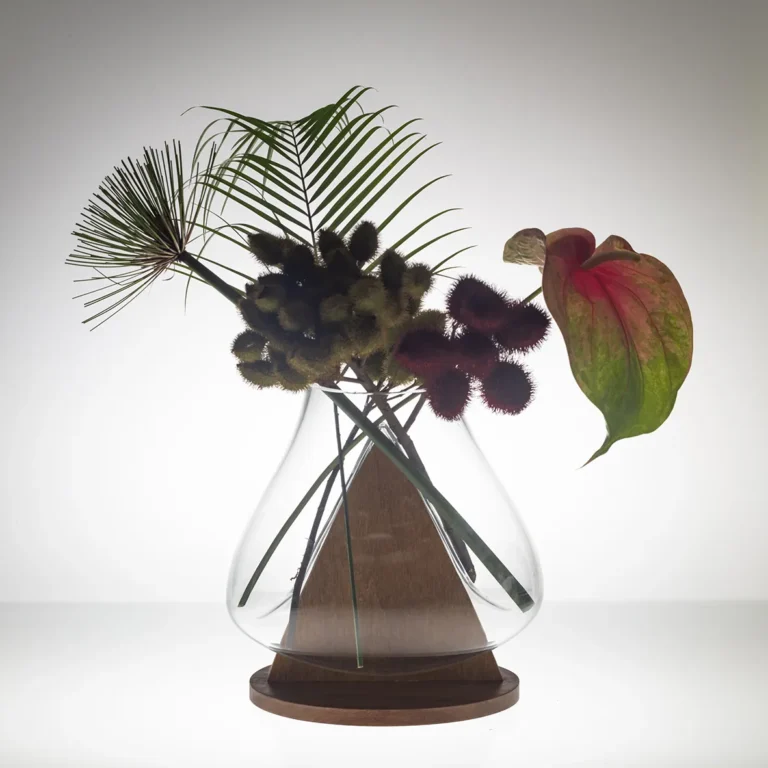
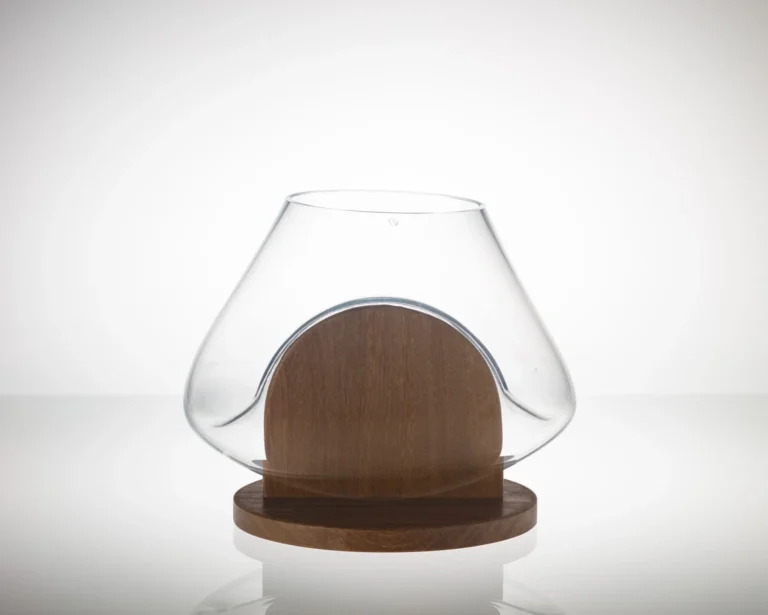
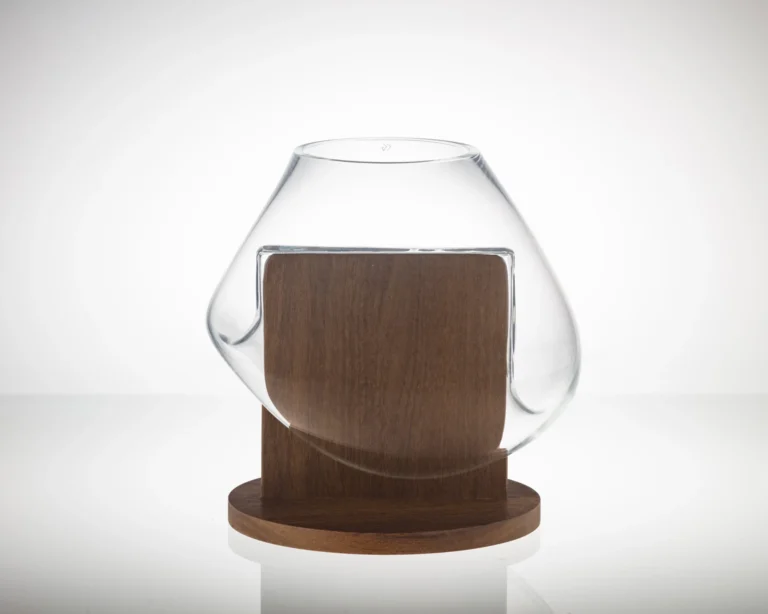
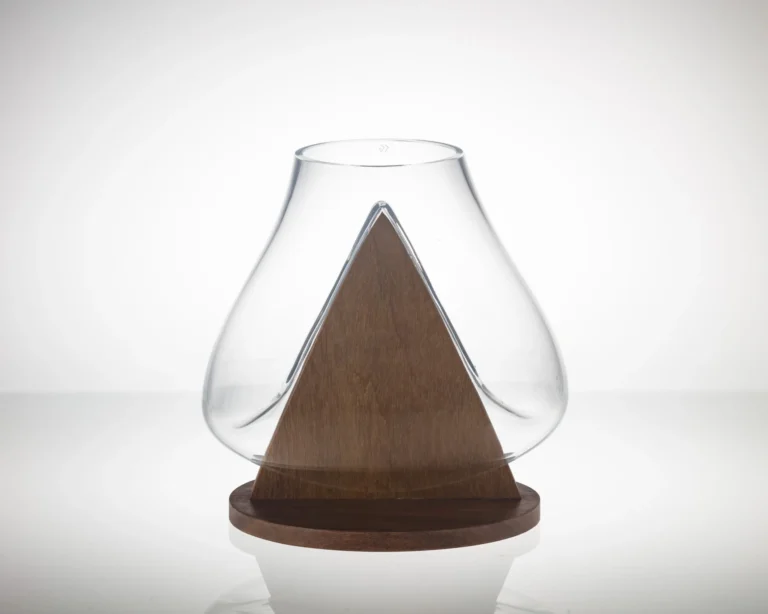
The Bauhaus vase by Carol Gay explores the limits of glass deformation through experimentation during glassblowing. It was also made to celebrate 100 years of the Bauhaus School, using the school’s classic shapes – triangle, square and circle – to structure the glass ball.
The aim was to intervene in the round shape that results from the artisan’s blowing, challenging the traditional process of making serial pieces. The deformation comes from iron pieces in circle, square and triangle shapes used as a mould. The outer shape of the ball stays organic, and in repetition each piece takes on a unique character shaped by the glassblower.
The base, in Brazilian Cumaru wood, suspends the glass, gives the piece stability and holds the shape created by the glassblower. Cumaru is a hard, resistant wood often used in Brazil for outdoor floors and stairs, and here it is given a new function. The result is a unique piece in which weight, lightness and transparency act together.
The glass contains no lead, is recyclable and is made using an electric oven, without burning CO2.
| Dimensions LxWxH | 27x25x29cm (11x10x11'') |
|---|---|
| discipline | Glassblowing |
| Piece Weight (kg) | 8 |
| Material | |
| Production Year | 2020 |
| Color | |
| Option | Circle, Square, Triangle |

