Mexican Furniture Designers: 10 Studios to Watch

Contents
  1. What defines contemporary Mexican design?
  2. Aura Carpio®, Designs from Mexico
  3. ASUL-STUDIO, Designs from Mexico City
  4. CMX | Furniture, Designs from Mexico
  5. Daniel Couttolenc, Designs from San Pedro Cholula
  6. Isabel Moncada, Designs from Guadalajara
  7. LØRDAG & SØNDAG, Designs from Mexico City
  8. Panorammma Atelier, Designs from Mexico City
  9. Peca Mobiliario, Designs from Guadalajara
  10. Natural Urbano — Sebastián Beltrán, Designs from Mexico
  11. Toro Manifesto, Designs from Mexico
  12. Frequently asked questions
  13. Browse our full selection of Mexican design

Updated on: September 21, 2026

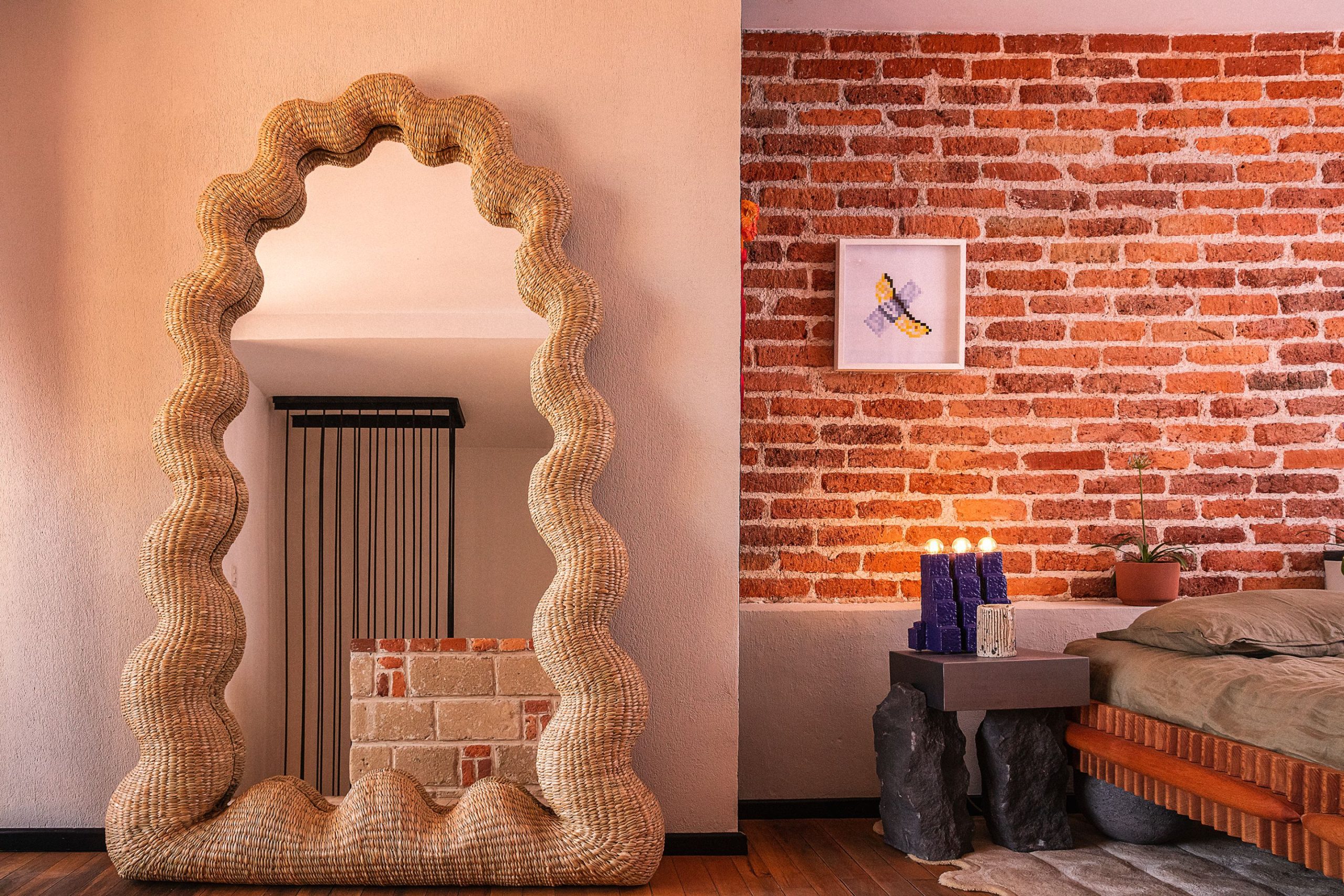
Mexican design is carried by a generation of independent studios working between inherited craft and contemporary form. They draw on regional hardwoods, volcanic stone, hammered copper, blown glass and woven fiber — and on artisan communities in Oaxaca, Chiapas, Hidalgo and Michoacán whose techniques predate the studios by centuries.

Ten studios below, selected by ADORNO’s curatorial team. Each works independently and produces in short runs or one-offs rather than at volume.

What defines contemporary Mexican design?

Three things recur across the studios here, and they distinguish Mexican work from the Scandinavian and Italian traditions it is often shelved beside.

  • The artisan is named, not anonymous. Mexican studios routinely work with specific craftspeople and communities, and credit them. This is a structural difference from European independent design, where the maker is usually the designer, and it means a single piece often carries two authorships.
  • Regional materials, not imported ones. Parota, Rosa Morada, huanacaxtle and tzalam are hardwoods with no European equivalent, and volcanic stone and local marbles behave differently from Carrara. The material dictates the form more than in traditions built on standardised stock.
  • Irregularity is expected. Hand-finishing and variable material mean no two pieces match. Studios describe this as one-of-a-kind rather than as tolerance, and buyers should treat photographs as indicative.

Aura Carpio®, Designs from Mexico

Aura Carpio® works in hammered copper, made by master artisans in Santa Clara del Cobre, Michoacán — a town that has worked copper since before the Spanish arrived. The studio uses the Terra hammering technique, which leaves a texture distinct from any machine finish. Pedregal® is a two-part wall sculpture in gauge 22 sheet; Coro® extends the same language across a wider span; and Masso® turns it into a monolithic coffee table, where each hammer strike reads as a separate vibration in the surface.

ASUL-STUDIO, Designs from Mexico City

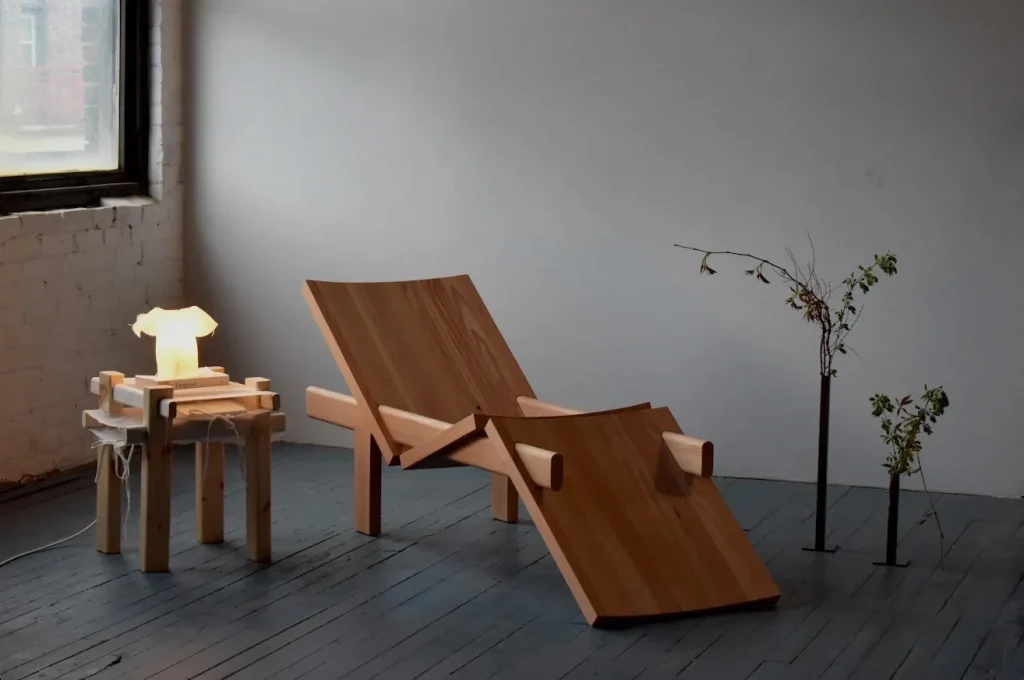
ASUL-STUDIO designs in Mexico City and produces with regional artisans. The Erosia side table is the clearest statement of the approach: its aluminum top is cast from wood tunneled by termites, preserving the voids left by years of invisible labor — destruction kept as relief, in a numbered edition of eighteen. Origo works the opposite way, two intersecting planes of solid Mexican oak that function as stool or side table, and the Split accent chair carries the same structural honesty into seating.

CMX | Furniture, Designs from Mexico

CMX | Furniture works at the larger end of the scale, where Mexican hardwoods are most visible — a single table top shows grain variation that smaller objects only hint at. The Noa Table is the studio’s signature piece, made to order.

Daniel Couttolenc, Designs from San Pedro Cholula

Daniel Couttolenc is a cabinetmaker working in parota wood, where the joinery is the subject rather than a means to it. The Aster side table separates into two auxiliary tables and a tray, its top view forming a hexagram — a figure for the union of opposites, which is a lot to ask of a table and mostly earns it. The Elements set reduces fire, earth, water and air to four sculptural objects.

Isabel Moncada, Designs from Guadalajara

Isabel Moncada designs lighting in bronze, brass, blown glass and parota wood, moving between art, engineering, mechanics and 3D modelling. The Mantis is the studio at full scale, a nine- or thirteen-piece fixture for a double-height room. Pata de Elefante is the counterweight — a floor lamp turned from solid parota — and the Dupla pendant pairs bronze and brass with glass.

LØRDAG & SØNDAG, Designs from Mexico City

LØRDAG & SØNDAG works with craftspeople in Oaxaca, Chiapas and Hidalgo, in stone and woven fiber. The Artefacto LS 16 floor lamp is hand-woven by master artisan Don Claudio entirely from G’noo Xombé Nisin fiber, with no internal metal structure at all — the weave alone carries it, which is technically demanding and rarely attempted. Artefacto Mármol LS-02 moves the same thinking into stone.

Panorammma Atelier, Designs from Mexico City

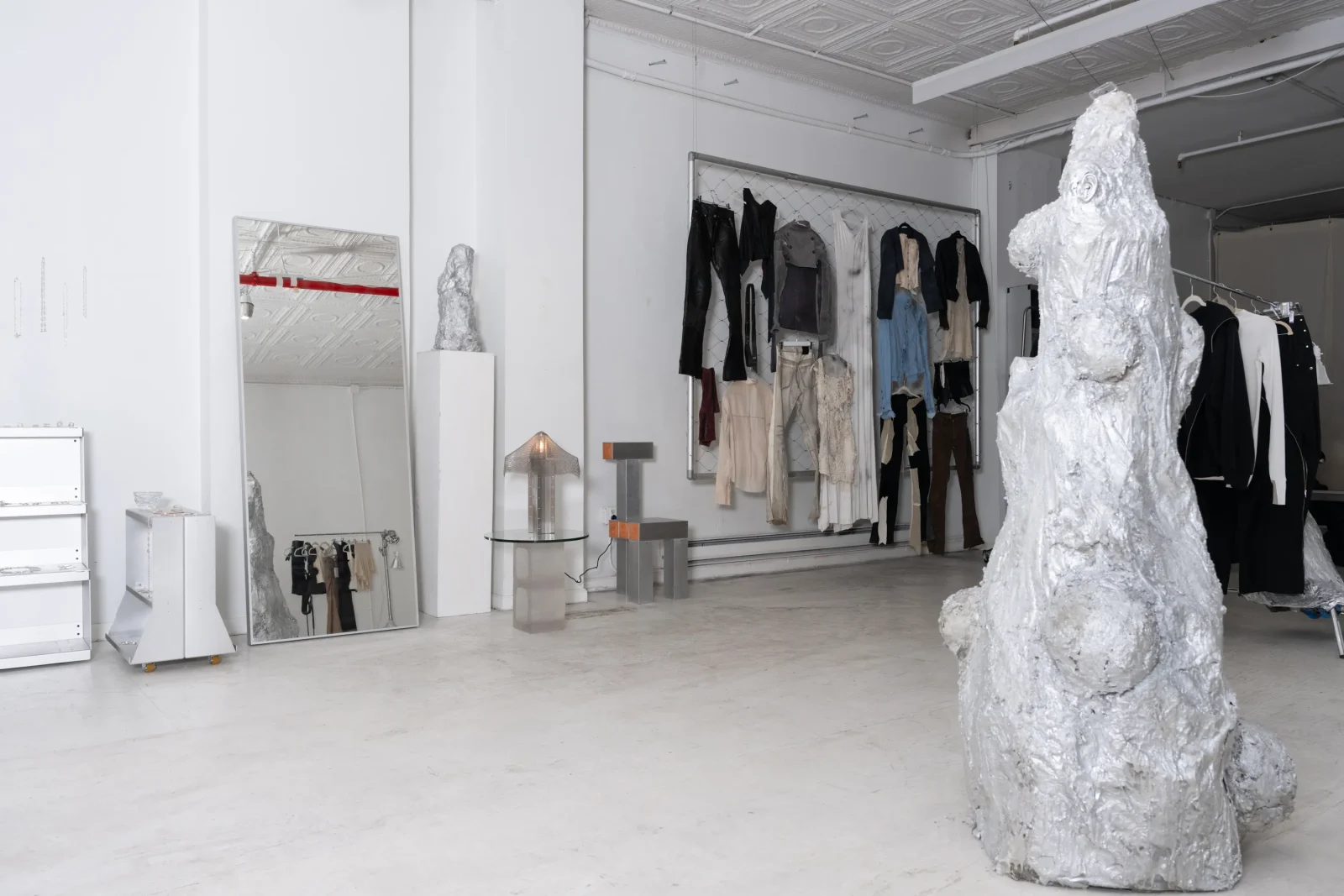
Panorammma Atelier hand-sculpts Mexican stone and metal, letting the block’s own pattern determine the final form. As they put it, when sculpting stone you get one attempt — so the shape is tailored to each piece rather than imposed on it. The Cult Stool is worked from a marble and onyx conglomerate, and Eclipse Olo stacks rings of white onyx with two compartments that open by rotation, mimicking a moon eclipsing the sun.

Peca Mobiliario, Designs from Guadalajara

Peca Mobiliario, led by Caterina Moretti, works in wood, glass and textile with a restraint closer to minimalism than most Mexican work. The Loto pouf comes in bouclé, linen and long-pile shag wool on an oak base; the Ensamble bench pairs with a matching pouf; and Pita Outdoors is a teak daybed built for weather.

Natural Urbano — Sebastián Beltrán, Designs from Mexico

Natural Urbano, led by Sebastián Beltrán, makes lighting in steel and biomaterials. The Lapso pendant is the studio’s most ambitious piece, combining both; the Crescent and the Lake table lamp sit at the accessible end. That range is unusual for one practice — it is a rare place to buy a first piece and a statement piece from the same maker.

Toro Manifesto, Designs from Mexico

Toro Manifesto works in oxidized steel, and the Cowgirl collection is the fullest statement of it — a dining table, chair, bar stool, bench and coffee table in one material. Letting steel oxidize rather than coating it means the surface keeps changing after it leaves the workshop, so the finish is a starting condition rather than a final one. The studio also produces the Sombra de Zebu rug.


Frequently asked questions

What is Mexican design known for?

Regional hardwoods such as parota and Rosa Morada, volcanic stone and local marbles, hammered copper, blown glass and woven natural fibre — worked with named artisan communities rather than anonymously. Irregularity is expected rather than corrected, so pieces are typically one of a kind.

Where are Mexico’s design studios based?

Mexico City and Guadalajara are the two main centers, with significant practices in Puebla and San Pedro Cholula. Artisan production is more dispersed — Oaxaca, Chiapas and Hidalgo supply much of the weaving and stonework, while Santa Clara del Cobre in Michoacán has worked copper for centuries.

How is Mexican design different from Scandinavian design?

Scandinavian work is built on standardized materials and repeatable production; Mexican studios work with variable regional stock and hand processes, so form follows the material more closely. The other structural difference is authorship — a Mexican piece often credits both the designer and the artisan who made it.

Can you buy Mexican designer furniture outside Mexico?

Yes. Every studio here ships internationally through ADORNO. Most pieces are made to order, so allow lead time rather than expecting stock delivery — and check dimensions carefully, since hand production means slight variation from published figures.

Will two pieces from the same studio match?

Not exactly. Solid timber varies board to board, stone varies block to block, and hammered copper carries the marks of whoever worked it. Ordering a pair means accepting two related but distinct objects. If close matching matters, ask whether both can be cut from the same log or block.

Browse our full selection of Mexican design

Furniture, lighting, ceramics and objects from independent Mexican studios, with prices and availability. Further reading in Mexican design pieces and Mexican decor and lighting.

Browse our catalogue of Mexican designers →

Words by

Natalie Mercer

More from Natalie Mercer

Related Articles